
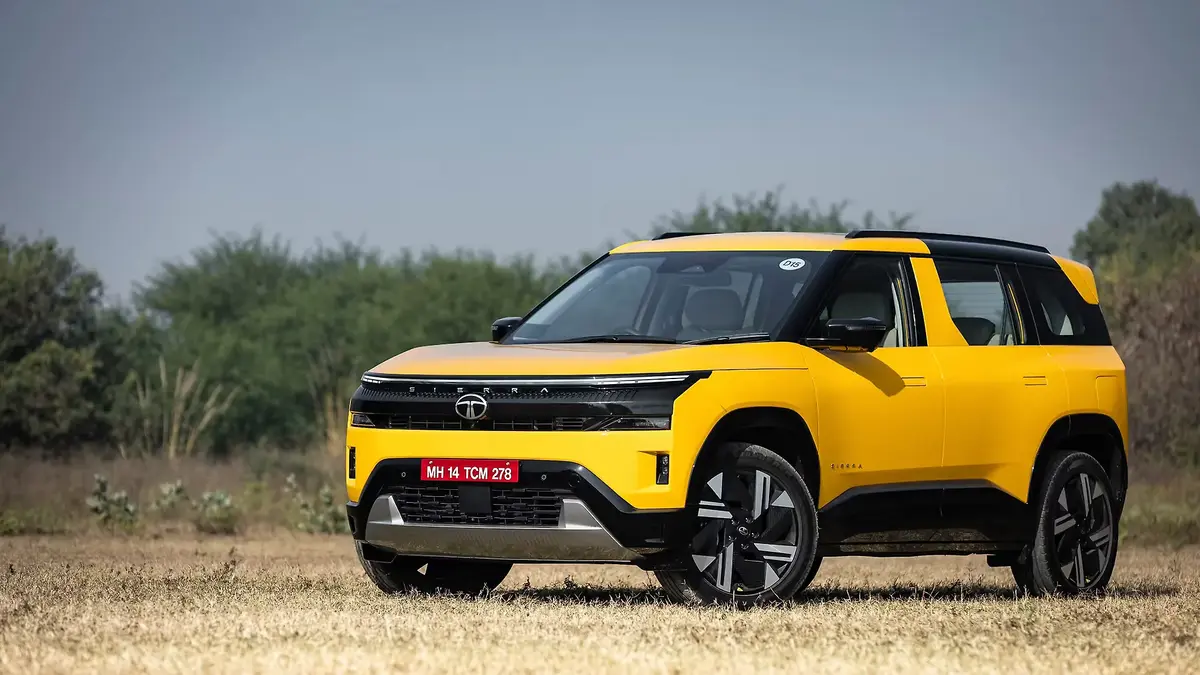
Tata Sierra: A Blend of Nostalgia and Modernity
The Tata Sierra has long been etched into automotive memory as one of India’s memorable SUVs. Now, the name returns—but make no mistake, this is a completely new car. While the DNA retains a few heritage cues, the 2024 Tata Sierra is very much a product of modern engineering, thoughtful design, and updated technology. Here’s a comprehensive first drive review to help you decide if it deserves your attention.
Exterior Design: Past Meets Present
The Tata Sierra pays homage to its roots through its design. The blacked-out glass elements and a bold rectangular face reminiscent of the original Sierra are subtle nods to the past. But it’s not just about nostalgia. The vehicle is larger than the competition—it’s both taller and wider, with the longest wheelbase in its class. At the front, sleek daytime running lights span the width, and the actual headlamps are tucked lower, offering a modern grille layout. You’ll also find flush door handles and stylish alloys highlighting its visual appeal.
Sierra Heritage Touchpoints
- Wraparound glass effect on the rear side windows.
- Flared B-pillar design.
- Subtle Sierra badging instead of oversized branding.
Interior Comfort and Features
Step inside the new Tata Sierra, and you’ll find an interior that feels several segments above. The dashboard design is clean and driver-centric. Premium materials are used throughout, including soft-touch surfaces and fabric inlays surrounding the infotainment system. There’s subtle damping on most moving parts, offering a refined tactile experience.
Technology and Layout
The vehicle comes in variants with two or three display screens. The three-screen version includes a digital instrument cluster, center touchscreen, and a passenger-side infotainment display. These are Samsung units with crisp resolution and smooth touch interaction. You can even stream content on the passenger screen with audio routed via Bluetooth headphones—keeping distractions minimal for the driver.
Key features include:
- Ventilated front seats with extendable thigh support.
- A premium JBL sound system featuring clear bass and crisp mids.
- Wireless phone charger (with minor stability issues).
- Panoramic sunroof enhancing cabin ambiance.
Powertrains and Driving Performance
The Tata Sierra offers three engine options: a 1.5L turbo direct injection petrol, a naturally aspirated MPI version, and a 1.5L diesel. All are mated to manual and automatic gearboxes depending on trim. During our review, we tested the turbo petrol and diesel variants.
Turbo Petrol (160 HP)
This engine impresses with smooth and linear power delivery. It doesn’t have a hard-hitting turbo kick, but it pulls nicely and can manage a 0-100 km/h dash in just over 10 seconds. The 6-speed auto box is tuned well, keeping the car in the power band and offering seamless driveability. Refinement levels are commendably high.
Diesel (118 HP)
The diesel motor benefits from hardware tweaks and torque tuning. At 280 Nm torque, it’s responsive but noisier. NVH could be improved, as engine drone becomes apparent at highway speeds. However, in terms of capability, it performs adequately with a 0-100 km/h time of under 13 seconds.
Ride and Handling
Body control is excellent even on winding roads. Despite its height, the Sierra remains composed and confident in corners. The steering offers decent feedback and the suspension geometry does an effective job mitigating body roll. Ride quality is on the firmer side but soaks up potholes and irregularities competently.
Off-Road Capability
Though it’s a front-wheel-drive SUV for now, the Sierra comes with terrain modes—Normal, Wet, and Rough—to optimize electronic systems for light off-roading. With 205 mm ground clearance, rocky paths shouldn’t pose any major issue on most leisure trails. Tata also confirmed the chassis supports AWD, which may feature later with electric variants.
Rear Seat Experience
Rear seat comfort is a high point. There’s ample legroom and headroom for six-footers. You get features like retractable sunblinds, a large sunroof, Type-C charging ports (including a 65W output for laptops), and a well-padded center armrest. All three rear passengers have three-point seat belts and adjustable headrests. Tata also provides a nifty boss mode to slide the front passenger seat from the back row for added space.
Safety and ADAS
The Sierra is loaded with safety features including six airbags, electronic stability control, post-crash braking, and a robust ADAS suite. Tata has tuned its ADAS systems specifically for Indian conditions, and during initial testing, the emergency braking wasn’t overly sensitive—a problem common with other brands. The car has been built with a 5-star safety rating in mind and feels reassuringly solid all around.
Pricing and Final Verdict
The new Tata Sierra starts at ₹11.5 lakh for the base petrol model. The diesel begins at ₹13 lakh, while the turbo-petrol variant starts around ₹18 lakh. Fully loaded versions are expected to touch ₹20 lakh.
So, does the new Sierra live up to expectations? In many ways, yes. It’s not perfect—the diesel is noisy, and a privacy filter for the passenger screen would be appreciated—but the core package is strong. A stylish, practical SUV that blends nostalgia with contemporary refinement, the Tata Sierra is worth considering if you’re in the market for a mid-size SUV that stands out from the crowd.
