
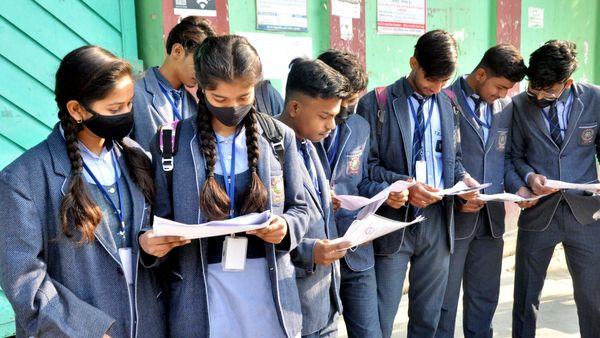
CBSE Embraces Digital: On-Screen Marking for Class 12 Board Exams
The Central Board of Secondary Education (CBSE) has announced a significant transformation in the way it evaluates Class 12 board exam answer scripts. Starting soon, CBSE will implement an On-Screen Marking (OSM) system for senior secondary students, replacing the traditional pen-and-paper evaluation method. This change marks a deliberate shift toward digital education processes and smarter administrative practices.
What is On-Screen Marking?
On-Screen Marking is a digital evaluation method where scanned copies of students’ answer sheets are marked by evaluators directly on a computer screen. Unlike the manual system where physical copies travel to dedicated evaluation centers, OSM centralizes the process on a secure digital platform. Teachers can access the scanned answer scripts from their schools, eliminating the need to travel for evaluation duty.
Why This Shift Was Necessary
The decision didn’t come out of nowhere. CBSE has been grappling with the logistical complexities of conducting board exams for nearly 46 lakh students across India and 26 other countries. Until now, its evaluation system heavily relied on physical answer scripts being transported across locations, evaluated at zonal centers, and then re-routed for compiling final results.
Physical handling introduces delays, can compromise security, and increases overall costs. CBSE’s adoption of OSM aims to resolve these issues and create a more reliable, efficient, and modern system tailored for a digital-first world.
Benefits of On-Screen Marking
There are multiple advantages that come with the switch to the OSM model, especially for Class 12 board exams:
- Faster Result Processing: Digital scripts can be evaluated quicker, shortening the time between exam completion and result declaration.
- Greater Transparency: Every mark is digitally recorded, enabling better review in case of discrepancies or re-evaluation requests.
- Reduced Logistical Burden: No more physical transportation of thousands of answer scripts from across the country.
- Cost and Time Efficiency: Costs involved in transport, handling, storage, and security are drastically reduced.
- Decreased Evaluator Disruptions: Teachers can now continue their regular duties at their schools while performing evaluation tasks digitally.
How It Works
The process of On-Screen Marking involves several steps:
- After exams conclude, student answer scripts are scanned at certified exam centers.
- These scanned copies are uploaded to a cloud-based evaluation platform.
- Authorized evaluators log in securely to access these scripts.
- Marking is done onscreen using stylus-enabled devices or computers with annotation tools.
- Marks are auto-tabulated, minimizing manual errors in calculating scores.
Why Only for Class 12?
CBSE has clarified that this change currently affects only the evaluation of Class 12 answer books. Class 10 assessments will continue in the traditional physical format, at least until 2026. The rationale is based on both volume and criticality. Class 12 results are pivotal for college admission and future career paths, and the need for timely, accurate assessments is paramount.
Moreover, pilot programs and resource availability made Class 12 a more immediate candidate for this transition. CBSE seems to be taking a measured approach by observing digital evaluation’s impact at the senior-secondary level before expanding it to the secondary level.
Teacher and Student Reactions
While many educators have welcomed the move, there are mixed feelings among students and teachers. Some teachers appreciate the convenience the system promises, as it reduces their travel commitments and allows them to balance evaluation duties with daily teaching responsibilities. However, others express concern over the learning curve associated with mastering new tools and platforms.
Students, on the other hand, view the new system with cautious optimism. Digital evaluation could reduce human error and promote consistency. But it also introduces questions about handling diagrams, maps, and creative answers, which are often best judged in their original form.
Challenges Ahead
Adopting any new technology in an educational setting is not without its hurdles:
- Comprehensive training will be essential to ensure teachers are proficient with the new platform.
- Clear guidelines on evaluation standards and annotation techniques need to be standardized.
- Technical infrastructure must support large-scale deployment across diverse geographic locations.
- Cybersecurity and data privacy protocols must be airtight to maintain trust in the system.
Global Context of Digital Evaluation
CBSE is not alone in its transition. Globally, many education boards have already embraced digitized evaluation systems. Boards in the UK, Singapore, and some parts of the US have moved toward on-screen marking with fairly positive outcomes. With this reform, CBSE joins a growing league of progressive education systems moving toward greater digital integration.
What’s Next?
CBSE has not ruled out further expansion of the evaluation method. Once the Class 12 OSM system is running smoothly, it could be introduced in phases to Class 10 and other examination formats. The success of this rollout will likely inform future reforms in India’s broader examination landscape, not just for CBSE but for other state and national boards.
Education is evolving rapidly to keep pace with technology. By embracing On-Screen Marking, CBSE is not merely introducing a new system; it’s laying the foundation for a smarter, faster, and more reliable evaluation framework. This could ultimately lead to greater trust in exam outcomes and ensure better academic planning for students across the country.
Conclusion
With nearly 46 lakh students affected annually, this change is no small move. It signals a commitment to modernization, efficiency, and transparency. Whether you’re a student, parent, or educator, understanding the nuances of this digital shift can help you prepare for a more technology-driven academic environment. The CBSE On-Screen Marking initiative is more than a tech upgrade—it’s a vision for the future of exams in India.