
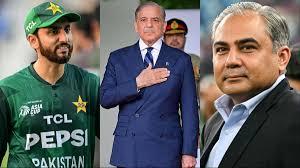
Pakistan’s T20 World Cup Decision Hinges on Political Approval
With just days to go before the highly anticipated clash between India and Pakistan in the T20 World Cup, cricket fans across the globe are facing a familiar question: Will Pakistan participate? The uncertainty has added tension and speculation ahead of one of cricket’s most-watched matchups.
The decision now rests with Pakistan Prime Minister Shehbaz Sharif, who holds the authority to greenlight or block the nation’s participation in the tournament. Although the Pakistan Cricket Board (PCB) has been gearing up for the event, evolving political and diplomatic tensions have put the team’s travel and match plans on hold.
Meetings and Mediation by the ICC
On Sunday, the International Cricket Council (ICC) attempted to break the deadlock by sending a two-member delegation to Lahore. ICC Deputy Chairman Imran Khwaja and Associate Members’ representative Mubashir Usmani met with PCB Chairman Mohsin Naqvi. This rare diplomatic outreach symbolizes the importance of a resolution, especially considering how pivotal India vs. Pakistan matches are from both sporting and commercial perspectives.
Sources suggest the PCB is awaiting final instructions from Islamabad. The outcome of this high-stakes meeting could unfold within the next 24 hours. If Sharif gives his consent, Pakistan will proceed to face India at the R Premadasa Stadium in Colombo.
Why the Delay? The Backdrop of Political and Security Concerns
This isn’t the first time sport has been tangled in the web of geopolitics. The India-Pakistan cricket rivalry, steeped in history, often faces uncertainty due to cross-border tensions. In recent years, security concerns, strained diplomatic ties, and domestic instability have kept cricket tours in flux.
The situation has been exacerbated by:
- Fluctuating political relationship between India and Pakistan
- Issues surrounding bilateral cricketing arrangements
- The PCB’s hesitance following years of home isolation due to security challenges
Security, Sovereignty, and Strategy
Security concerns are paramount. Since the tragic 2009 attack on the Sri Lankan team in Lahore, Pakistan has often faced reluctance from countries to tour. Though international cricket has returned, public and private security-related apprehensions continue to hamper wider engagement.
For this World Cup, Pakistan’s leadership needs to balance sovereignty with sporting diplomacy. While cricket can serve as a bridge, it also serves as a soft-power tool. Every decision carries consequence. Approving participation could be seen as de-escalatory, while withdrawal might send a sharper geopolitical message but could isolate the team further.
Broad Overview: Pakistan’s Contemporary Cricketing Challenges
Beyond this immediate issue, Pakistan’s cricketing ecosystem has been grappling with a host of structural, institutional, and political challenges. Here’s a look at some of the pressing concerns:
1. Unstable Administrative Structure
The PCB, like many national sports bodies, often finds itself entangled in domestic politics. Changes in government often lead to new cricket administrators, challenging long-term planning. Mohsin Naqvi, the current chief, is already the fourth chairman in just a few years. Without stable leadership, ground-level cricket development and consistency in strategy suffer.
2. Infrequent Home Series and International Isolation
While Pakistan has hosted a few international series in recent years, many teams still remain hesitant. Often, Pakistan relies on neutral venues like the UAE or Sri Lanka to host events. This weakens the concept of home advantage and affects gate revenues and fan support.
3. Funding and Sponsorship Struggles
Global financial headwinds and local sponsorship limitations make it difficult for the PCB to compete with wealthier boards. Pakistan often struggles to match the infrastructure, technology, and marketing power of boards like the BCCI or Cricket Australia. A conditional sponsorship market further limits the board’s financial independence.
4. Player Management and Domestic Cricket Reform
Pakistan’s domestic cricket structure has been overhauled multiple times in the past decade. While the aim has been to introduce professionalism, inconsistency in formats and talent pipelines has confused players and coaches alike. Additionally, frequent changes to team selections, coaching staff, and management often impact consistency on the field.
5. External Pressures and Integrity Concerns
From time to time, Pakistani cricket has been marred by allegations of match-fixing and indiscipline. Although efforts have been made to clean up the game, lapses in governance occasionally trigger big headlines and erode public trust.
What’s at Stake?
With the T20 World Cup drawing millions of viewers, Pakistan’s involvement matters not only to fans but also to the tournament’s broadcasters and sponsors. Financial projections are often built around an India–Pakistan match, with tickets, advertising and viewership numbers spiking dramatically.
Should Pakistan pull out or delay confirmation, it could potentially disrupt groupings, schedules, and stadium logistics. Moreover, players from both teams would need to recalibrate their mental preparation.
Fans Caught in the Middle
Perhaps most affected by the confusion are regular fans. Cricket has long provided communities in both countries with moments of joy and pride. While politics may drive decisions at the top, to many, the sport remains apolitical. A withdrawal would not only disappoint millions but also deepen the chasm that has kept South Asia’s biggest teams apart.
The Road Ahead
For now, all eyes are on Islamabad and the Prime Minister’s Office. If the nod comes through, expect the PCB to finalize itineraries swiftly. Match-preview presses, net sessions, and media buzz may pick up overnight.
But even if the decision permits participation, the wider issues remain. For Pakistan cricket to thrive, reforms, stability, and depoliticization are essential. The country has produced world-class talent time and again. But without consistent governance, even the most promising cricketers face an uphill climb.
Conclusion
Cricket in Pakistan stands at a critical juncture. The T20 World Cup has turned into not just a sporting event but a litmus test for diplomacy, governance, and foresight. Hopefully, rational voices will prevail, allowing the sport to move beyond factional lines, if only momentarily.
While the world waits for that final yes or no from Pakistan’s leadership, one thing is clear: sports can still act as a unifying force in a divided world. But only if both politics and cricket allow it.