At a Glance
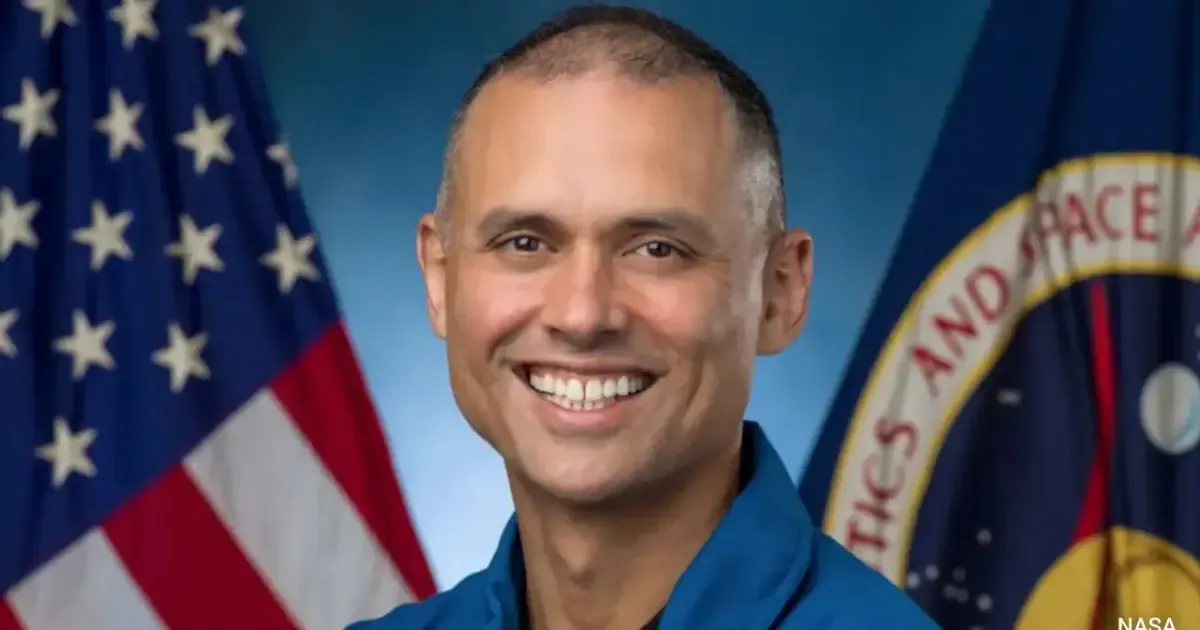
Anil Menon’s path from a Delhi student to a NASA astronaut is an inspiring story rooted in service. A formative winter spent vaccinating children in India taught him humility, patience, and the importance of helping others, qualities that proved invaluable in his journey to space. His dedication to humanitarian work and his medical expertise have prepared him for the challenges of space exploration, making him a symbol of achievement and compassion.
Key Takeaways
The main points at a glance
- Anil Menon’s journey to becoming a NASA astronaut began with a formative experience vaccinating children in Delhi.
- This early volunteer work instilled values of patience, precision, and compassion, crucial for space missions.
- Menon’s unique background combines medical expertise with a deep understanding of human needs, honed through humanitarian service.
- His selection as an astronaut highlights NASA’s emphasis on well-rounded individuals with strong character and a commitment to service.
- Anil Menon’s story serves as an inspiration, demonstrating that dedication and empathy can lead to achieving even the most ambitious dreams.
The winter air in Delhi was cold and sharp. Young Anil Menon, barely out of his teens, stood in a long line of volunteers. Before him stretched rows of children, their breath forming tiny clouds in the morning chill. He held a syringe, his hands steady despite the cold. One by one, he vaccinated children against preventable diseases. It was slow, painstaking work. But for Anil, it was more than just a medical task. It was a lesson in humility and purpose.
Years later, that same man sits inside a state-of-the-art spacecraft, strapped into a seat, waiting for the rumble of engines that will carry him beyond Earth’s atmosphere. The contrast could not be starker. Instead of the dusty streets of Delhi, there are gleaming control panels. Instead of children’s cries, there are the calm voices of mission control. But Anil Menon, now a NASA astronaut ready for launch, carries that winter with him. It grounded him. It taught him that service to others is the truest form of exploration.
His journey from a student in Delhi to a NASA astronaut is not just a story of ambition. It is a story of how small acts of kindness can shape a life bound for the stars.
The Winter That Shaped an Astronaut’s Path
It was the early 2000s when Anil Menon first began volunteering at a vaccination camp in Delhi. The exact program isn’t widely documented, but it likely involved the Pulse Polio initiative or a similar government-run drive to immunize children. India was still battling polio and other diseases, and mass vaccination campaigns were a cornerstone of public health.
Anil was a medical student at the time, studying to become a doctor. He could have spent his winter break resting or studying. Instead, he chose to work in a crowded clinic. Mothers brought their babies, wrapping them in thin shawls against the cold. The children cried, but Anil stayed calm. He learned to comfort them, to work quickly and gently. It was here, amid the smell of antiseptic and the constant hum of families waiting, that Anil discovered something important.
He realized that the greatest challenges are not always in the sky. Sometimes they are right here on Earth, in the struggle to keep a child healthy.
That winter stayed with him. It taught him patience, resilience, and the power of small actions. These are the same qualities that NASA looks for in its astronauts. The space agency doesn’t just want pilots or scientists. It wants people who can handle pressure, who can work with others, and who understand the fragility of life. Anil’s time in those vaccination lines gave him all of that.
From Delhi Student to Space Explorer
Anil Menon grew up in Delhi, a city of contrasts. It is a place of ancient history and modern ambition, of crowded bazaars and quiet parks. As a child, he looked up at the night sky and dreamed. But those dreams were not just about space. They were about helping people.
In India, many children dream of becoming doctors or engineers. Anil did both. He pursued medicine, earning his degree before specializing in aerospace medicine. This rare combination set him apart. He understood the human body and how it reacts to extreme environments. He also understood the human heart and the need for compassion.
His academic journey took him from Delhi to the United States. There, he trained as a flight surgeon and worked with NASA on projects related to astronaut health. He was not yet an astronaut himself, but he was getting closer. Every step he took built on the lessons from that winter in Delhi.
His selection as a NASA astronaut candidate was a milestone. He beat thousands of applicants to earn a spot in one of the most exclusive groups in the world. For India, it was a moment of pride. For Anil, it was the realization of a dream he had held since childhood.
How Vaccinating Children Prepared Anil Menon for Space
It might seem strange to say that vaccinating children prepared someone for space travel. But think about it. Space is unforgiving. Every mistake can be fatal. Astronauts must be patient, precise, and calm under pressure. Anil learned these skills in a crowded clinic in Delhi.
When you give a child a shot, you have to be careful. One wrong move and you hurt the child. You must also deal with scared parents and long lines. It teaches you to focus, to communicate, and to keep going even when you are tired. That is exactly what astronauts do during a space mission.
NASA recognizes the value of humanitarian work. In selecting astronauts, the agency looks for candidates who have served their communities. They want people who are not just brilliant but also grounded. Anil’s vaccination work showed that he understood the needs of others. It made him a better doctor and a better potential astronaut.
In interviews, Anil has spoken about that winter with gratitude. He says it reminded him why he wanted to become a doctor in the first place: to help people. That sense of service extends to his work as an astronaut. He is not just exploring space for himself. He is doing it for all of humanity.
Anil Menon’s Rigorous Training for Space
Becoming a NASA astronaut requires years of intense training. Anil Menon has undergone grueling physical tests, survival training, and simulations. He has learned to fly jets, to operate spacecraft systems, and to work in microgravity. But through it all, he has kept his focus on the bigger picture.
The training is designed to push astronauts to their limits. They spend hours underwater to simulate weightlessness. They practice emergency procedures until they can do them in their sleep. They learn to work as a team, even when they are exhausted.
Anil’s medical background has been a great advantage. He understands the health risks of space travel, from bone loss to radiation exposure. He has helped develop protocols to keep astronauts safe. But he also brings something else: a calm demeanor that comes from years of dealing with patients in crisis.
As he prepares for launch, Anil is ready. The mission itself is still shrouded in some secrecy, but it involves a trip to space, likely to the International Space Station. He will be part of a crew conducting scientific experiments and testing new technologies. The exact duration and spacecraft are not yet public, but the significance is clear. Anil Menon is about to become the first person of Indian origin to fly to space as a NASA astronaut, a historic achievement.
The Mission Ahead for Anil Menon
While specific details of Anil Menon’s mission have not been released, we know that NASA is planning a series of flights to the International Space Station. These missions typically last around six months. They involve conducting research that can benefit life on Earth and prepare for future deep space exploration.
Anil will likely be joined by other astronauts from different countries. Together, they will manage the space station, maintain its systems, and carry out experiments. Some of these experiments might involve human health, which is where Anil’s expertise will shine.
The mission is a stepping stone. NASA aims to return humans to the Moon and eventually go to Mars. Every flight helps gather data and build experience. Anil Menon is part of that grand plan. But for him, the mission is also personal. It is the fulfillment of a dream that began in a Delhi winter.
India Celebrates Anil Menon’s Cosmic Achievement
Reaction in India to Anil Menon’s achievement has been overwhelming. Social media is filled with messages of pride and inspiration. Newspapers have run front-page stories. The Indian government has also taken notice, praising Anil as a role model for the nation’s youth.
For many Indians, Anil represents the possibility of achieving great things, no matter where you come from. He grew up in the same crowded streets as millions of others. He attended local schools. He faced the same challenges. But he never gave up on his dream.
His story is especially resonant in a country where many children still lack access to basic healthcare. The fact that he volunteered to vaccinate children is a powerful symbol. It shows that success does not have to mean leaving your values behind. You can reach the stars and still keep your feet on the ground.
Indian space enthusiasts are eagerly following every update. Many are drawing comparisons to Rakesh Sharma, the first Indian in space, who flew in 1984. But Anil Menon is different. He is not just an Indian astronaut; he is a NASA astronaut, representing humanity as a whole. Yet his roots in Delhi remain a source of pride.
Key Lessons from Anil Menon’s Inspiring Journey
What can we learn from Anil Menon? First, that small acts of service can have big impacts. A winter spent vaccinating children did not just protect their health. It shaped a future astronaut. It taught him compassion, patience, and the importance of helping others.
Second, that dreams take time. Anil did not become an astronaut overnight. He went to medical school, specialized, worked as a flight surgeon, applied multiple times, and finally was selected. His journey was long, but he never lost sight of his goal.
Third, that no background is a barrier. Anil came from a country that had no human spaceflight program of its own. Yet he found his way into NASA. His story proves that with hard work and determination, you can go anywhere.
And finally, that the best astronauts are those who stay grounded. Anil Menon’s humility and sense of service make him not just a skilled explorer but a truly inspiring human being.
As he prepares to launch, he carries with him the hopes of many. But he also carries the memory of that cold winter in Delhi, where he learned what it really means to reach out and help. From those streets to the stars, Anil Menon’s journey reminds us all: the sky is not the limit. The heart is.
Frequently Asked Questions
What inspired Anil Menon's journey to become a NASA astronaut?
Anil Menon's journey was significantly shaped by his experience volunteering at a vaccination camp in Delhi during his medical studies. This period taught him humility, patience, and the profound impact of service, which he carried with him throughout his career aspirations.
How did vaccinating children prepare Anil Menon for space travel?
The meticulous and compassionate work of vaccinating children required patience, precision, and the ability to remain calm under pressure. These are essential skills for astronauts, who must handle critical situations with focus and care during space missions.
What is Anil Menon's background before joining NASA?
Anil Menon is a medical doctor who specialized in aerospace medicine. He also trained as a flight surgeon and worked with NASA on astronaut health projects, building a unique skill set that bridges medicine and space exploration.
What does Anil Menon's selection as a NASA astronaut mean for India?
Anil Menon's achievement is a source of immense pride for India, showcasing the potential for individuals from diverse backgrounds to reach the highest levels of space exploration. He is seen as a role model for aspiring scientists and explorers across the nation.
What are the key qualities NASA looks for in astronauts?
NASA seeks individuals who are not only technically proficient but also possess strong character, resilience, and the ability to work effectively in teams. Humanitarian work and a demonstrated commitment to service, like Menon's, are highly valued.
What kind of missions is Anil Menon expected to undertake?
While specific mission details are often confidential, astronauts like Anil Menon typically participate in missions to the International Space Station. These involve conducting scientific research, maintaining the station, and testing new technologies for future deep space exploration.
References
- Delhi Student To NASA Astronaut Ready For Launch: Anil Menon's Journey – Original report (NDTV India)
- Delhi Student To NASA Astronaut Ready For Launch: Anil Menon's Journey – NDTV – NDTV