At a Glance
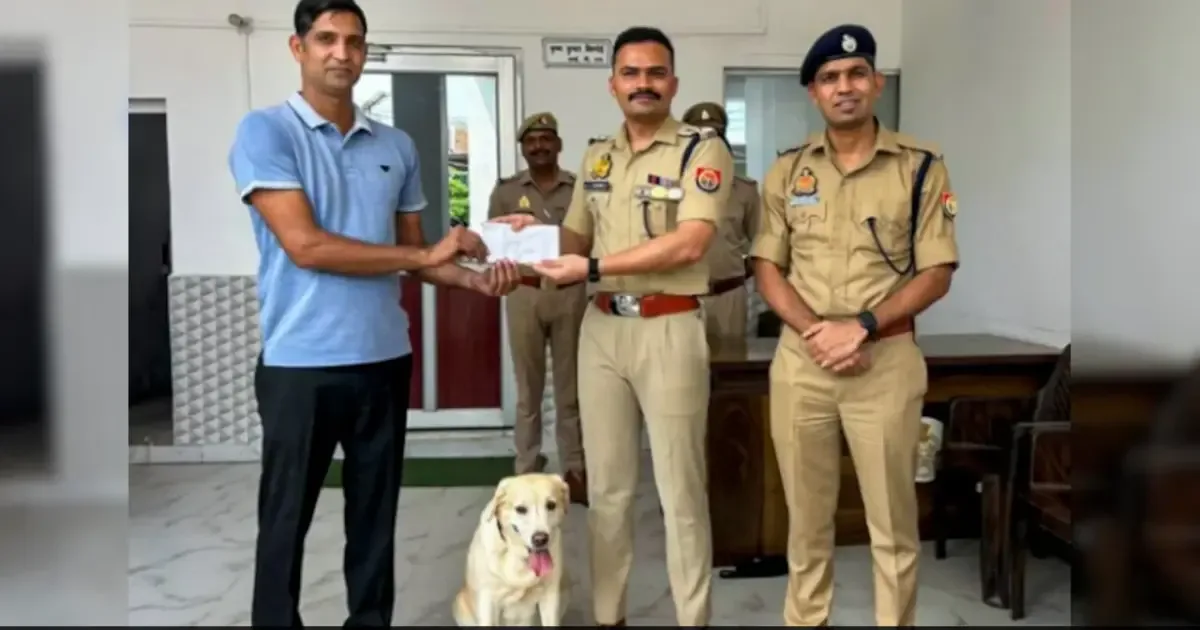
When an investigation into a sexual assault of a six-year-old girl in Sambhal, UP, stalled due to a lack of clues, police dog Mary, a Labrador retriever, provided the breakthrough. Using a scarf worn by the victim, Mary tracked the suspect’s scent through the town, leading officers directly to the accused’s house and resulting in his arrest.
Key Takeaways
The main points at a glance
- A sexual assault investigation in Sambhal, UP, was stalled due to a lack of witnesses or CCTV footage.
- Police dog Mary, a seven-year-old Labrador, was deployed to track the suspect using a scarf worn by the victim.
- Mary successfully followed the scent trail, leading investigators to a specific house where the accused was apprehended.
- Dogs possess a superior sense of smell (millions more receptors than humans) and undergo rigorous training to track specific scents.
- Mary’s tracking provided a crucial lead, enabling the police to make an arrest and move the case forward.
- The case highlights the valuable role of canine units in modern police investigations, especially when traditional methods fail.
A Crime with No Clues
The investigation into a sexual assault of a six-year-old girl in Sambhal, Uttar Pradesh, had hit a wall. The family was devastated, and local police struggled to find leads. The crime occurred in an area with no CCTV cameras and no eyewitnesses, leaving investigators with little to work with.
Without direct proof or witnesses, finding a suspect was extremely difficult. This is a common challenge in many investigations. The Sambhal police needed a different approach. They turned to a unique member of their team: a seven-year-old Labrador retriever named Mary.
Meet Mary, the Four-Legged Detective
Mary is a trained sniffer dog with the Uttar Pradesh Police, working alongside her handler. She has years of experience using her exceptional sense of smell to locate evidence invisible to humans. Sniffer dogs undergo extensive training to follow scent trails, even those that are days old, and remain calm under pressure.
For this case, Mary and her handler were brought to the scene with a crucial piece of evidence: a scarf the girl was wearing during the assault. The police hoped the suspect’s scent on the scarf would lead Mary to the perpetrator.
Mary’s handler gave her the command. After sniffing the scarf, Mary began to follow the scent, nose to the ground, leading the way.
The Scent That Led to Justice
Mary led the police through the streets of Sambhal, following a scent trail that had been left hours earlier and potentially affected by weather. Her handler and other officers followed, observing her confident progress.
After some time, Mary stopped in front of a house and sat down, signaling she had found the source of the scent. The police entered the house and took a man into custody.
Based on Mary’s tracking and other evidence, the man was arrested and accused of assaulting the six-year-old girl. Mary’s ability to follow the scent provided the crucial lead the police needed.
How Police Dogs Track Scents
Dogs possess an extraordinary sense of smell, far superior to humans. While humans have about 5 million scent receptors, dogs like Labradors have between 125 million and 300 million. This biological advantage is enhanced through rigorous training.
Sniffer dogs are trained to associate specific scents with rewards. For criminal investigations, they learn to track the unique scent of individuals, which is left by sweat, skin cells, and other body chemicals. Even attempts to hide or clean up leave traces that trained dogs can detect.
Mary’s training enabled her to follow old trails, work in distracting environments, and ignore other stimuli. Her handler can interpret her signals, such as sitting down to indicate a successful find.
In this case, the scent from the suspect transferred to the girl’s scarf. Mary successfully locked onto this scent and followed it directly to the accused’s location, demonstrating the effectiveness of canine tracking in investigations.
Arrest and Reaction
Following Mary’s lead, the suspect was taken into custody. The police stated the investigation was ongoing and they were gathering more evidence for a strong court case. The arrest provided some relief to the victim’s family and the community, who praised the police for utilizing Mary’s skills.
Police officials confirmed Mary’s critical role in the investigation, highlighting her professional and accurate work. They emphasized that the legal process was just beginning for the accused.
The suspect will now face trial for the serious crime of sexual assault of a minor. India’s legal system offers special protections for child victims, and the trial is expected to be expedited.
The Larger Role of Canine Units in India
Uttar Pradesh and other states in India have canine units that assist in various tasks, including detecting explosives, drugs, finding missing persons, and tracking suspects. While dogs are commonly used in these areas, their application in sexual assault cases is less frequent but highly valuable.
This case highlights how police dogs can provide critical breakthroughs when traditional investigative methods fall short. Their findings serve as a vital lead, complementing other evidence.
Canine units across India have expanded, with dogs treated as integral members of the police force. While recognition for dogs like Mary is important, the ultimate goal is delivering justice.
Challenges exist, as canine evidence must be presented carefully and often alongside other proof to be accepted in court. However, Indian courts increasingly recognize the value of canine tracking when corroborated.
The police are likely collecting further forensic evidence and statements to build a comprehensive case that includes Mary’s tracking contribution. The focus remains on supporting the victim and her family throughout the legal process.
Mary’s work has drawn praise, but the priority is the victim’s recovery and justice. Her role in identifying the accused is a significant step, with the legal system now responsible for the rest.
This case has spurred discussions on using dogs more extensively in sexual assault investigations. Experts suggest careful training and application to ensure accuracy and effectiveness. Mary’s success demonstrates that a well-trained police dog can be a powerful investigative tool.
The community in Sambhal remembers Mary’s contribution, viewing her tracking as a near-miracle. For the police, it’s a reminder of the unique capabilities of their four-legged officers.
Thanks to police dog Mary, the investigation is no longer at a dead end. A suspect has been identified, the family has hope, and a remarkable story of canine assistance in achieving justice has emerged.
Frequently Asked Questions
How did police dog Mary help solve the assault case?
Police dog Mary helped by tracking the scent of the accused individual. Investigators used a scarf worn by the victim, and Mary was able to follow the scent left on it directly to the suspect's location, leading to his arrest.
What makes police dogs like Mary so effective at tracking scents?
Dogs have an incredibly powerful sense of smell, with millions more scent receptors than humans. Through extensive training, they learn to identify and follow specific human scents, even after hours or days, and can do so in challenging environments.
Was Mary the only evidence used to arrest the suspect?
No, Mary's tracking provided a crucial lead that allowed police to identify and apprehend a suspect. However, her work is typically used as part of a larger body of evidence, which police continue to gather for a strong court case.
Are police dogs commonly used in sexual assault investigations in India?
While police dogs are used for various tasks like drug and explosives detection, their use in sexual assault cases is less common but growing. This case demonstrates their significant potential in such investigations.
What happens to the suspect after being arrested?
After arrest, the suspect will undergo further investigation and legal proceedings. The prosecution will build a case using all available evidence, including the lead provided by the police dog, to prove guilt beyond a reasonable doubt in court.
How are police dogs trained?
Police dogs are trained from a young age to associate specific scents with rewards like toys or treats. They learn to follow trails, ignore distractions, and signal their findings to their handlers, becoming highly specialized investigative tools.
References
- Police Dog Mary Helps Crack Case Of 6-Year-Old Girl's Sexual Assault In UP – Original report (NDTV India)
- Police Dog Mary Helps Crack Case Of 6-Year-Old Girl's Sexual Assault In UP – NDTV – NDTV
- No CCTV, no witnesses: How police dog Mary helped solve 6-yr-old’s rape case in UP’s Sambhal – ThePrint – Highlighted the lack of CCTV and witnesses, emphasizing the dog's crucial role.
- Scent of a scarf: Sniffer dog helps crack rape case of 6-year-old in UP's Sambhal – The Times of India – Focused on the scent of the victim's scarf as the key evidence tracked by Mary.
- Police dog Mary helps crack case of 6-year-old girls sexual assault in UPs Sambhal – The Tribune – Corroborated the story with additional details on the dog's training and police response.
- Man hacks father-in-law to death in Uttarakhand’s Almora, flees with wife – The Tribune – The Tribune