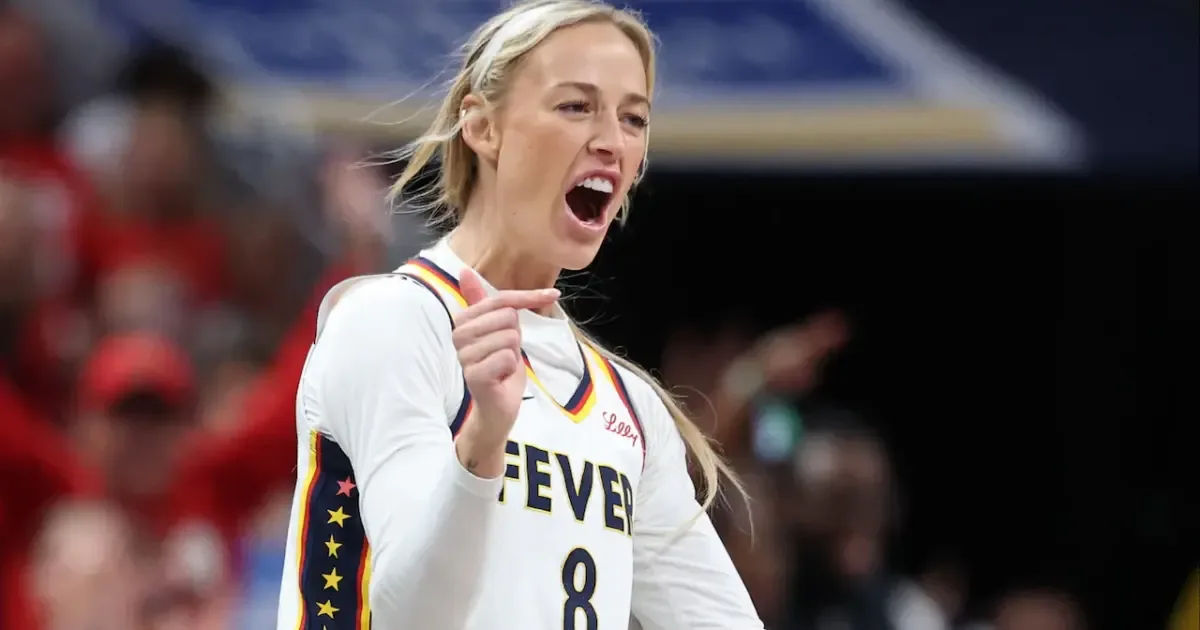
At a Glance
Indiana Fever guard Sophie Cunningham made her television broadcasting debut on USA Network, earning widespread praise for her smooth, natural on-camera presence. Fans and observers quickly speculated about a potential future media career, highlighting a growing trend of WNBA players transitioning into broadcasting roles as the league expands its media footprint.
Key Takeaways
The main points at a glance
- A Natural in Front of the Camera
- What Fans and Viewers Said
- Sophie's On-Court Personality Shines Through Off It
- Why WNBA Players Are Becoming Media Stars
- From Indiana Guard to Future Broadcaster?
- What Comes Next for Cunningham
Indiana Fever guard Sophie Cunningham made her television broadcasting debut on USA Network, and the reaction was immediate. Fans who tuned in for the game found themselves equally captivated by the new voice on their screen. Praise came fast: “smooth,” “natural,” and “future star” filled social media timelines. It felt like a discovery, and for a league that is increasingly becoming a pipeline for media talent, Cunningham’s debut was a standout moment.
Cunningham, known for her scrappy play and big personality on the court, showed a different side. She was calm, clear, and funny without trying too hard. She knew the game inside and out, but what caught people off guard was how easily she made it all look. For a league seeing more of its stars step into media roles, Cunningham’s debut felt like the next chapter in a growing trend. The WNBA has long been a source of articulate, knowledgeable players who transition seamlessly into broadcasting, and Cunningham appears to be the latest example.
A Natural in Front of the Camera
Cunningham did not stumble or freeze. She sounded like someone who had been doing this for years. Her voice was steady; she did not rush or fill silences with nervous chatter. She let the game breathe and picked her moments, showing rare restraint for a first-timer. She broke down plays simply, talking about spacing and screens without jargon, like watching the game with a friend who happens to be a pro. Her warmth came through as she smiled and laughed, looking comfortable in the chair. USA Network’s approach of letting broadcasters be themselves clearly worked for her. The network has a history of featuring current players in its WNBA coverage, and Cunningham took full advantage of the opportunity. Her ability to explain complex basketball concepts in plain language made the broadcast accessible to casual viewers while still satisfying die-hard fans. That balance is hard to achieve, even for seasoned analysts.
What Fans and Viewers Said
Social media reaction was almost entirely positive. One fan wrote, “Sophie Cunningham sounds like she has been doing this for years.” Another said, “Can we get Sophie in the studio every week?” The word “smooth” appeared repeatedly, along with “poised” and “refreshing.” Some fans joked about her future career path, with one posting, “Sophie Cunningham is about to have a longer media career than playing career.” Even fans of rival teams chimed in with praise, a sign that she impressed the league as a whole. The buzz carried into the next day, with clips being shared widely across platforms like X (formerly Twitter) and Instagram. Many viewers noted that Cunningham’s delivery felt authentic, not rehearsed, which is a quality that networks prize. The positive reception was not limited to casual fans; media analysts and sports commentators also took notice, pointing to her debut as a model for how active players can transition into broadcasting without losing their on-court credibility.
Sophie’s On-Court Personality Shines Through Off It
Anyone who has watched Cunningham play knows she brings energy. On the broadcast, that passion came out as enthusiasm and genuine excitement for the game. She did not tone down her personality; she channeled it differently. As a role player rather than a superstar, she offers relatability. Her teammates describe her as the glue of the locker room, and that awareness served her well on TV. She played her part and added value without dominating. Fans who follow her on social media already knew she had a fun personality, but seeing it translate to live television was a pleasant surprise. Authenticity sells, and she has it in spades. Cunningham’s playing style-hustling for loose balls, diving on the floor, and celebrating teammates-translates into a broadcasting style that is energetic but not overbearing. She understands the game from a role player’s perspective, which gives her insights that differ from those of superstars. That perspective is valuable for networks looking to provide diverse viewpoints during broadcasts.
Why WNBA Players Are Becoming Media Stars
Cunningham is not the first active WNBA player to step in front of a camera. The league has seen a wave of players move into media roles as coverage expands. Networks want fresh perspectives, and fans want to hear from athletes directly. The WNBA encourages players to build their brands, which helps when they step into media. Sue Bird, Candace Parker, and Lisa Leslie are retired legends who moved into media, but the trend of active players like Breanna Stewart and A’ja Wilson getting reps is growing. USA Network often features current players, which is how Cunningham got her shot. The WNBA offers media training for rookies focusing on interviews, but players usually seek their own broadcasting opportunities. Cunningham likely had some help preparing, but her natural ease cannot be taught. The league’s rising popularity-driven by record viewership and increased investment from networks-has created more opportunities for players to showcase their personalities off the court. Media companies are eager to tap into the WNBA’s authentic voices, and players like Cunningham are capitalizing on that demand. This trend is not limited to the WNBA; across women’s sports, athletes are becoming sought-after analysts and hosts, but the WNBA has been a particular incubator for media talent because of the league’s emphasis on player empowerment and personal branding.
From Indiana Guard to Future Broadcaster?
It is too early to say Cunningham is leaving basketball for broadcasting, but the buzz raises the question. Based on her debut, the answer seems yes. She has the voice, knowledge, personality, and natural ease that many former athletes lack. One good debut does not guarantee a long career; she will need more reps and experience handling tough moments-such as analyzing a controversial call or discussing a teammate’s poor performance. But she cleared the hardest hurdles in one night. The timing is perfect, as the WNBA is experiencing record popularity and media companies need talent. As an active player, her authenticity is gold. Networks value current players because they bring insider knowledge and credibility that retired players sometimes lose over time. Cunningham’s ability to speak from the perspective of someone still competing gives her analysis an immediacy that resonates with viewers. If she continues to pursue media opportunities, she could follow in the footsteps of players like Chiney Ogwumike, who has balanced playing with a prominent role at ESPN. The path is there, and Cunningham has taken the first step.
What Comes Next for Cunningham
Opportunities like this usually lead to more. USA Network may ask her back, and other networks might reach out. She could do regular pregame or postgame hits. Balancing media work with playing responsibilities is challenging but possible, as other active players have shown. The key is to stay selective. Fans will be watching to see if she builds on her strong start. USA Network would be smart to feature her more, especially as the WNBA season progresses and playoff races heat up. Cunningham has not publicly discussed media ambitions, but the buzz is not going away. For now, fans can enjoy seeing a new side of a player they already love. She surprised everyone, nailed it, and started a conversation that will follow her career. The WNBA’s media landscape is evolving, and players like Cunningham are at the forefront of that change. Whether she becomes a regular broadcaster or just makes occasional appearances, her debut has already made an impact. It has also highlighted the depth of talent in the league-not just on the court, but in front of the camera as well.
Frequently Asked Questions
Did Sophie Cunningham receive formal media training?
The WNBA offers media training for rookies focusing on interviews, but players typically seek their own broadcasting opportunities. Cunningham likely had some preparation, but her natural ease was the key factor.
Will Cunningham continue broadcasting during the season?
It is possible. She will need to balance media work with her playing schedule, but other active players have managed similar commitments. For example, Chiney Ogwumike has worked for ESPN while playing, and Breanna Stewart has made guest appearances on various networks.
What makes Cunningham’s debut stand out?
Her calm, natural delivery and ability to break down plays simply, combined with her warm personality, impressed viewers and sparked speculation about a media career. Unlike some first-time broadcasters who rely on clichés or struggle with pacing, Cunningham sounded like a seasoned pro from the start.