At a Glance
Sanket Kumar’s inspiring journey from missing the JEE Advanced exam by just two marks to becoming a scientist-engineer at ISRO highlights the power of perseverance. Despite facing discouragement, he used YouTube as his primary study tool during a drop year, ultimately achieving his dream in the space sector.
Key Takeaways
The main points at a glance
- Missing the JEE Advanced cutoff by two marks was a significant setback for Sanket Kumar.
- Despite advice to the contrary, Sanket chose to take a drop year to retake the exam.
- He utilized YouTube and free online resources as his primary study method, bypassing expensive coaching centers.
- Sanket’s dedication led him to a career as a scientist-engineer at ISRO, a highly respected organization.
- His story emphasizes that there are multiple paths to success beyond traditional elite institutions.
- Sanket’s core message is to persevere through failure and utilize available resources.
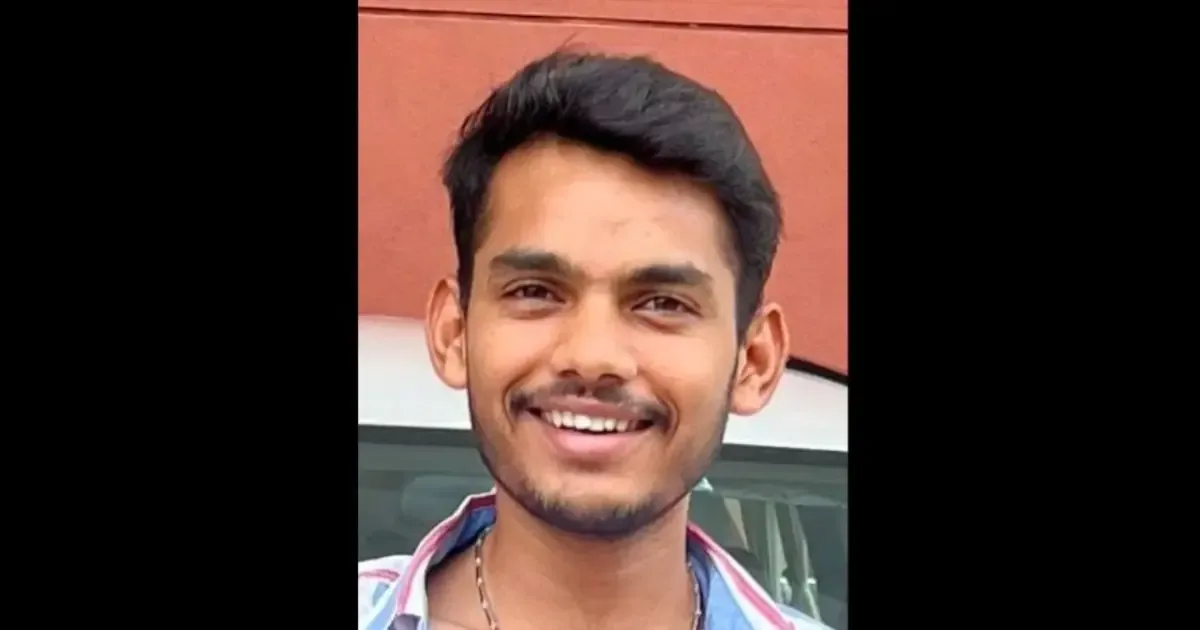
Sanket Kumar sat in front of his laptop, staring at the screen. His hands were trembling as he logged in to check his JEE Advanced results. What he saw stopped him cold: he had missed the cutoff by just two marks. This tiny difference felt like the end of the road, but it was just the beginning of a different journey. Today, Sanket Kumar is a scientist-engineer at the Indian Space Research Organisation (ISRO), a prestigious space agency, proving that failure can be a stepping stone to great success. His story, which has been covered by NDTV Education and The Times of India, has resonated with thousands of students across India who face similar pressures from the highly competitive educational system.
The Joint Entrance Examination (JEE) Advanced is one of the toughest entrance exams in the world. Every year, over two lakh students appear for JEE Advanced, which grants admission to the elite Indian Institutes of Technology (IITs). The margin for error is razor-thin, and missing the cutoff by even a single mark can derail the plans of even the most dedicated aspirants. For Sanket, a bright student from Meerut, Uttar Pradesh, the two-mark gap was both a heartbreak and a defining moment. It forced him to reconsider his options, confront societal expectations, and ultimately chart his own course.
The Two-Mark Heartbreak
In 2021, Sanket Kumar was among the thousands of students who had dedicated years of intense preparation to crack JEE Advanced. He had spent countless hours solving problems, attending coaching classes, and burning the midnight oil. But when the results were declared, he discovered he had missed the qualifying cutoff by a mere two marks. In a system where every mark matters, this narrow miss was devastating. Many students in his position would have settled for a less preferred engineering college or given up on their dreams entirely. However, for Sanket, the initial shock gave way to a deep resolve. He refused to let this setback define his future. Instead, he saw it as a temporary hurdle and began to explore alternative ways to achieve his goal of working in the space sector.
The pressure on Indian students to perform well in board exams and entrance tests is immense. Families often invest heavily in coaching, and the expectation is that a top rank will lead to a secure, high-paying job. When Sanket missed the cutoff, he not only faced his own disappointment but also the concern of his family and teachers. Many advised him to accept a seat in a lesser-known college rather than risk another year of uncertainty. Taking a “drop year” in India is often stigmatized, seen as a waste of time or a sign of failure. Yet, Sanket chose to listen to his inner conviction rather than the chorus of well-meaning advice.
Why Everyone Said ‘Don’t Take a Drop Year’
The decision to take a drop year for JEE preparation is not taken lightly. Students who take a gap year face significant pressure: they lose one year of their career progression, they may feel isolated from friends who have moved on to college, and they risk performing worse due to increased anxiety. Many counselors and teachers argue that it is better to accept a decent college than to gamble on another attempt. In Sanket’s case, his family and teachers were worried about the psychological toll and the possibility that he might not improve his score. They urged him to move forward with whatever admission he could get.
But Sanket had a different vision. He knew that his ultimate aim was not just any engineering degree, but a career that involved space research and cutting-edge technology. The Indian Space Research Organisation (ISRO) has long been a dream employer for science and engineering graduates in India. Its achievements, from the Mars Orbiter Mission (Mangalyaan) to the Chandrayaan lunar missions, have inspired generations. Sanket believed that if he could secure a position at ISRO, the extra year of preparation would be worth it. He also realized that the conventional path of IIT admission was not the only route to his dream. ISRO recruits scientists and engineers through various channels, including the Indian Space Research Organisation’s own recruitment exams and through the Centralised Recruitment Board. Sanket’s research showed him that he could bypass the IIT system entirely if he focused on building a strong foundation in physics, mathematics, and engineering concepts.
YouTube Became His Classroom
One of the most remarkable aspects of Sanket’s story is how he prepared for his second attempt. Without the financial resources to enroll in expensive coaching programs, he turned to the internet. According to The Times of India, Sanket relied heavily on YouTube lectures for his studies. He would search for tutorials on specific topics, watch them repeatedly, and pause to solve problems on his own. Platforms like YouTube, along with free online courses and open educational resources, offered him a virtual classroom that was available 24/7. He also used online forums and practice test websites to simulate exam conditions. This self-directed learning required immense discipline-no teacher to oversee his progress, no fixed schedule, and no one to push him when he felt demotivated.
Yet, Sanket thrived in this environment. He learned to manage his time, set daily goals, and track his own improvement. He focused on understanding concepts deeply rather than memorizing formulas. His approach proved that with determination and the right use of technology, a student can overcome the lack of formal coaching. This is a crucial lesson for millions of Indian students who cannot afford the high fees of private coaching institutes. The digital divide is still a reality, but as internet penetration increases, more students can access quality education from their homes. Sanket’s story is a testament to the power of free online content when combined with personal grit.
The ISRO Selection: A Dream Realized
After months of rigorous self-study, Sanket Kumar appeared for the recruitment examination conducted by ISRO. The selection process for scientist-engineer positions is highly competitive. It involves a written test, a technical interview, and a thorough evaluation of the candidate’s knowledge and problem-solving abilities. ISRO looks for individuals who not only have strong academic backgrounds but also demonstrate creativity, teamwork, and a passion for space exploration. Sanket’s preparation paid off: he was selected as a scientist-engineer at ISRO. This role places him among the ranks of professionals who contribute to India’s space missions-designing satellites, developing propulsion systems, analyzing data from space probes, and working on projects that push the boundaries of human knowledge.
The announcement of his selection made headlines, and his story quickly went viral. NDTV Education and The Times of India both covered his journey, highlighting the dramatic turnaround from a two-mark failure to a coveted position at ISRO. Social media users praised his resilience, and many students wrote to him saying they felt inspired to keep going despite their own setbacks. Sanket’s achievement is particularly notable because it shows that ISRO is not an impossible dream for those who do not make it to IITs. The organization values talent and determination over the name of the institution one attended.
What This Means for Other Students
Sanket Kumar’s story carries a powerful message for the Indian education system and the millions of students who navigate it. For decades, the mantra has been “crack JEE Advanced or settle for second best.” This belief creates enormous pressure and leads to a high rate of stress, anxiety, and even suicide among teenagers. Sanket’s experience challenges this narrative. He proves that there are multiple pathways to a successful career in science and technology. Students who miss the cutoff for JEE, or any other competitive exam, should not lose hope. They can explore alternative entrance exams, such as those conducted by ISRO, the Defence Research and Development Organisation (DRDO), the Bhabha Atomic Research Centre (BARC), and other national laboratories. State engineering colleges, private universities, and online degree programs also offer quality education and can lead to excellent job opportunities.
Moreover, Sanket’s reliance on online resources underscores the importance of digital literacy. In a country where coaching fees can run into lakhs of rupees, free platforms like YouTube, Khan Academy, and NPTEL can level the playing field. However, the availability of content alone is not enough; students need guidance on how to use these resources effectively. Schools and communities could play a role by setting up study groups or mentoring programs that help self-learners stay motivated. Sanket’s success also highlights the value of resilience and a growth mindset. He did not view the two-mark miss as a personal failure but as a signal to try a different approach. This attitude is something that can be cultivated and taught.
Sanket’s Message: ‘Keep Going’
In interviews, Sanket Kumar has emphasized that his story is not about him alone. He hopes it will encourage other students who are facing similar disappointments. His core message is simple: “Keep going. Do not give up. Use the resources you have, and believe in yourself.” He also advises students to be open to unconventional paths. Not every successful engineer or scientist graduates from an IIT, and not every IIT graduate becomes a top scientist. Passion, hard work, and smart use of available tools can open doors that seem closed.
Sanket’s journey from a two-mark setback to ISRO is a reminder that success is not linear. It involves setbacks, doubts, and moments of despair. But it also involves courage, persistence, and the willingness to learn from failure. As India continues to produce world-class scientists and engineers, stories like Sanket’s will inspire the next generation to dream big and work hard, no matter what obstacles they face. The Indian Space Research Organisation, with its ambitious plans for human spaceflight (Gaganyaan) and interplanetary missions, will benefit from talented individuals like Sanket who bring not just technical skills but also a spirit of resilience.
For now, Sanket Kumar is settling into his role at ISRO, likely working on projects that will contribute to India’s growing presence in space. His story has already been shared widely on social media, and he has received messages of congratulations from across the country. But perhaps the most meaningful impact is on the students who read about him and think, “If he can do it, so can I.” That is the true legacy of his achievement.
Frequently Asked Questions
How close was Sanket Kumar to qualifying for JEE Advanced?
Sanket Kumar missed the cutoff for JEE Advanced by a very narrow margin of just two marks. This small difference meant he did not qualify for the exam despite his hard work.
What did people advise Sanket Kumar to do after his JEE setback?
Most of Sanket’s family and teachers advised him against taking a ‘drop year’ to prepare again. They suggested he accept admission into a less prestigious college available to him rather than risk another year of study.
How did Sanket Kumar prepare for his second attempt at the exam?
Instead of traditional coaching, Sanket turned to online resources, primarily using YouTube for his studies. He watched lectures, paused and rewound videos to understand complex topics, and learned at his own pace.
What is Sanket Kumar’s current profession?
Sanket Kumar is currently working as a scientist-engineer at the Indian Space Research Organisation (ISRO). This role involves contributing to significant space exploration and satellite projects for India.
What is the main message from Sanket Kumar’s story?
Sanket’s story conveys that failure is not the end and that there are multiple paths to success. It encourages students to persevere, utilize available resources like the internet, and not let setbacks define their future.
Does Sanket Kumar believe expensive coaching is necessary for success?
No, Sanket’s experience demonstrates that success is achievable without expensive coaching centers. He found that the vast amount of free educational content available online, combined with self-discipline, was sufficient for him to achieve his goals.
References
- Meerut Student Who Missed JEE Advanced By 2 Marks Selected As ISRO Scientist – Original report (NDTV India)
- Meerut Student Who Missed JEE Advanced By 2 Marks Selected As ISRO Scientist – NDTV – Duplicate of the original NDTV article; no additional unique content was extractable.
- ‘Relied on YouTube lectures’: After JEE setback, Meerut youth lands scientist-engineer role at ISRO – The Times of India – Added the detail that Sanket relied on YouTube lectures for his preparation, providing a unique angle on his self-study methods.
- UP Board 12th Result 2026 Announced | Direct Download Link on NDTV – NDTV – NDTV
- LIVE: Bihar Board Class 12 Result Declared – NDTV – NDTV
- Uttarakhand Board Class 10 Result 2026 DECLARED | UK Board Scorecard Download Direct Link – NDTV – NDTV