
At a Glance
In Indian mythology, Lakshmi is the goddess of wealth. Saraswati is the goddess of knowledge. They are often seen as complementary forces. But in today's Bollywood, one is clearly winning.
Key Takeaways
The main points at a glance
- The Metaphor: What Adil Hussain Said
- The Reality: How Star Power Drives Box Office
- The Struggle: Small Films Without A-Listers
- Why This Matters: The Broader Industry Debate
- What Can Change? Possible Paths for Content-Driven Cinema
In Indian mythology, Lakshmi is the goddess of wealth. Saraswati is the goddess of knowledge. They are often seen as complementary forces. But in today’s Bollywood, one is clearly winning.
“Lakshmi is dominating Saraswati,” says actor Adil Hussain. It is a striking way to describe what is happening in Indian cinema right now. The money goddess has pushed the art goddess aside. And small, story-driven films are the ones paying the price.
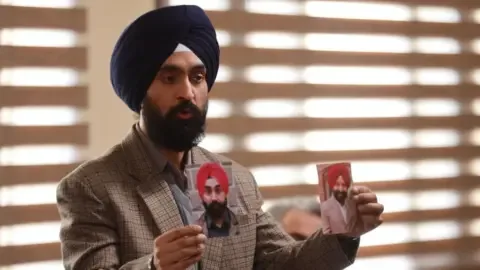
Hussain, a graduate of the National School of Drama (NSD), recently spoke to NDTV about the struggles that content-driven movies face in India. Films that do not have a big star attached often find it hard to even get a proper release. They struggle for screens, for marketing budgets, and for audience attention.
The actor used the metaphor to sum up a problem that many filmmakers, critics, and film lovers have been talking about for years. The industry is heavily tilted in favor of star-powered blockbusters. Smaller films, no matter how good they are, often get left behind.
The Metaphor: What Adil Hussain Said
Hussain did not hold back when he described the current state of affairs. He said the “ecosystem” is skewed. That word is important. It means the system is not balanced. It is designed to favor one type of cinema over another.
“Lakshmi is dominating Saraswati,” Hussain said. It is a simple but powerful image. Lakshmi brings money, success, and box office numbers. Saraswati brings art, culture, and creativity. In an ideal world, both should coexist. But right now, the actor argues, money is calling all the shots.
Hussain knows this struggle firsthand. He is an actor who has worked in both commercial and independent films. You have seen him in Hollywood movies like “Life of Pi” and in acclaimed Indian films like “Mukti Bhawan” and “English Vinglish.” He has also appeared in smaller, more experimental projects that barely got noticed.
He understands what it takes to make a film that is not led by a big star. And he knows how hard it is to get that film seen by audiences.
The actor’s point is not just about his own experience. He is speaking for a whole group of filmmakers and actors who feel that the system is stacked against them. They pour their hearts into making good films, but the market does not always reward quality. It rewards star power.
The Reality: How Star Power Drives Box Office
Let us look at how the system works. In India, especially in Bollywood, a handful of actors can guarantee a certain level of box office success. Names like Shah Rukh Khan, Salman Khan, Aamir Khan, Akshay Kumar, and a few others have been the pillars of the industry for decades.
When a film starring one of these actors releases, it gets everything. Hundreds of screens across the country. Massive marketing campaigns. Television ads. Billboards. Social media buzz. The film is treated like an event.
But when a small film with unknown actors or lesser-known faces releases, it is a different story. The film might get a handful of screens, if any. The marketing budget is tiny or nonexistent. The media barely covers it. And if the film does not perform well in its first weekend, it is pulled from theaters quickly.
This is not just a feeling. It is a business reality. Multiplexes and single-screen theaters are businesses. They want to show films that will fill seats and sell popcorn. A film with a superstar is a safe bet. A small film is a risk.
The result is that many excellent films are never seen by a wide audience. They get lost in the noise. And over time, even filmmakers who want to make small, meaningful stories find it harder to justify the effort. The system pushes everyone toward making bigger, safer, more star-driven projects.
Hussain’s metaphor captures this perfectly. Lakshmi, the goddess of wealth, is the star system. She brings the money. Saraswati, the goddess of knowledge, is the art. She brings the story. But in today’s market, Lakshmi is in charge.
The Struggle: Small Films Without A-Listers
So what does this struggle look like on the ground? Consider a filmmaker who has made a small, thoughtful film. The script is strong. The performances are good. But the cast does not include any A-list stars. The film is not backed by a major studio with deep pockets.
First, the filmmaker has to find a distributor who is willing to take a chance. This is not easy. Distributors are businesspeople. They look at what has worked before. If the film does not have a recognizable name, they often say no.
If a distributor does agree, the film gets a limited release. Maybe a few shows in a few cities. The audience has no idea the film even exists. There is no big advertising campaign to tell them. No superstar’s face on a billboard. No hype on social media.
Then there is the timing. Big films often take over all the screens during holiday weekends or festive seasons. Small films get pushed to less favorable dates. They are expected to perform despite minimal support.
And if the film does well in its first week despite these odds, it is a small miracle. But often, the opposite happens. The film opens to empty theaters. The multiplex owner sees the low numbers and reduces the number of shows. Within two weeks, the film is gone.
This cycle is deeply discouraging for independent filmmakers. Many talented directors and writers end up making compromises. They add a star to the cast, even if the star does not fit the role. They change the script to make it more commercial. They chase trends instead of telling the story they wanted to tell.
Hussain’s comment shines a light on this ongoing struggle. He is not just talking about his own films. He is talking about an entire segment of Indian cinema that is being squeezed out.
It is important to note that this is not a new problem. For decades, Indian cinema has been dominated by star vehicles. But in recent years, the gap has grown wider. The costs of making and marketing a film have gone up. The pressure to deliver a big opening weekend has intensified. And star power has become more important than ever.
At the same time, there have been some hopeful signs. Small films have occasionally broken through. Movies like “The Lunchbox,” “Masaan,” “Court,” and “Newton” found audiences, both in India and abroad. They won awards and critical praise. But these are exceptions, not the rule. For every “Lunchbox” that succeeds, there are a hundred small films that disappear without a trace.
Why This Matters: The Broader Industry Debate
Hussain is not the first person to talk about this problem. Many actors, directors, and critics have spoken out about the dominance of star-driven cinema. But his metaphor is hitting a nerve because it frames the debate in a way that is easy to understand.
Lakshmi versus Saraswati. Money versus art. Box office versus content. This is a tension that runs through the entire Indian film industry.
On one side, you have the commercial juggernauts. These are the films that break box office records. They are often big, loud, and full of spectacle. They feature the biggest stars. They are designed to appeal to the widest possible audience. They are about entertainment first and everything else second.
On the other side, you have the content-driven films. These are smaller, more intimate stories. They focus on character, dialogue, and social issues. They may or may not have famous faces. They are often made on modest budgets.
In an ideal world, both types of films would have space to thrive. Audiences would have choices. The market would reward diversity. But that is not what is happening.
The imbalance has real consequences. For one, it limits the kind of stories that get told. If only star-driven films can succeed, then only certain types of stories are allowed to exist. Complex, quiet, or challenging narratives get pushed aside. The industry becomes homogenized.
It also affects the careers of actors like Adil Hussain. He is a classically trained actor from NSD, one of the best drama schools in the country. He has the skills to play a wide range of roles. But if the only roles available are in big commercial films, his talent is not fully used.
Many other actors have voiced similar frustrations. Nawazuddin Siddiqui, another NSD graduate who rose to fame through small films, has spoken about how the industry treats character actors. Irrfan Khan, before his untimely death, often talked about the need for better scripts and more support for independent cinema. These voices echo the same concern: that the system is not working for everyone.
The debate is not just about money. It is about the health of the film industry as a whole. A cinema culture that only values box office numbers is a shallow one. It loses the richness that comes from different voices, different stories, and different approaches to filmmaking.
Hussain’s comment is a reminder that this debate is still alive. It has not been resolved. And as long as small films continue to struggle, the conversation will continue.
What Can Change? Possible Paths for Content-Driven Cinema
So what can be done? Is there a way to balance Lakshmi and Saraswati? Can small, content-driven films find a place in a star-centric market?
One major development has been the rise of streaming platforms. Services like Netflix, Amazon Prime Video, Hotstar, and others have changed the game. They are hungry for content. They are willing to take risks on stories that traditional distributors might reject.
For small films, streaming offers a lifeline. Instead of fighting for a handful of theater screens, these films can reach millions of viewers at home. The constraints of box office numbers and weekend collections do not apply in the same way. A film can find its audience over time, rather than in a single weekend.
Many filmmakers have already taken advantage of this. Movies like “Bulbbul,” “Serious Men,” “Eeb Allay Ooo!,” and “Soni” found audiences on streaming platforms. They might have struggled in theaters, but online, they found a home.
Streaming also allows for more diverse stories. Since the platform is not tied to a single theater release, it can experiment with different genres, languages, and styles. This is good news for content-driven cinema.
But streaming is not a perfect solution. The money from streaming deals is often less than what a successful theatrical release can generate. And the theatrical experience itself has its own value. There is a magic to watching a film on the big screen with an audience. Many filmmakers still aspire to that.
Another possible path is government support. Some countries have film funds and grants that help independent filmmakers. India has some schemes, but they are not always easy to access or generous enough to make a real difference.
There is also the role of film festivals. Festivals can give small films visibility and credibility. A strong festival run can lead to distribution deals, critical attention, and even award buzz. But festivals are not a mass-market solution. They reach a niche audience, not the general public.
Some in the industry argue for more collaboration between commercial and independent cinema. Big stars could use their power to support small films. They could act in them for lower fees. They could produce them. They could use their social media platforms to promote them. A few stars have done this. Aamir Khan, for instance, has produced and acted in smaller films alongside his big projects. But this is still rare.
Then there is the audience itself. In the end, it comes down to what people choose to watch. If more people actively seek out small films, the market will respond. But changing audience habits is slow work. The pull of a big star is strong.
Adil Hussain’s metaphor is a call to reflect. It asks us to think about what we value. Do we value wealth above all else? Or do we also value knowledge, art, and culture?
For now, Lakshmi is still in charge. But Saraswati has not given up. There are still filmmakers making brave, honest, and beautiful films. There are still actors like Adil Hussain who are willing to speak out. And there are still audiences who crave something more than just a star’s face on a poster.
The balance may shift slowly. But conversations like this one are a necessary first step. When an actor of Hussain’s caliber uses a metaphor that sticks, it forces people to pay attention. It makes the invisible struggle visible.
In the end, the goal is not to drive Lakshmi away. The goal is to give Saraswati a seat at the table. Not as a guest, but as an equal partner. That is the cinema that Adil Hussain believes in. And that is the cinema that deserves a chance to be seen.
Frequently Asked Questions
What does Adil Hussain mean by "Lakshmi is dominating Saraswati"?
Adil Hussain uses this metaphor to describe the current state of Indian cinema. Lakshmi represents wealth and box office success, while Saraswati represents art and knowledge. He feels that money and commercial success are currently prioritized over artistic quality and storytelling in the industry.
Why do small films without big stars struggle in India?
Small films struggle because they find it hard to get a proper release, secure enough screens, and get adequate marketing budgets. The industry heavily favors films with star power, which are seen as a safer bet for box office success.
How does star power affect a film's release in India?
Films with big stars receive extensive support, including hundreds of screens, massive marketing campaigns, and significant media attention. In contrast, smaller films with less-known actors often get limited screens and minimal promotion, making it difficult for them to reach audiences.
What is the "ecosystem" Adil Hussain refers to in Indian cinema?
Hussain describes the film industry's "ecosystem" as skewed, meaning it is unbalanced. This system is designed to favor star-powered blockbusters over smaller, content-driven films, making it harder for the latter to succeed.
What happens to small films if they don't perform well immediately?
If a small film does not perform well in its opening weekend, it is often quickly removed from theaters. This is because cinema owners are businesses that prioritize films likely to fill seats and generate revenue.
What compromises do independent filmmakers sometimes make?
To navigate the system, independent filmmakers might compromise by adding a star to the cast, even if they don't fit the role. They may also alter scripts to be more commercial or chase trends instead of telling the story they originally intended.