
At a Glance
A paraglider in China became entangled on a tower crane, dangling 60 metres in the air in a terrifying incident captured on a viral video. While the video shows the paraglider stuck, it does not reveal the rescue or the paraglider’s condition, leaving many questions unanswered about the event that occurred in China. The footage has sparked global concern and discussions about paragliding safety, especially near urban obstacles.
Key Takeaways
The main points at a glance
- A paraglider in China was left dangling 60 metres (197 feet) in the air after getting tangled on a tower crane.
- A video of the terrifying incident quickly went viral on social media, drawing international attention.
- The exact location, date, and the paraglider’s identity and condition remain unknown, as the video does not show the rescue.
- The incident highlights the significant risks of paragliding near urban obstacles like construction cranes.
- Experts emphasize the danger of heights and the unpredictable factors like wind at such altitudes.
- The viral footage has prompted discussions on paragliding safety regulations and the importance of pilot awareness and emergency preparedness.
Paraglider Stuck on Crane in China: Terrifying Rescue Video Emerges
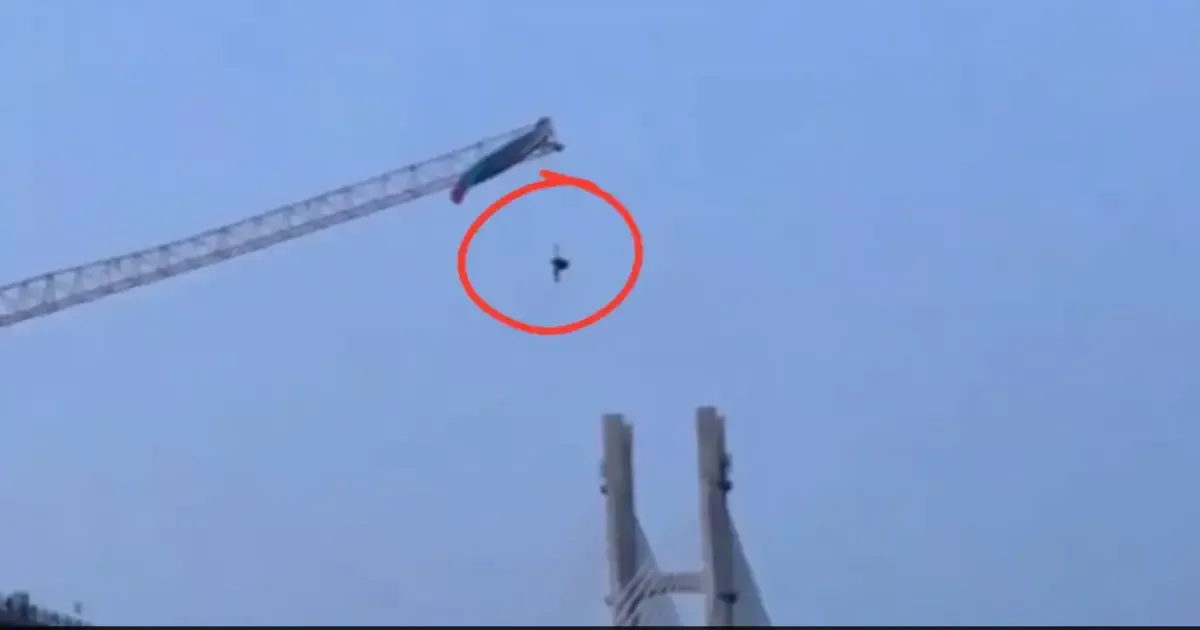
A paraglider in China faced a terrifying ordeal after becoming entangled on a towering crane, dangling approximately 60 metres (197 feet) in the air. A dramatic video capturing the moment of peril quickly went viral online, showing the individual suspended precariously above the ground. The footage highlights the extreme danger of the situation, with the paraglider caught on the metal structure of the crane.
While the video does not show the paraglider’s eventual freedom, it vividly conveys the panic and risk involved. The person appears to be suspended by their harness or the glider’s lines. Reports indicate the incident occurred in China, though the specific city and date remain unconfirmed. The video’s rapid dissemination across social media platforms like Weibo and Twitter drew widespread shock and concern from viewers worldwide.
News outlets, including NDTV and Metro.co.uk, have reported on the event, corroborating the core facts: a paraglider became stuck on a crane at a significant height, with the harrowing moment captured on camera. The swift spread of the video underscores the dramatic nature of the incident.
Currently, no official statement from Chinese authorities has been released. It remains unclear whether the paraglider was safely rescued or sustained injuries, as the video concludes before any rescue efforts are depicted. Such incidents, while rare, serve as stark reminders of the inherent risks in adventure sports, particularly when conducted near tall structures like cranes. The recording of this event may prove valuable for authorities investigating the circumstances.
The shaky, ground-level video shows the paraglider’s silhouette against the sky, ensnared by the crane’s arm. Slight movements suggest the person was conscious and attempting to extricate themselves. Witnesses on the ground likely alerted emergency services, but the duration of the paraglider’s predicament before help arrived is unknown, leaving many questions unanswered. Despite the missing information, the story has captured global attention, serving as a potent warning about how quickly adventure sports can turn dangerous.
The Extreme Danger of Being 60 Metres Up
A height of 60 metres is equivalent to a 20-storey building, a fall from which is almost invariably fatal. The paraglider was in a life-threatening situation, suspended at an extreme altitude.
Several factors contributed to the extreme danger. Firstly, cranes are active, mechanical structures; the paraglider could have been caught in moving parts or cables. Secondly, wind speeds at 60 metres are significantly stronger and more unpredictable than at ground level, posing a risk of sudden gusts exacerbating the situation.
Thirdly, any sharp edges on the crane could have torn the paraglider’s harness or lines, leading to an immediate fall. The individual’s survival hinged on the integrity of their equipment and the swiftness of any rescue operation.
Rescuing someone from a crane presents considerable challenges, often requiring specialized equipment like basket lifts or ladder trucks, and potentially helicopters. However, no details regarding the rescue operation for this specific incident are available.
The psychological toll of being suspended 60 metres above the ground, unable to move, is immense, likely inducing severe shock or panic in the paraglider.
This danger is amplified in urban environments where cranes are prevalent. Construction sites with tall cranes can be difficult to spot from the air, posing a risk to low-flying paragliders who might not see them until it is too late.
The 60-metre height is consistent with many tower cranes used in Chinese construction, some of which exceed 100 metres. The paraglider was fortunate not to be entangled on an even taller structure.
Experts note that falls from over 10 metres are frequently fatal. A fall from 60 metres offers virtually no chance of survival, suggesting the paraglider’s survival was contingent on being tangled rather than free-falling.
Risks in Urban Paragliding: Navigating Obstacles
Paragliding, a sport involving foot-launched gliders, relies on wind and thermals for flight. While exhilarating, it carries significant risks, especially in urban settings.
A primary hazard in urban paragliding is collision with obstacles such as cranes, power lines, buildings, and bridges. Paragliders have limited maneuverability and can become entangled if they fly too low or too close to structures.
Paragliding has gained popularity in China, but regulations vary. While some cities restrict flights near airports, busy roads, or construction sites, these rules are not universally enforced.
Similar incidents have occurred globally. A paraglider in Switzerland was rescued by helicopter after getting caught on a cable car line in 2019. Tragically, a paraglider in Australia died after hitting a power line in 2021, underscoring the documented risks.
Urban paragliding demands specialized training and heightened awareness. Pilots must meticulously plan routes, identify potential obstacles, and maintain safe altitudes above structures. Despite careful planning, unforeseen events can occur.
Weather conditions are a critical factor. Strong winds can divert a paraglider off course, while turbulence near buildings can impede control. Sudden wind shifts can force a pilot towards an obstacle they were attempting to avoid.
Equipment failure, such as a broken line or torn fabric, is another risk. However, in this specific case, the paraglider appeared to be entangled rather than suffering from equipment malfunction, with the crane being the primary issue.
Safety experts strongly advise paragliders to avoid construction sites altogether. Cranes, often unlit and difficult to see, pose a particular danger due to their ability to snag lines and harnesses.
Many construction cranes in China are situated in densely populated areas. Paragliders flying over cities must exercise extreme caution, as this incident demonstrates that no flight is entirely risk-free.
Social Media’s Role: The Viral Video Phenomenon
The video of the paraglider dangling from the crane rapidly spread across social media platforms, including Weibo, Twitter, and Reddit. Thousands of users shared the footage, expressing shock and fear.
Many viewers voiced concerns for the paraglider’s safety and inquired about potential rescue methods. The video became a focal point for discussions on adventure sports safety, with some sharing similar accident accounts.
The video’s viral nature is attributed to its inherently dramatic content. The sight of a person suspended 60 metres in the air is compelling, and the raw, unedited footage enhances its impact.
Social media facilitates rapid information dissemination. Within hours, international news outlets like NDTV and Metro.co.uk picked up the story, rapidly extending its reach to a global audience.
However, viral videos can also propagate misinformation. Without official confirmation, details may become distorted. Relying on verified sources is crucial when reporting on such events.
The incident also ignited a debate regarding the regulation of paragliding near urban areas, with some advocating for stricter rules and others defending the sport when practiced responsibly.
The online reaction highlights the significant public attention these incidents attract, fueled by fascination with near-death experiences and survival narratives. The video’s spread also underscores the role of citizen journalism in documenting events.
As of now, no official statement from Chinese authorities or the paraglider has been shared publicly on social media, though this may change as more information becomes available.
Unanswered Questions: The Missing Details
Despite extensive coverage, numerous details surrounding this incident remain unknown. The exact location in China, including the specific city or province, has not been identified in available reports.
Furthermore, the date of the incident is unconfirmed, making it difficult to ascertain the timeline of events and any subsequent rescue.
The identity of the paraglider, including their age, gender, and experience level, has not been disclosed. This lack of information prevents an assessment of whether they were a novice or an experienced pilot.
Crucially, the paraglider’s condition-whether they survived or were injured-is unknown, as the video does not depict the rescue, and no official update on their status has been published.
The method of rescue also remains a mystery. Details regarding the involvement of firefighters, helicopters, or the paraglider’s self-rescue efforts are unavailable.
This information gap may stem from an ongoing investigation by Chinese authorities or a lack of access to further details by reporting news outlets.
It is possible the paraglider was rescued quickly without serious injury, but this cannot be assumed without confirmation. The uncertainty surrounding the event adds to its intrigue.
For now, the narrative remains incomplete. Readers are advised to approach conclusions with caution until official information is released, recognizing that the viral video presents only a partial account.
Moving Forward: Lessons in Paragliding Safety
This incident is expected to spur discussions on paragliding safety in China, potentially leading to revised regulations for adventure sports in urban proximity. Paragliding organizations may also update their training protocols.
A primary safety lesson is the critical importance of obstacle avoidance. Paragliders must meticulously scout their flight paths for tall structures and maintain safe altitudes to prevent entanglement.
Another key takeaway is the necessity of emergency preparedness. Paragliders should be equipped with knowledge and tools, such as a knife for cutting lines, and a means to contact help, like a phone or radio, in case of entanglement.
For construction sites, the incident highlights the need for enhanced visibility measures. Cranes should be clearly marked with lights or flags, and safety netting or barriers could be considered to mitigate risks.
Social media can serve a positive function by raising awareness. The viral video has effectively alerted the public to the dangers of urban paragliding, potentially encouraging greater caution among pilots.
Ultimately, the primary responsibility rests with the individual pilot. Paragliding is an inherently high-risk sport, and pilots must acknowledge and manage these risks, flying only within their capabilities and avoiding unnecessary dangers.
The paraglider’s fate, whether survival or injury, could significantly influence future safety measures and regulations. Their story may serve as a powerful cautionary example.
The global community awaits further details, with the video serving as a stark reminder of the fragility of life when airborne at significant heights.
This incident also demonstrates the profound impact of video in news dissemination, with a single clip reaching millions and potentially driving public discourse and policy change.
As more information emerges, this story will likely evolve. However, the core message remains clear: adventure sports demand vigilance, respect for the environment, and an unwavering commitment to safety.
Frequently Asked Questions
What happened to the paraglider stuck on the crane in China?
A paraglider became entangled on a tower crane in China and was left dangling about 60 metres in the air. A video of the incident went viral, showing the paraglider suspended by their equipment.
Was the paraglider rescued?
The available video footage does not show the rescue, and there has been no official confirmation regarding the paraglider's condition or how they were freed. Details about the rescue remain unknown.
Where and when did this paraglider incident occur?
The incident reportedly took place in China, but the specific city and the exact date of the event have not been confirmed. The video surfaced online, leading to widespread reporting.
How dangerous is it to paraglide near tall structures like cranes?
Paragliding near tall structures like cranes is extremely dangerous due to potential entanglement, unpredictable winds at higher altitudes, and the risk of equipment damage. A fall from 60 metres is typically fatal.
What are the risks associated with urban paragliding?
Urban paragliding carries risks such as colliding with or becoming entangled in obstacles like cranes, power lines, and buildings. Pilots must be highly aware of their surroundings and maintain safe altitudes.
How did the video of the paraglider go viral?
The video gained viral status due to its dramatic and frightening content, showing a person in a life-threatening situation. Social media platforms allowed for rapid sharing, reaching a global audience and prompting news coverage.
What lessons can be learned from this paraglider incident?
The incident underscores the importance of obstacle avoidance, careful flight planning, maintaining safe altitudes, and emergency preparedness for paragliders. It also highlights the need for better safety awareness and potentially stricter regulations for adventure sports near urban construction sites.
References
- Paraglider Dangles 60 Metres In Air After Getting Stuck On Crane In China – Original report (NDTV World)
- Paraglider left dangling 60 metres in the air after getting caught on tower crane in China – Metro.co.uk – Confirms the same incident with a slightly different headline, but full article text was unavailable.
- READ: Text of US-Iran memorandum of understanding released by US – ABS-CBN – ABS-CBN
- 'Shoebox' flat reform leaves low-income Hong Kong residents in limbo – ABS-CBN – ABS-CBN
- 40M Filipinos do not have access to clean and potable water: DENR – ABS-CBN – ABS-CBN