At a Glance
At the UN Human Rights Council, Indian diplomat Anupama Singh labeled Pakistan a ‘Frankenstein state’, stating it is now ‘shocked by its own terror monsters.’ She accused Pakistan of using terrorism as state policy and creating militant groups that have turned against it. Singh rejected Pakistan’s allegations on Kashmir, calling them propaganda, and highlighted human rights concerns in Pakistan-occupied Kashmir.
Key Takeaways
The main points at a glance
- India’s diplomat Anupama Singh called Pakistan a ‘Frankenstein state’ at the UNHRC, citing its support for militant groups that have become a threat to the country itself.
- Singh rejected Pakistan’s allegations regarding human rights in Kashmir, reiterating that the region is an integral part of India.
- The diplomat accused Pakistan of using terrorism as a tool of state policy, including training and funding militants.
- India highlighted alleged human rights abuses and lack of freedoms in Pakistan-occupied Kashmir, questioning Pakistan’s moral authority to speak on human rights.
- The strong language used by India is seen as a strategic move to counter Pakistan’s criticism and put Islamabad on the defensive.
- The incident reflects the ongoing diplomatic tensions between India and Pakistan, particularly concerning the Kashmir dispute and terrorism.
India Slams Pakistan at UN: A ‘Frankenstein State’ Rebuke
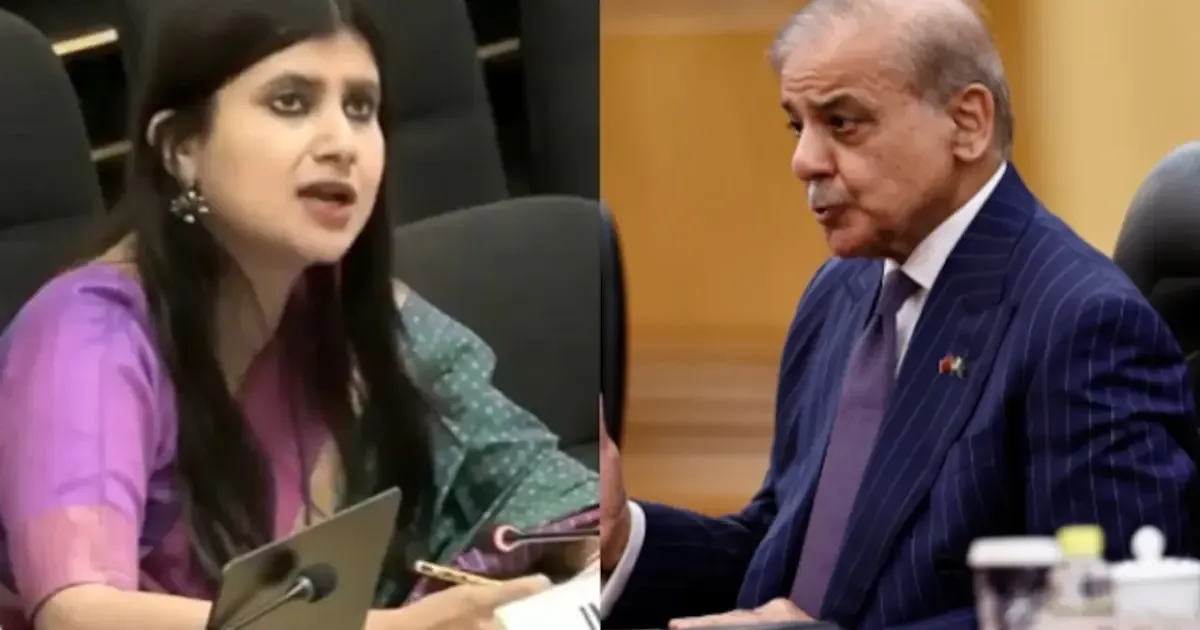
An Indian diplomat has sharply criticized Pakistan at the United Nations Human Rights Council (UNHRC), labeling it a ‘Frankenstein state’ that is now ‘shocked by its own terror monsters.’ The strong statement was made by Indian First Secretary Anupama Singh during a session in Geneva.
Singh’s remarks came after Pakistan raised allegations concerning human rights in Kashmir. She accused Pakistan of creating militant groups to use as weapons against its neighbors, only for these groups to eventually turn against their creator.
The phrase ‘A Frankenstein state is shocked by its own terror monsters’ directly addressed Pakistan’s long-standing support for non-state armed groups. This strong rebuke was noted by many delegates as one of the most forceful public criticisms India has delivered at the UN in recent years.
Anupama Singh’s Statement at the UNHRC
In her address, Anupama Singh systematically rejected Pakistan’s claims about Kashmir, calling them ‘propaganda.’ She reiterated India’s firm stance: ‘Jammu and Kashmir was, is, and will always remain an integral part of India.’
Singh then focused on terrorism, accusing Pakistan of employing it as a state policy. She alleged that Pakistan has a history of training, funding, and arming militants for decades.
However, she argued that these militants have now become a threat to Pakistan itself, stating, ‘The monster has turned on its master.’
The Indian diplomat also highlighted what she described as Pakistan’s hypocrisy. She pointed out that while Islamabad criticizes human rights in Indian-administered Kashmir, it ignores abuses in the part of Kashmir under its control.
Singh referred to Pakistan-occupied Jammu and Kashmir (PoJK) as a region where basic rights are denied and people face repression without any democratic representation. She concluded that ‘Pakistan has no moral authority to speak on human rights’ and should first examine its own record.
Why India Used the ‘Frankenstein’ Metaphor
India has previously used the ‘Frankenstein’ metaphor to describe Pakistan’s approach to terrorism. This analogy suggests a creation that becomes uncontrollable and dangerous to its creator.
Indian officials contend that groups like Lashkar-e-Taiba and Jaish-e-Mohammad were initially supported by Pakistan’s security establishment. These groups were intended to operate in Kashmir against Indian forces.
However, some of these outfits have since carried out attacks within Pakistan, targeting politicians, security forces, and religious minorities. India’s position is that Pakistan’s past actions have led to instability within its own borders.
The timing of Singh’s statement was significant, occurring during a UNHRC session where countries review human rights records. Pakistan had used its speaking time to criticize India over Kashmir, prompting India’s strong counter-response.
The ‘Frankenstein state’ label was a strategic move to shift the focus and place Pakistan on the defensive. While India’s foreign minister had previously called Pakistan the ‘epicentre of terrorism,’ the Frankenstein metaphor offers a more vivid and memorable critique.
Rejection of Pakistan’s Claims on Kashmir
Pakistan frequently raises the issue of Kashmir at the UN, accusing India of human rights violations in the Indian-administered part of the region. India consistently rejects these accusations, asserting that Kashmir is an internal matter and Pakistan has no locus standi to interfere.
Singh dismissed Pakistan’s claims as baseless propaganda and affirmed India’s commitment to peace and development in Kashmir. She mentioned that democratic elections have been held in the region and highlighted the constitutional provisions for Jammu and Kashmir, noting the changes made in 2019.
She also drew attention to the human rights situation in Pakistan-occupied Kashmir, describing it as a place under military control with restricted freedoms. Singh stated that Pakistan’s criticism of Indian Kashmir ignores the repression in the territory it illegally occupies.
India has consistently urged Pakistan to address its own human rights record, including the treatment of minorities, women, and dissidents within Pakistan. The message from the Indian diplomat was clear: Pakistan is not in a position to lecture other nations on human rights.
India-Pakistan Dynamics at the UN
The exchange between India and Pakistan at the UN is a long-standing diplomatic confrontation, primarily centered on the Kashmir dispute. Pakistan often uses UN platforms to internationalize the issue and seek external pressure on India.
India, conversely, maintains that differences should be resolved through bilateral discussions and rejects third-party mediation. Both nations frequently use their speaking slots at forums like the UNHRC to criticize each other.
The UNHRC is a 47-member body that reviews the human rights records of all UN member states. India is currently a member, while Pakistan, though not a member this year, can participate as an observer.
The strong language used by India was noted by observers, though no country officially commented on the exchange. This incident follows a pattern of diplomatic confrontations, including India walking out of a UN event in 2023 where Pakistan’s prime minister was speaking, and Pakistan boycotting a UN cultural event hosted by India in 2024.
Future Implications and Pakistan’s Response
As of now, Pakistan has not issued an official response to the ‘Frankenstein state’ remark. However, a statement from Pakistan’s foreign ministry is anticipated.
This diplomatic exchange is likely to continue at future UN meetings, including the UN General Assembly in September. India’s assertive stance, particularly its use of the vivid ‘Frankenstein’ metaphor, may signal a tougher approach in calling out Pakistan on terrorism in international forums.
The metaphor’s simplicity and power suggest it could become a recurring theme in Indian diplomacy. The next steps depend on Pakistan’s response, which will shape the ongoing diplomatic narrative.
Meanwhile, the human rights situation in both parts of Kashmir remains a focus for international observers. India has invited UN officials to visit Indian-administered Kashmir, a transparency measure that Pakistan has not mirrored for its controlled territory, a point often highlighted by Indian diplomats.
The session concluded without a formal resolution, but Anupama Singh’s ‘Frankenstein state’ comment is likely to be remembered as a significant moment in recent UN diplomatic history.
Frequently Asked Questions
What did India's diplomat say about Pakistan at the UN?
Indian diplomat Anupama Singh called Pakistan a 'Frankenstein state' at the UN Human Rights Council. She stated that Pakistan is now 'shocked by its own terror monsters,' implying that militant groups it supported have turned against it.
Why did India use the term 'Frankenstein state'?
India used the 'Frankenstein' metaphor to describe Pakistan's alleged creation and support of militant groups, which have subsequently become a threat to Pakistan itself. This highlights India's view that Pakistan is responsible for the terrorism it faces.
What was India's response to Pakistan's claims on Kashmir?
India firmly rejected Pakistan's allegations regarding human rights in Kashmir, labeling them as 'propaganda.' India reiterated its position that Jammu and Kashmir is an integral part of India and highlighted human rights concerns in Pakistan-occupied Kashmir.
What is India's accusation against Pakistan regarding terrorism?
India accuses Pakistan of using terrorism as a tool of state policy for decades, including training, funding, and arming militant groups. These groups, according to India, were intended to be used against neighbors but have now become a threat to Pakistan's own stability.
What is the significance of this exchange at the UNHRC?
The exchange is significant because of the unusually strong language used by India, which aimed to counter Pakistan's criticism and put Pakistan on the defensive. It reflects the ongoing diplomatic rivalry between the two nations over issues like terrorism and Kashmir.
Has Pakistan responded to India's 'Frankenstein state' remark?
As of the report, Pakistan had not officially responded to the 'Frankenstein state' remark during the UNHRC session. However, a response from Pakistan's foreign ministry is generally expected after such incidents.
References
- India Slams Pak Over Terrorism At UN, Calls It A "Frankenstein State" – Original report (NDTV World)
- India Slams Pak Over Terrorism At UN, Calls It A "Frankenstein State" – NDTV – This source provided the original RSS item with the core quote and context.
- Video | India Slams Pak Over Terrorism At UN, Calls It A "Frankenstein State" – NDTV – This source indicated a video version of the same story, but no new text content was available.
- Frankenstein state shocked by its own terror monsters: First Secy Anupama Singh slams Pakistan at UNHRC – ANI News – This source added the phrase 'shocked by its own terror monsters' and confirmed the UNHRC setting.
- 'Desperate' Trump Used All Kinds Of Leverage For Iran Deal: Mojtaba Khamenei – NDTV – This source was unrelated to the India-Pakistan story and was not used.
- Watch| 'J&K was, is and will always remain an integral part of India': India rebuts Pakistan at UNHRC – Firstpost – This source provided the direct quote about J&K being an integral part of India and confirmed the UNHRC context.