
At a Glance
Tokyo’s busy streets are a blur of neon lights, rushing trains, and the constant hum of a city that never sleeps. But tucked away in one corner of this sprawling metropolis, something unexpected pulls you in. It is not the scent of ramen or sushi.…
Key Takeaways
The main points at a glance
- From Patna to Tokyo: One Man's Journey
- The Dhaba That Became a Home Away From Home
- Pani Puri, Samosa and the Taste of Bihar
- How a Viral Video Changed Everything
- What It Means for Indians in Japan and Foodies Everywhere
Tokyo’s busy streets are a blur of neon lights, rushing trains, and the constant hum of a city that never sleeps. But tucked away in one corner of this sprawling metropolis, something unexpected pulls you in. It is not the scent of ramen or sushi. It is the sharp, tangy smell of tamarind water and chaat masala. It is the sound of someone saying “Ek plate pani puri, please” in Hindi.
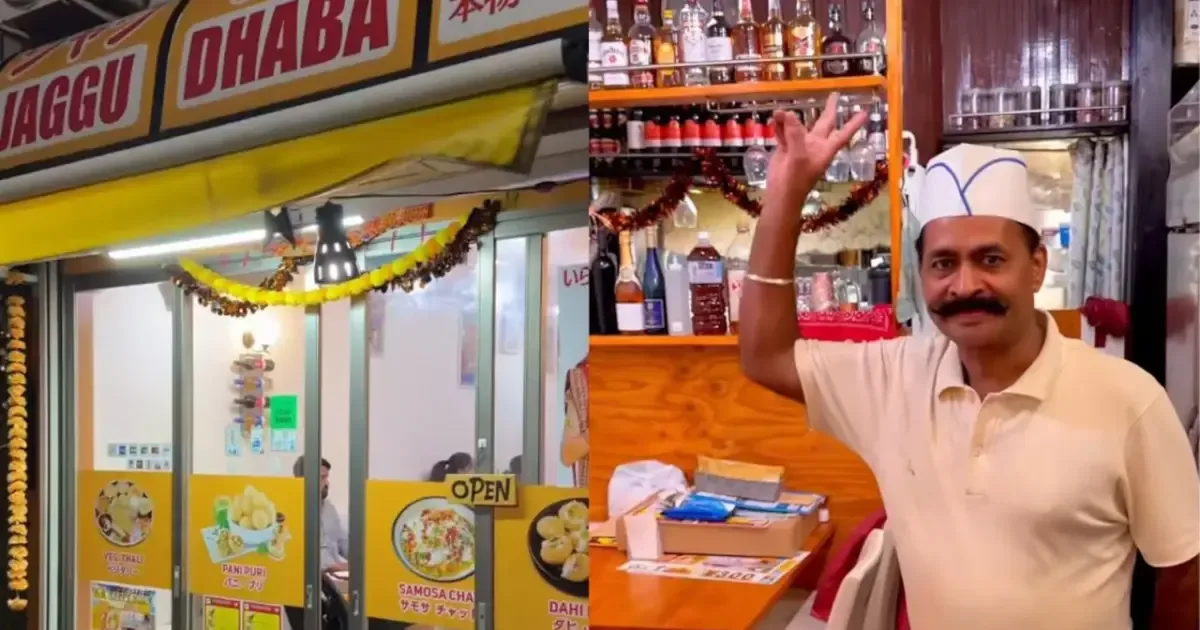
This is Jaggu Dhaba. A small, no-frills eatery run by a man from Patna, Bihar. And in recent weeks, it has become a sensation. Not just among Indians living in Japan, but among locals and tourists too. A viral video of the dhaba serving pani puri – those little hollow balls of fried dough filled with spicy water and potatoes – has taken the internet by storm. People from all over the world are sharing it, smiling, and saying: “This is home.”
But behind the viral clip and the buzz, there is a real human story. The story of one man who packed his dreams and moved thousands of miles away from his hometown, just to share a taste of Bihar with the world.
From Patna to Tokyo: One Man’s Journey
The man behind Jaggu Dhaba goes by the name Jaggu. That is what everyone calls him. His full name is not widely known, and that is maybe how he likes it. What matters is the food and the story behind it.
Jaggu was born and raised in Patna, the capital of Bihar. Like many young Indians, he grew up eating on the streets – crispy samosas from a corner stall, sweet jalebis on Sunday mornings, and of course, pani puri. For him, these were not just snacks. They were memories. They were the taste of childhood, monsoon evenings, and loud family gatherings.
But life in Patna was not easy. Jobs were scarce. Opportunities were limited. Jaggu wanted more. He wanted to see the world and maybe, just maybe, take a piece of his home with him.
So he moved to Tokyo. The decision was not easy. He did not speak much Japanese. He did not have a lot of money. What he had was a recipe book in his head – all the things his mother and grandmother taught him. He also had a deep stubbornness to make it work.
In Tokyo, he worked odd jobs. He saved every yen he could. He watched the city and its people. He noticed how much Japanese food was about precision and presentation. But he also noticed something missing. There was very little street food from back home. No one was making the kind of food that reminded him of Patna’s narrow lanes.
That is when the idea struck him. He would open a dhaba. A real Indian dhaba. Not a fancy restaurant with fake decor. A small, honest place where he could serve the food he grew up eating.
The Dhaba That Became a Home Away From Home
Jaggu Dhaba is not a big place. It is small and humble, with a few stools and a counter where Jaggu himself stands, frying, mixing, and serving. There is no air conditioning. The menu is written on a board in both English and Japanese. The decor is simple – some pictures of Bihar, a few posters of Bollywood movies, and the smell of spices.
But for Indians living in Tokyo, this dhaba is more than a place to eat. It is a home away from home.
“When I first walked into Jaggu Dhaba, I almost cried,” says one customer in an online review. “The smell of that chaat masala took me straight back to Patna. I had not tasted that in years.”
Jaggu hears this kind of thing often. A young software engineer from Bangalore stops by after work. A family from Delhi, on vacation, finds the place by chance. A group of students from Hyderabad, studying in Tokyo, come every weekend. For all of them, Jaggu Dhaba is a link to everything they left behind.
“They come here and they talk to me in Hindi, in Bhojpuri, in English,” Jaggu says in a soft voice. “They tell me their stories. They tell me they miss home. And I tell them, ‘You do not have to miss it. I have brought it here.'”
But it is not just Indians. Japanese locals have also started coming. They are curious about this small stall that smells so different from everything around it. They point at the pani puri, not knowing what it is. Jaggu shows them how to eat it. He puts a piece in his mouth and says, “In one bite.” They laugh. They try. And most of the time, their eyes go wide. “Oishii!” they say. Delicious.
Pani Puri, Samosa and the Taste of Bihar
Let us take a moment to talk about the food itself, because that is the real star of this story.
Pani puri, also called golgappa in some parts of India, is one of the country’s most popular street foods. It is made of small, round, hollow pieces of fried dough. You crack a hole in the top, stuff it with spiced potatoes and chickpeas, dip it into a bowl of tangy tamarind water, and pop the whole thing in your mouth. The flavors explode. Sour, sweet, spicy, all at once.
Samosas are another favorite. They are crispy, deep-fried pastries filled with spiced potatoes and peas. In India, you eat them with mint chutney or sweet tamarind sauce. At Jaggu Dhaba, they come exactly like that – hot, fresh, and golden.
But Jaggu does not stop there. He also makes other Bihari dishes. There is litti chokha, a classic from Bihar made of roasted wheat balls and mashed vegetables. There is chai, brewed the Indian way, with ginger and cardamom. And there is a sweet dish called jalebi, which is deep-fried batter soaked in sugary syrup.
“I want people to know what real Bihari food tastes like,” Jaggu says. “Not the fancy version. Not the one you get in five-star hotels. The real one. The one you eat on the streets of Patna.”
That is the key. Jaggu Dhaba does not try to be something it is not. It does not try to “modernize” Indian food for a foreign audience. It serves Indian street food, exactly as it is. And that is what people love about it.
How a Viral Video Changed Everything
In early 2025, someone filmed a short video of Jaggu Dhaba. It showed Jaggu making pani puri, handing it to a customer, and the customer taking a bite. The video was posted on social media – likely Instagram or Twitter, though the exact platform is not confirmed in reports.
Within hours, the video started spreading. People shared it with captions like “Pani puri in Tokyo?!” and “Patna boy making it big in Japan.” It was picked up by news websites in India. NDTV Food, MSN, The Economic Times, and inkl all ran stories about it. The headline was simple but powerful: “Viral Video: Pani Puri in Tokyo? Patna Man Opens ‘Jaggu Dhaba’ in Japan.”
Overnight, Jaggu became a mini celebrity. Hundreds of people started visiting his dhaba, many of them carrying phones to take videos themselves. Some came from other parts of Japan, just to try the pani puri that everyone was talking about.
“I did not expect this,” Jaggu says, shaking his head. “I just wanted to make good food. But now, so many people know about my dhaba. It feels like a dream.”
The viral video did not just bring customers. It also brought something else – pride. For many Indians, seeing a man from Patna running a successful food stall in Tokyo was inspiring. It showed that even from a small town, even without big connections, you can go far if you have passion.
“That could be my brother,” one comment read. “That could be my son. That could be me.”
What It Means for Indians in Japan and Foodies Everywhere
Jaggu Dhaba is not the only Indian food spot in Japan. There are plenty of Indian restaurants in Tokyo, Osaka, and other cities. But most of them serve North Indian dishes like butter chicken and naan. Very few focus on regional cuisines, and even fewer on street food.
That is what makes Jaggu Dhaba special. It brings something new: the taste of Bihar, a state that often gets overshadowed by Punjab or Kerala in the international food scene.
For the Indian community in Japan, this is big. “Finally, we have a place that serves real street food,” says a woman from Mumbai who works in Tokyo. “Not just dal makhani. Pani puri. Samosa. The stuff we grew up eating. It makes living here so much easier.”
For foodies and tourists, Jaggu Dhaba offers something even more valuable: a genuine cultural experience. In a city as polished as Tokyo, finding a rough-and-ready dhaba that serves food with attitude is rare. It is not about white tablecloths. It is about standing on the street, holding a paper plate, and tasting something completely different.
This trend – regional Indian food going global – is growing. You see it in London, New York, Dubai. People want more than butter chicken. They want real, honest, local flavors. And Jaggu Dhaba is proof that even the smallest stall can become part of that movement.
There are other similar spots in Japan, but very few. A small eatery in Shinjuku serves South Indian dosa. A place in Osaka makes decent biryani. But Jaggu Dhaba stands out because of its focus on Bihar and because of the man behind it. He is not a businessman first. He is a storyteller, and his medium is food.
More Than a Meal: Building Bridges Through Food
At the end of the day, Jaggu Dhaba is not really about pani puri or samosa. It is about connection.
Food is one of the most powerful ways to bring people together. It crosses borders, languages, and cultures. When a Japanese person eats pani puri at Jaggu Dhaba, they are not just tasting something new. They are tasting a part of India. And when an Indian eats the same dish thousands of miles from home, they are tasting a part of their past.
Jaggu knows this. That is why he puts so much care into every plate. He wakes up early to prepare the tamarind water. He makes the dough for the puris fresh. He checks the spice level for each customer. He does not take shortcuts.
“This is not just business for me,” he says. “This is my life. When someone eats my food and smiles, that is everything.”
His story has already inspired others. A few young Indians in Tokyo have approached him, asking how they can start something similar. He tells them: “Work hard. Do not be afraid. And make good food. The rest will follow.”
Jaggu Dhaba is still small. It may never become a chain or a famous brand. But that is fine. It has already done something bigger. It has shown that a man from Patna, working in a tiny stall in Tokyo, can make the world stop and notice.
So next time you are in Tokyo, take a detour from the usual tourist spots. Find the small dhaba with the smell of chaat masala in the air. Order a plate of pani puri. Eat it in one bite. And remember: some of the best stories in the world are hidden in the most unexpected places.
Frequently Asked Questions
What is Jaggu Dhaba?
Jaggu Dhaba is a small, simple eatery in Tokyo run by a man named Jaggu from Patna, Bihar. It serves authentic Indian street food, most famously pani puri. The dhaba has become a sensation, attracting both Indians living in Japan and locals.
Who is Jaggu?
Jaggu is the owner and operator of Jaggu Dhaba, originally from Patna, Bihar. He moved to Tokyo with a dream of sharing the taste of his home with the world. He learned to cook from his mother and grandmother.
Why did Jaggu move to Tokyo?
Jaggu moved to Tokyo because he felt job opportunities were limited in Patna and he wanted to see the world. He also had a desire to share a taste of his home, Bihar, with a global audience.
What kind of food does Jaggu Dhaba serve?
Jaggu Dhaba serves authentic Indian street food, with a focus on dishes from Bihar. Popular items include pani puri, samosas, litti chokha, chai, and jalebi. Jaggu aims to serve the food as it is eaten on the streets of Patna.
How did Jaggu Dhaba become famous?
Jaggu Dhaba gained fame after a short video of it serving pani puri went viral on social media. This video was shared widely, attracting attention from people all over the world.
Who visits Jaggu Dhaba?
Customers include Indians living in Tokyo who miss the taste of home, as well as curious Japanese locals and tourists. Many find it a comforting link to their roots or an exciting new culinary experience.
What is pani puri?
Pani puri, also known as golgappa, is a popular Indian street food. It consists of small, hollow fried dough balls filled with spiced potatoes and chickpeas, then dipped in tangy tamarind water. It's known for its explosion of sour, sweet, and spicy flavors.
References
- Viral Video: Pani Puri In Tokyo? Patna Man Opens 'Jaggu Dhaba' In Japan – Original report (NDTV Health)
- Viral Video: Pani Puri In Tokyo? Patna Man Opens 'Jaggu Dhaba' In Japan – NDTV Food – NDTV Food
- Patna man’s Tokyo eatery wins fans with authentic Bihari flavours – MSN – Syndicated article echoing the NDTV story, emphasizing the eatery's popularity among locals and tourists.
- Samosa, pani puri in Tokyo: Patna's 'Jaggu Dhaba' brings Bihari desi flavours to Japan. Watch video – The Economic Times – Syndicated article focusing on the inclusion of samosa along with pani puri, and the 'desi' flavors appeal.
- Samosa, pani puri in Tokyo: Patna's 'Jaggu Dhaba' brings Bihari desi flavours to Japan. Watch video – inkl – Another syndication with same title, reinforcing the viral nature and Bihari flavors theme.
- How Orry Makes His Fluffy Iced Coffee With A 'Secret Ingredient' – NDTV Food – NDTV Food