
At a Glance
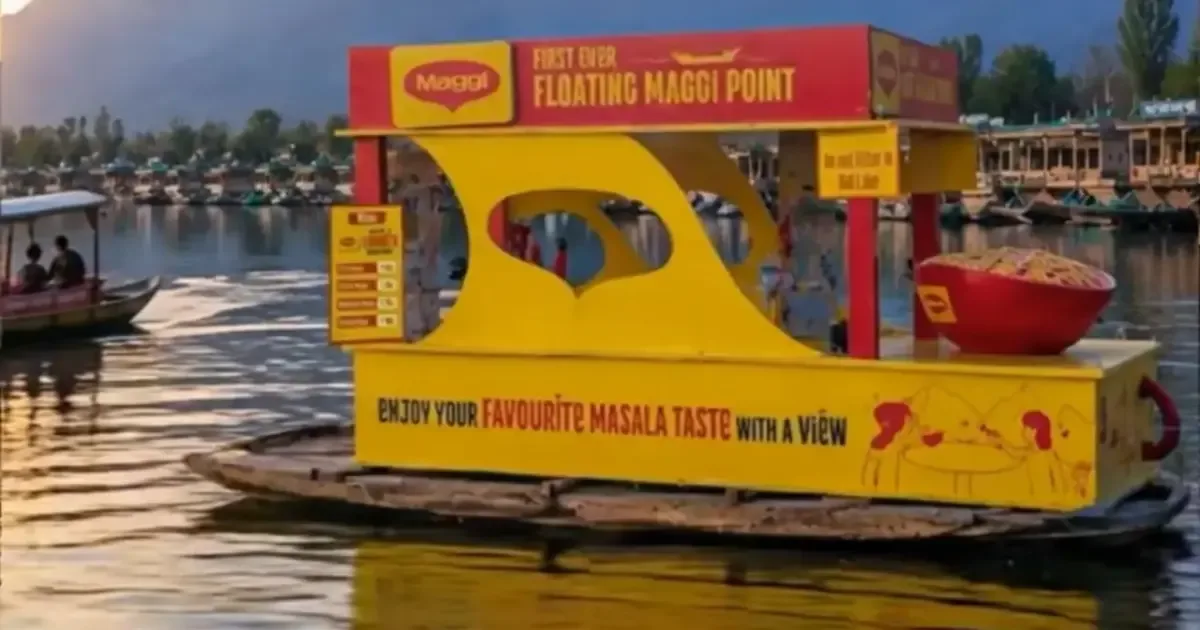
Picture this. You are sitting in a shikara on Dal Lake. Then you catch a whiff of Maggi noodles. Maggi India launched a floating pop-up store on Dal Lake in Srinagar, the first-ever floating Maggi point in the region. The internet called it ‘Next-Level Pahadon Wali Maggi.’ The initiative blends experiential marketing with the scenic beauty of Kashmir’s waterways.
Key Takeaways
The main points at a glance
- The Floating Maggi Stall on Dal Lake
- How the Internet Reacted: ‘Next-Level Pahadon Wali Maggi’
- Why a Floating Maggi Point?
- What Makes It Unique: Maggi Meets Kashmiri Waterways
- The Backstory: Maggi India’s Pop-Up Experiment
The Floating Maggi Stall on Dal Lake
Picture this. You are sitting in a shikara on Dal Lake. The water is calm, the sky soft blue, mountains snow-capped in the distance. Then you catch a whiff of Maggi noodles. The aroma, familiar from countless roadside stalls and hostel kitchens, now mingles with the crisp mountain air. Maggi India recently launched a pop-up store on Dal Lake-the first floating Maggi point in the region. A video shared by Maggi India shows a small wooden platform painted in the brand’s signature red and yellow. Steam rises from boiling water. A vendor, wearing a chef’s hat, stirs the noodles with practiced ease. People on nearby shikaras smile, point, and reach for cups of the hot snack. The scene feels magical, almost surreal-a perfect collision of everyday comfort and extraordinary setting.
The floating Maggi point is a pop-up, not a permanent structure. This temporary nature adds to its charm and urgency: visitors know it may not be there forever. It sits among Dal Lake’s famous houseboats, adding a playful touch to the serene landscape. The lake already hosts floating gardens, markets, and even a post office, but a Maggi stall is something new. The setup is deliberately simple: a wooden deck with a counter, stove, and pots. The vendor works quickly, serving Maggi in paper cups. It is hot, steamy, and satisfying-a moment of lake, mountains, and noodles all combined into one memorable experience.
Dal Lake, covering about 18 square kilometers, is a major tourist attraction in Srinagar, known for its houseboats, shikara rides, and floating markets. The lake’s ecosystem supports a unique way of life, with vendors selling vegetables, flowers, and handicrafts directly from boats. The floating Maggi point joins this tradition, but with a modern twist. For many visitors, eating Maggi on the lake becomes a story to share-a blend of taste, travel, and novelty that ordinary restaurants cannot offer.
How the Internet Reacted: ‘Next-Level Pahadon Wali Maggi’
When Maggi India shared the video on social media, the internet erupted. People called it “next-level Pahadon Wali Maggi,” a phrase that instantly went viral, referring to Maggi enjoyed on mountain trips in places like Manali, Shimla, or Nainital. Comments poured in from all over India and beyond: “Best thing ever-Maggi on water!” and “I have eaten Maggi in trains and on mountaintops, but on a boat? That’s a dream.” Some users joked about logistics-wondering how the noodles stay hot in the cold lake breeze, or whether the vendor ever drops a cup into the water. Others raised environmental concerns about plastic use and waste disposal. But the overwhelming reaction was positive, praising the novelty and creativity.
Maggi India played along with the buzz, captioning the post: “Kashmir ki wadiyon mein, Dal Lake ki lahariyon mein. Maggi ki ek nayi kahani.” (In the valleys of Kashmir, on the waves of Dal Lake. A new story of Maggi.) The post earned thousands of likes, shares, and comments within hours, spreading across platforms like Instagram, X (formerly Twitter), and Facebook. The phrase “Next-Level Pahadon Wali Maggi” became a hashtag, used by influencers and travelers sharing their own Dal Lake Maggi experiences. This organic amplification showed the power of combining a beloved brand with a photogenic, unexpected location.
The internet reaction also highlighted a broader cultural trend: Maggi is more than just noodles in India. It is a comfort food associated with travel, nostalgia, and shared moments. From college hostel rooms to long train journeys, Maggi has been a constant companion. The floating point taps into this emotional connection, elevating a simple snack into an experience. The enthusiasm online suggests that many people are now adding “eat Maggi on Dal Lake” to their bucket lists.
Why a Floating Maggi Point?
Dal Lake is iconic-a top tourist destination in India, symbolizing Kashmir’s natural beauty and unique floating culture. The lake and its surroundings attract millions of domestic and international tourists each year, especially during the peak seasons of spring, summer, and autumn. For a brand like Maggi, which has a long history of marketing stunts in unusual places-mountain tops, deserts, remote railway lines-a floating point on Dal Lake was a natural next step.
This initiative taps into Kashmiri floating markets, a centuries-old tradition where vendors sell fresh produce and goods from boats. By adapting this model for instant noodles, Maggi merges the old with the new. The photogenic nature of the lake ensures viral potential on social media: every shikara ride, every sunset, every cup of noodles becomes content worth sharing. As domestic tourism returns to Kashmir after periods of decline, Maggi capitalizes on travelers’ open, vacation mood. It is a smart match of brand and environment.
Moreover, Dal Lake’s geography is perfect for a floating pop-up. The lake is large, with numerous waterways, houseboats, and shikaras constantly moving. A stationary floating platform becomes a focal point, easily visible yet not obstructing traffic. The cool climate also makes hot soups and noodles appealing-visitors welcome a warm snack after a windy boat ride. All these factors combine to make the floating Maggi point not just a gimmick, but a well-thought-out marketing move that leverages location, culture, and consumer behavior.
What Makes It Unique: Maggi Meets Kashmiri Waterways
The floating Maggi point blends a stunning natural location with an immersive customer experience. You order from your shikara, the boat rocks gently, the vendor hands you a hot cup. Steam rises and mixes with the lake breeze, creating a sensory overload that standard restaurants cannot replicate. The branding is subtle yet effective: red and yellow panels blend into the lake’s colors, feeling authentic rather than aggressive. This careful design makes the stall appear as if it belongs, not as an intrusion.
This is experiential marketing at its best: a live story that builds emotional connection. Customers do not just consume a product; they become part of a narrative. They remember the moment they ate Maggi on Dal Lake, and that memory is tied to the brand. This approach is far more powerful than traditional advertising because it creates genuine engagement. Visitors post photos, tell friends, and recommend the experience to others. The uniqueness also encourages repeat visits-some tourists return just to try the floating Maggi again, or to show it to fellow travelers.
Another unique aspect is the fusion of local and modern elements. Kashmiri cuisine is rich and distinct, known for dishes like rogan josh, yakhni, and kahwa. Maggi, a globally recognized instant noodle, represents convenience and a certain urban modernity. By placing it on Dal Lake, Maggi shows that tradition and innovation can coexist. The stall respects the lake’s heritage while adding a contemporary twist. This balance appeals to both traditionalists curious about modern influences and younger travelers seeking novelty.
The Backstory: Maggi India’s Pop-Up Experiment
Maggi India has a history of adventurous and unusual pop-ups. The brand has previously set up stalls on the Siachen Glacier, one of the highest battlefields in the world, serving hot noodles to soldiers. It has operated from remote railway lines in the Himalayas and even in desert camps in Rajasthan. These pop-ups are not just marketing stunts; they are tests of brand loyalty and adaptability. Each location presents unique challenges-supply chain, weather, local regulations-and the floating Maggi point is no different.
Pop-ups create urgency and buzz because they are temporary. Customers feel compelled to visit before the stall disappears. This limited-time aspect drives social media coverage and word-of-mouth promotion. For Maggi, the small scale also allows low-risk experimentation. If the floating point is successful, the company can consider permanent installations or expansions. If not, it can be removed with minimal investment. The Dal Lake pop-up is therefore a calculated move-a way to gauge interest and generate positive sentiment.
By choosing Dal Lake, Maggi sends a message of belief in Kashmir’s future-a positive, hopeful gesture in a region that has faced challenges. The pop-up highlights the beauty of Kashmir and supports local tourism by creating a new attraction. While no details on duration or menu variations have been released, the initial success suggests that more such stalls could follow, potentially on other lakes or waterways in India, like the backwaters of Kerala or the ghats of Varanasi.
Local and Tourist Reactions: What People Are Saying
Tourists have been delighted by the floating Maggi point. “I could not believe my eyes when I saw it-I ordered two packets immediately. Best Maggi ever, with a view like this,” said a traveler from Mumbai, who visited the lake with family. International tourists have also expressed amazement, calling it a unique example of Indian innovation. Local shikara wallahs have noted a slight increase in business, as some visitors hire boats specifically to reach the floating stall. For them, the Maggi point is an added attraction that brings more customers to the lake.
However, reactions among local food vendors are mixed. Some worry about competition, especially those selling traditional snacks like kebabs, breads, and tea from their own floating stalls. But most see the Maggi point as a temporary gimmick that will not significantly affect their livelihoods. “It’s new and people are curious. But soon they will want our local food again,” said a vendor near the Char Chinar island. Environmentalists have raised concerns about plastic waste-the Maggi cups and spoons, if not disposed of properly, could harm the lake’s delicate ecosystem. Maggi India has not yet commented on specific waste management measures for the pop-up, but given the brand’s experience with outdoor events, it is likely that steps have been taken to collect and dispose of trash responsibly. Overall, the mood remains positive, with most viewing the floating Maggi point as a fun addition to Dal Lake’s traditional charm.
What’s Next for Floating Food in Kashmir?
Could the floating Maggi point spark a broader trend? If it proves successful, other brands might follow-perhaps floating pizza counters, chai stalls, or ice cream parlors. The lake is large enough to accommodate multiple floating vendors without overcrowding, and tourists are always eager for new experiences. The existing floating markets could become even more vibrant, blending tradition with modern consumer culture. This could boost tourism even further, giving visitors more reasons to spend time on the lake.
Maggi itself may expand the concept to other waterways in India. The backwaters of Kerala, for instance, offer a similar serene setting with a different cultural flavor. The Ganga in Varanasi, with its ghats and boat rides, could also be an interesting location. Each would require adaptation to local customs and regulations, but the blueprint is now proven. For now, the floating Maggi point remains a delightful pop-up-a brief but memorable chapter in Dal Lake’s long history. It reminds us that sometimes the simplest ideas, when placed in the right setting, can create the most lasting impressions.