At a Glance
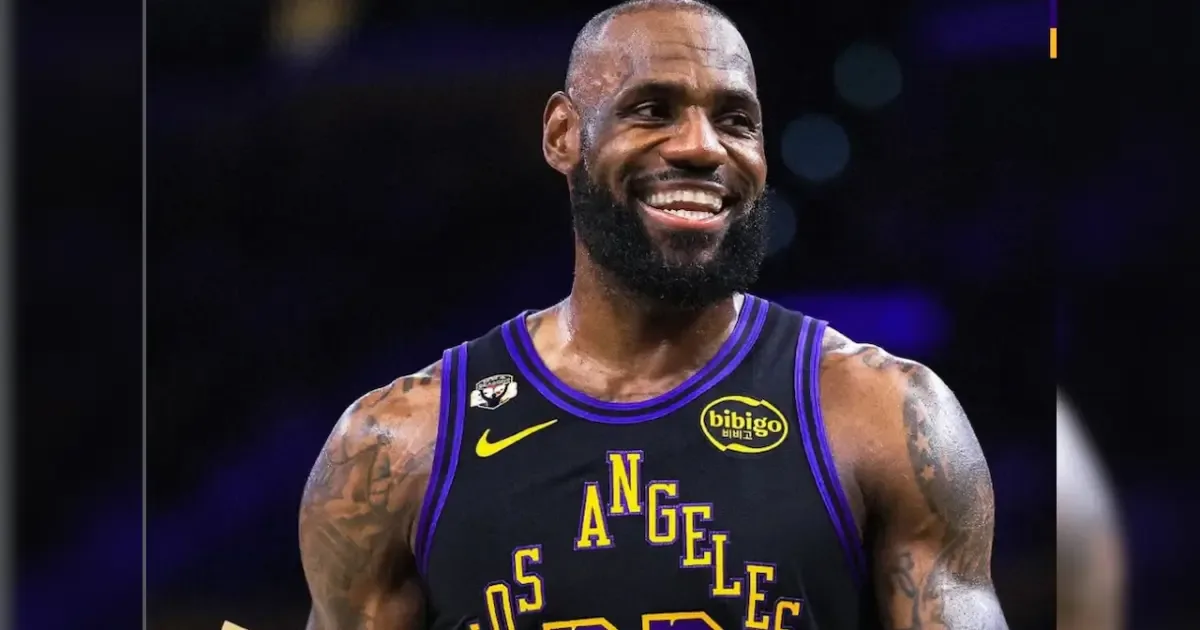
ESPN insider Dave McMenamin suggests LeBron James could take a $20-30 million pay cut to help the Lakers retain Austin Reaves and build around Luka Doncic. While not confirmed, this scenario highlights the Lakers’ salary cap challenges under the new CBA and the potential financial flexibility a lower salary for LeBron could provide.
Key Takeaways
The main points at a glance
- ESPN’s Dave McMenamin proposed LeBron James might take a $20-30 million pay cut to aid the Lakers’ financial flexibility.
- This potential pay cut could help the Lakers retain key player Austin Reaves and facilitate building around Luka Doncic.
- LeBron’s current player option is $52.6 million; a reduced salary would free up significant cap space under the NBA’s new CBA rules.
- While LeBron has shown willingness to take discounts, a cut of this magnitude would be unprecedented for a player of his stature.
- Experts express skepticism due to LeBron’s history of maximizing earnings, but acknowledge the potential strategic benefits for team building and championship contention.
LeBron James might take a pay cut of $20-30 million next season. This isn’t due to a loss of value, but to help the Lakers remain competitive. This scenario was outlined by ESPN’s Dave McMenamin.
The core idea is that LeBron, at 40 and in his 22nd season, holds a $52.6 million player option for 2025-26. If he opts out and signs for significantly less, the Lakers could gain the financial flexibility to retain guard Austin Reaves and build around Luka Doncic. However, this remains speculation, not a confirmed decision.
The discussion comes at a critical juncture for the Lakers franchise. After acquiring Luka Doncic in a blockbuster mid-season trade, the front office faces a delicate balancing act between leveraging LeBron’s remaining elite years and building a sustainable contender for the post-LeBron era. The new collective bargaining agreement, with its punitive luxury tax penalties and restrictive second apron, makes it nearly impossible for teams to carry three max or near-max contracts without sacrificing depth. McMenamin’s analysis highlights one potential pathway: a voluntary reduction from LeBron that could allow the Lakers to keep a third star in Austin Reaves and add essential role players.
What Dave McMenamin Reported
McMenamin presents a strategic possibility, not a report of an agreement. A contract for LeBron in the $20-30 million range could help the Lakers keep Reaves, preserve roster flexibility, and continue developing around Doncic. McMenamin offered this as analysis of what would be strategically sound, given the Lakers’ cap limitations and LeBron’s age. A $22-32 million savings could be critical in retaining Reaves.
McMenamin, a veteran NBA insider who has covered the Lakers extensively, first floated this scenario during an ESPN segment or article. He emphasized that no conversations have taken place between LeBron and the Lakers about a specific salary figure, but rather that the math of the new CBA makes such a move logical. The proposed range of $20-30 million would represent roughly half of what LeBron could command on the open market if he opted out. For comparison, a $25 million salary would place him among the top 30-40 earners in the league, still a substantial sum but far below his usual max. The core insight is that by taking less now, LeBron could help ensure the Lakers have the flexibility to surround him and Doncic with a competitive supporting cast, potentially extending his championship window.
LeBron’s Contractual Choices: Max Salary vs. Pay Cut
LeBron holds a $52.6 million player option. If he exercises it, the Lakers are committed. If he opts out, he becomes a free agent and could sign a new deal. McMenamin’s proposed scenario involves a $20-30 million salary, a 40-57% cut from the max. Historically, LeBron has not taken substantial pay cuts. While he took a small discount in Miami, a cut of this magnitude would be unprecedented.
LeBron’s player option for the 2025-26 season was included in the two-year, $101.3 million extension he signed with the Lakers in 2024. The $52.6 million figure reflects the maximum salary allowed under the CBA based on his years of service. If LeBron opts out, he becomes an unrestricted free agent and could sign a new contract with the Lakers or any other team. However, at age 40, it is highly unlikely he would leave Los Angeles, where he has established his family and business interests. The more realistic question is whether he would accept a significant pay cut to stay.
Throughout his career, LeBron has largely maximized his earnings. He has signed multiple max contracts and has rarely left money on the table. The closest precedent came during his time with the Miami Heat, when he and his teammates (Dwyane Wade and Chris Bosh) each took slightly below max deals to fit under the cap. Those discounts were in the range of 5-10%, not the 40-57% being speculated now. A pay cut of this magnitude would be unprecedented for a player in LeBron’s position, especially one who still performs at an All-NBA level.
Some observers have pointed out that LeBron may have different priorities at this stage of his career. He has often spoken about playing with his son Bronny (who is on the Lakers’ roster) and about his desire to win more championships. If he values winning over the last few million dollars, a pay cut could be a rational choice. Additionally, LeBron’s off-court earnings are enormous-he is a billionaire through endorsements and investments-so the difference between $52 million and $25 million in on-court salary may be less significant to him personally than the opportunity to build a winner.
The Importance of Retaining Austin Reaves
Reaves, 26, emerged as a key player on a team-friendly $13 million contract. He is eligible for an extension worth up to $100 million over four years. The Lakers prioritize keeping him for his youth, improvement, and compatibility with LeBron and Doncic. With LeBron at $52 million, Doncic at $43 million, and Reaves at $13 million, the trio would account for roughly $109 million, leaving minimal room. If LeBron took $25 million, their combined salary drops to about $81 million, freeing up $28 million. Losing Reaves would be a significant blow.
Austin Reaves has been one of the NBA’s best value contracts since going undrafted in 2021 and signing a two-way deal. After a breakout 2022-23 season, he signed a four-year, $53.8 million contract with the Lakers, a deal that now looks like a steal. Reaves has improved his scoring, playmaking, and defense each season, and he has shown a knack for rising to the occasion in playoff games. At 26, he fits perfectly alongside both LeBron and Doncic: he can play off the ball as a spot-up shooter and cutter, but also handle primary creation duties when needed.
The Lakers have made it clear they view Reaves as a long-term piece. He is eligible for a contract extension this summer that could pay him up to $100 million over four years, reflecting his true market value. If the Lakers cannot come to an agreement, Reaves would become a restricted free agent in 2026, and other teams could offer him a lucrative offer sheet. The Lakers would likely match, but doing so would commit them to a higher salary figure.
Retaining Reaves is crucial for both the present and future. He and Doncic are both 26, giving the Lakers a young core to build around once LeBron eventually retires. Losing Reaves would not only weaken the team immediately but also deprive the franchise of a cost-controlled asset that was developed in-house. The cap savings from a LeBron pay cut would make it far easier to absorb Reaves’ upcoming raise without crossing punitive tax thresholds.
The Luka Doncic Factor: Building for the Future
Doncic, 26, is the Lakers’ cornerstone after being acquired this season. The team is focused on building around him. LeBron’s age means the Lakers must plan for the post-LeBron era. If LeBron accepts less money now, the Lakers can allocate funds to younger players and acquire talent around Doncic, representing a short-term sacrifice for long-term success. At this stage, another championship might hold greater value than an extra $27 million.
The acquisition of Luka Doncic from the Dallas Mavericks in a stunning mid-season trade fundamentally shifted the Lakers’ trajectory. Doncic, a five-time All-Star and former MVP candidate at just 26, gives the Lakers a franchise player for the next decade. His presence allows the organization to think beyond LeBron’s career. The front office, led by Rob Pelinka, is now tasked with building a contender around Doncic while still maximizing LeBron’s final seasons.
LeBron and Doncic have shown early chemistry on the court. Doncic’s elite pick-and-roll playmaking and LeBron’s off-ball movement and finishing complement each other well. To fully unlock this partnership, the Lakers need a third star or high-level role players. Austin Reaves fits that bill, but the team also needs quality wings, shooters, and a rim-protecting center. Under the new CBA, teams with three max contracts find it extremely difficult to fill out the roster with capable players.
If LeBron takes a pay cut to around $25 million, the Lakers could have approximately $20-30 million in cap space or exception money to spend. That could land a starting-caliber player, such as a 3-and-D wing or a rim-running big. Over the next few seasons, LeBron’s declining salary would give the Lakers more flexibility to add pieces via trade or free agency. This approach mirrors how some other superstars have helped their teams: Tim Duncan took below-market deals to allow the Spurs to build around him, and Dirk Nowitzki did the same for the Mavericks. LeBron, if he chooses, could follow that path.
Salary Cap Realities
The NBA’s cap for 2025-26 is projected at about $154 million. The luxury tax threshold is around $195 million. Teams exceeding the second apron face severe limitations. If LeBron earns $52 million, the Lakers would likely exceed the first apron. With LeBron at $25 million, they would have considerable flexibility. This financial analysis underscores why McMenamin’s perspective is noteworthy.
The NBA’s new collective bargaining agreement, implemented in 2023, has dramatically altered team-building strategies. The so-called ‘second apron’-projected at approximately $207 million for 2025-26-carries severe penalties: teams cannot use the mid-level exception, cannot aggregate salaries in trades, cannot trade draft picks seven years out, and lose access to the buyout market. Several prominent teams are already feeling the squeeze. The Phoenix Suns, with three max contracts, have a top-heavy roster with little depth. The Los Angeles Clippers have similarly struggled to build around their stars.
For the Lakers, the math is stark. If LeBron exercises his $52.6 million option, his salary plus Doncic ($43 million) and Reaves (projected $13 million) totals $108.6 million. After factoring in other guaranteed contracts (Rui Hachimura, Jarred Vanderbilt, Gabe Vincent, etc.), the Lakers would be well over the cap and likely in the luxury tax. Adding any quality free agent would require using the taxpayer mid-level exception or minimum contracts. The team would also be at risk of triggering the second apron if they make additional moves.
If LeBron instead takes $25 million, the trio’s salary drops to $81 million. That savings of over $27 million could be used to retain Reaves on a larger contract, add a free agent using the full mid-level exception (projected around $13 million), and still potentially stay under the luxury tax or at least avoid the second apron. The flexibility would allow the Lakers to make trades using cap space or exceptions without immediate limitations. It is this kind of financial calculus that makes McMenamin’s proposal plausible from a roster-building perspective, even if it requires an unprecedented concession from LeBron.
Expert Opinions and Scenarios
The notion is met with skepticism. LeBron has consistently maximized earnings, and he is pursuing milestones and a fifth championship. The Lakers also have alternative strategies, such as using draft picks or the mid-level exception. Comparisons to Tim Duncan and Dirk Nowitzki are informative but limited. Duncan took a pay cut at 36; Nowitzki did so at 36. LeBron, at 40, is still performing at an All-Star level, making a pay cut seem premature.
Many NBA observers have reacted with caution to the pay cut scenario. LeBron James has been a shrewd businessman throughout his career, building a billion-dollar empire that includes production companies, endorsements, and investments. He has never taken a pay cut of this magnitude, and his camp has not indicated any willingness to do so. Critics argue that LeBron, even at 40, is still capable of playing at an All-Star level and should not be expected to sacrifice salary when he is still a top-10 player.
The Lakers have other ways to improve the roster without asking LeBron to take a pay cut. They could use their future first-round draft picks (they have several tradable now) to acquire veteran talent via trade. They could also rely on the development of young players like Max Christie and Jalen Hood-Schifino. The mid-level exception, while limited under the second apron, could still yield a rotation player. However, these tools may not be enough to build a true contender, especially in a loaded Western Conference.
Historical comparisons are instructive but imperfect. Tim Duncan famously took a pay cut in 2012 when he signed a three-year, $30 million deal after years of max contracts. He was 36 at the time. Dirk Nowitzki similarly took a significant discount in 2014 at age 36, signing a two-year, $20 million deal to help the Mavericks. Both players were past their prime but still effective. LeBron is older than both were at the time of their discounts, but he is also performing at a higher level. The difference is that LeBron is still a top player, not a declining star. This makes the pay cut question more complex: he might feel he has not yet earned the right to take less.
Another perspective is that LeBron may prioritize chasing another title over maximizing his salary. Having won four championships and cemented his legacy, he might view a fifth ring as more valuable than an extra $27 million. His on-court earnings, while significant, are a fraction of his overall wealth. If LeBron decides that winning is his primary goal, a pay cut becomes more plausible. But until he or his representatives indicate such a willingness, the scenario remains speculative.
Conclusion: Likelihood and Potential Impact
The most probable outcome is that LeBron exercises his $52.6 million option. The Lakers would then navigate cap challenges around that. However, the discussion itself reflects the harsh realities of the new CBA, where even legends are asked to sacrifice for team building. If LeBron were to take the pay cut, it would reshape the Lakers’ outlook, allowing them to retain Reaves and build a contender around Doncic. Even unlikely, the scenario illustrates the complex calculus facing modern NBA teams.
At this point, the most likely scenario remains LeBron picking up his $52.6 million option. He has never shown a willingness to leave that much money on the table, and there is no indication from his camp that he plans to do so. The Lakers, for their part, have not publicly discussed any expectation of a pay cut. The front office is preparing for a variety of outcomes, and McMenamin’s report is just one piece of analysis in a complex puzzle.
However, the fact that this scenario is being discussed by a respected insider like McMenamin signals how much the NBA landscape has changed. The new CBA has forced teams and players to think creatively about salary structures. Even the most powerful superstars are now being asked to consider financial sacrifices for competitive reasons. If LeBron were to take a pay cut, it would set a precedent for other aging stars like Kevin Durant, Stephen Curry, or Giannis Antetokounmpo in their later years.
For the Lakers, the potential impact cannot be overstated. Retaining Austin Reaves and building a sustainable roster around Luka Doncic would give the franchise a bright future beyond LeBron. If LeBron can be convinced to accept a smaller role financially, he could extend his championship window and cement his legacy as a team-first star. Even if this specific scenario does not come to pass, the conversation itself is a sign of the times in the NBA: a league where financial flexibility is the new currency, and even legends must weigh their own value against the team’s future.