At a Glance
The debate around food theatre, from tableside dal tadka to pasta served in cheese wheels, questions whether culinary spectacle enhances or detracts from the dining experience. While dramatic presentations can create memorable moments and viral social media content, critics argue that the focus should remain on the quality and taste of the food itself. Finding a balance between showmanship and authentic flavor is key to satisfying diners.
Key Takeaways
The main points at a glance
- Food theatre, like tableside dal tadka and pasta cheese wheels, has become increasingly popular, turning dining into a performance.
- While these dramatic presentations can create memorable experiences and social media buzz, they raise questions about whether the food itself is improved.
- Unusual combinations, such as matcha jalebi, highlight how food theatre can sometimes prioritize spectacle over taste and tradition.
- Celebrities and political gestures can amplify food trends, but this can also lead to food becoming a fleeting fashion item rather than a focus on flavor.
- Simpler dishes, like Bryan Adams’ endorsement of vada pav, show that authenticity and taste can be powerful enough without elaborate theatrics.
- The best restaurants balance culinary art with authenticity, using theatre to enhance, not hide, the quality of the food, ensuring a meaningful dining experience.
Picture this: you are sitting in a dimly lit restaurant, the air thick with promise. A server approaches your table, holding a brass ladle filled with steaming dal tadka. With a flourish, they pour the hot, spiced lentils into your bowl. The sound is satisfying, and the aroma hits you before the first spoonful.
Now, scroll through your phone. There is a video of a chef wheeling out a massive wheel of Parmesan. He scrapes the inside, melting the cheese with hot pasta, tossing it all together in the hollowed-out rind. It is a cascade of glossy, creamy sauce, and the comments are full of fire emojis and tags.
Are these moments of culinary artistry, or just a show? Is the food actually any better, or are we eating with our eyes and phones first?
That question is at the heart of a growing debate in the food world. Restaurants have always tried to impress guests with drama, but in recent years, dining has become much more than just eating. It has become a performance. As these performances get bigger and more unusual, some are asking: has food theatre gone too far?
Let us look at both sides of the plate.
The Rise of Tableside Drama: From Dal Tadka to Cheese Wheels
Food theatre is not new. There has always been showmanship in how we serve and eat food. Think about the classic Caesar salad tossed tableside, the Japanese teppanyaki chef flipping shrimp tails into his hat, or a flambéed dessert set ablaze. These moments have long been part of fine dining.
The trend of preparing food in front of the guest has deep roots. In Western restaurants, the “gueridon” trolley was once standard. This rolling cart was used to carve meats, mix salads, and light desserts on fire right at your table, signifying high service and luxury.
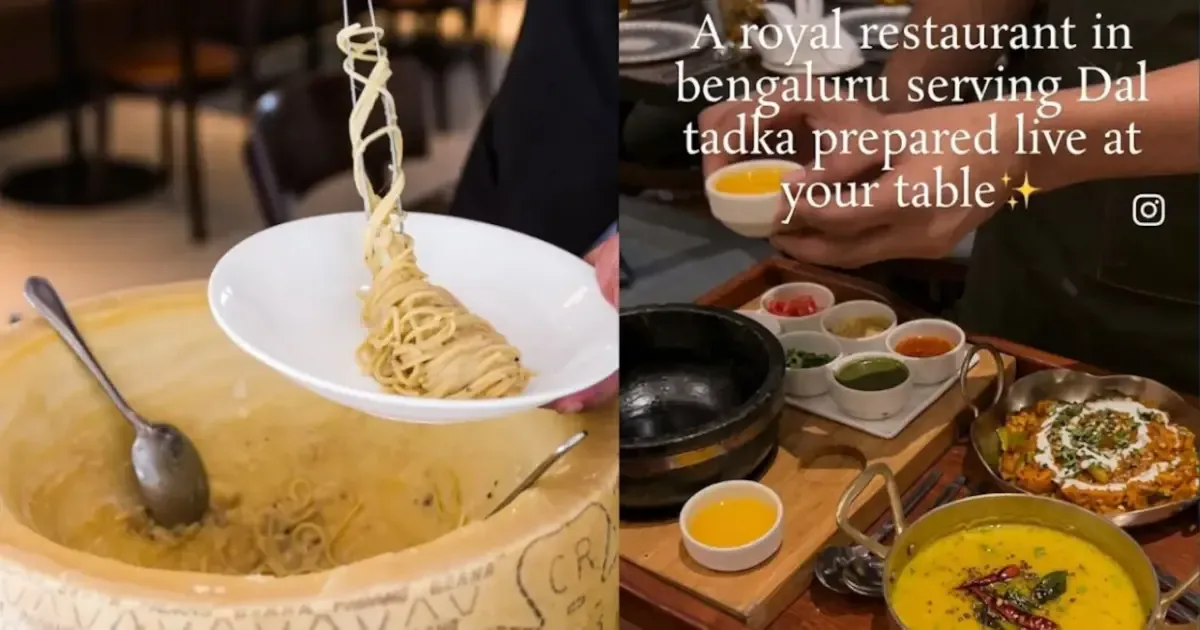
In India, tableside drama has taken on a local flavor. Consider tableside dal tadka. Instead of a pre-plated bowl, a server brings a hot iron skillet to your table. They pour in ghee or oil, toss in cumin seeds, red chilies, and garlic. The spices sizzle and pop before the dal is poured on top. The sound and smell create pure theater, turning a simple lentil dish into a memorable moment.
Then there is the pasta cheese wheel, a trend that has taken over social media. A hollowed wheel of Parmesan or Grana Padano is brought to the table, and hot pasta or risotto is tossed inside. The heat melts the cheese from the wheel’s walls, coating every strand. It is creamy, rich, and undeniably photogenic. Servers often scrape the inside of the wheel to ensure every bit of cheese makes it to your plate.
These techniques are popular but raise questions. When you order dal tadka, do you want a show, or just really good dal? Is pasta inside a cheese wheel tastier than pasta with grated cheese on top, or does the experience just make you think it is?
The answer is likely a bit of both. There is real skill in a well-timed tableside pour and genuine delight in watching food come together. However, there is a danger: the show can become the main act, overshadowing the food.
When Food Becomes a Spectacle: The Internet Reacts to Matcha Jalebi
If tableside dal tadka and cheese wheels represent one end of the food theatre spectrum, the other end is stranger, where tradition meets surprise, sometimes unpleasantly.
A recent video that shocked the internet featured a bizarre combination: matcha jalebi with strawberry lassi. Jalebi is a classic Indian sweet, a deep-fried swirl of batter soaked in sugar syrup. Matcha is a powdered green tea with a grassy, slightly bitter taste. Lassi is a yogurt-based drink, and strawberry lassi is a sweet, pink, fruity version.
The video showed a chef dunking a bright orange jalebi into a green matcha coating, served with pink strawberry lassi. The colors were vivid, the combination confusing, and the internet reaction intense. Some called it an abomination, others creative, and many simply asked “why?” This showed how much people care about their food and how a single dish can create a viral moment.
This is the reality of modern food culture: a dish must not only taste good but also look good on a screen and be shareable. Restaurants know this and design dishes to photograph well, creating moments that make people pull out their phones.
The matcha jalebi is a perfect example of food theatre that may have gone too far. It is not about improving flavor but creating shock and spectacle. Once the spectacle is over, the question remains: does the dish actually work on the plate?
For many who tried it, the answer was no. The bitterness of matcha clashed with the sweetness of the jalebi, and the lassi added another layer of sweetness that did not tie the dish together. The show was better than the meal.
Celebrity Cheers and Political Gifts: Who’s Driving the Trend?
Food theatre is driven by powerful forces, including celebrities, politicians, and the media.
Consider a viral moment when Italian Prime Minister Giorgia Meloni visited India and received a gift of Melody chocolates from Indian Prime Minister Narendra Modi. The wordplay between “Meloni” and “Melody” was immediate, and social media lit up with the “Melodi” trend. This food-related gesture became a global talking point, showing how food can be a symbol, a joke, and political theater simultaneously. The simple chocolates became a viral spectacle due to the context.
Celebrities also weigh in on food. When a famous person loves a dish, it can validate it, making a street food stall famous or sending customers flocking to a restaurant.
However, celebrity endorsements are a double-edged sword. They can elevate a simple dish but also turn food into a fashion item, trendy not for its taste but because a star was photographed eating it. This can create a shallow food culture where trends fade quickly.
The Case for Simplicity: Bryan Adams and the Humble Vada Pav
Not every celebrity loves fancy food. Sometimes, stars align around something much simpler.
Musician Bryan Adams visited Mumbai and ate vada pav from a street vendor, calling it the “most delicious vegan street dish.”
Vada pav is about as untheatrical as food gets: a spiced potato fritter (vada) in a soft bread roll (pav), often served with chutney and chili. It is simple, filling, and flavorful, with no flames or fancy trolleys, just good, honest food.
Adams’ comment praised the dish and connected it to veganism, introducing Indian street food to a new audience. The impact was real, with increased searches for vada pav and more business for vendors. The humble snack gained a moment in the spotlight.
This highlights the other side of the food theatre debate: sometimes, the best food theatre is no theatre at all. It is the authenticity, story, history, and generational enjoyment of the dish itself that is powerful enough without tableside presentation.
Vada pav wins on taste, texture, and price because it is real. In a world of elaborate presentations, a dish that lets the food speak for itself is refreshing. Bryan Adams’ endorsement shows that the most effective food moment can have the least amount of show.
Where Do We Draw the Line? Balancing Art and Authenticity
The line between culinary art and gimmick is not always clear.
Some of the best meals involve showmanship. A sushi chef slicing fish or a sommelier pouring wine are forms of theater that display skill, tradition, and respect for ingredients, setting the mood for the meal.
The problem arises when the show overshadows the skill. If a restaurant trains staff more on pouring dal with a flourish than on making it taste amazing, the food suffers. Diners might be impressed momentarily, but a mediocre meal leaves them unlikely to return.
This is the trap of food theatre: it can be a shortcut to attention. A cheesy pasta wheel video gets millions of views, while perfectly seasoned pasta might get few. The pressure to go viral pushes chefs to think more like content creators than cooks.
However, diners are becoming smarter and can often tell when they are being sold a show instead of a meal. After the tenth cheese wheel video, it looks like a tired cliche. Similarly, tableside dal tadka loses its novelty when every restaurant adopts it.
The best restaurants find a balance, using theatre to enhance the food, not hide flaws. Presentation should add meaningfully to the experience. Tableside dal can be wonderful if the dal is exceptional; a cheese wheel can be delicious if the pasta is perfectly cooked and the sauce is balanced. The show becomes part of the meal, not the whole point.
Cultural context also matters. In India, shared dining and communal eating are already social theater, fitting naturally with tableside preparations. In the West, tableside theatre can feel more forced or like an old-fashioned ritual.
The reception of food theatre varies. What feels exciting in one city might feel pretentious in another. What works on Instagram today might feel dated tomorrow. The trend moves fast.
What Diners Really Want: Entertainment or Great Taste?
Ultimately, the most important question is what diners want. The answer is likely both: entertainment and great food.
People want memorable experiences and stories to tell. Tableside dal tadka and pasta cheese wheels provide this, making meals into events. But people also want delicious food with fresh, well-prepared ingredients. No amount of theatre can compensate for a bad meal; if the food doesn’t taste good, the show feels hollow, and diners feel cheated.
Restaurants measure success differently. Some count online views, gaining followers from viral videos. But the real test is loyalty: do customers return and bring friends, or do they just visit once for the show?
Smart restaurants use theatre to attract customers but keep them with great taste. They understand food theatre is a tool for a first impression, not the entire experience. The debate around food theatre will continue, likely intensifying as social media shapes dining trends and restaurants push presentation boundaries. Some experiments will be brilliant, others less so.
Frequently Asked Questions
What is food theatre?
Food theatre refers to the use of dramatic presentation and performance elements in the dining experience. This can include tableside preparation, elaborate garnishes, or unusual serving methods designed to impress and entertain diners.
Are tableside preparations like dal tadka a new concept?
No, tableside preparations have a long history in fine dining, such as classic Caesar salads or flambéed desserts. In India, tableside dal tadka offers a local twist on this tradition, enhancing the sensory experience with sizzling spices.
Why are pasta cheese wheels so popular on social media?
Pasta cheese wheels are popular because they are highly photogenic and create a visually appealing spectacle. The process of tossing hot pasta inside a Parmesan wheel, melting the cheese to coat the pasta, is inherently shareable and generates significant engagement online.
Can food theatre go too far?
Yes, food theatre can go too far when the spectacle overshadows the quality and taste of the food. Dishes that prioritize shock value or visual appeal over flavor, like some experimental combinations, may alienate diners who are looking for a genuinely delicious meal.
What is the role of celebrities in food trends?
Celebrities can significantly influence food trends by endorsing dishes or restaurants. Their endorsements can bring widespread attention and popularity, but they can also turn food into a trend driven by fame rather than inherent taste or quality.
What do diners ultimately want from a dining experience?
Diners generally want a combination of entertainment and great taste. They seek memorable experiences and stories to share, but these must be supported by delicious, well-prepared food. A lack of flavor can make even the most elaborate show feel hollow.
How can restaurants balance food theatre with great taste?
Restaurants can balance theatre and taste by using presentation to enhance the food, not mask its flaws. The spectacle should complement an exceptional dish, ensuring that the quality of ingredients and preparation remains paramount. The goal is to create a cohesive and satisfying dining experience.
References
- From Tableside Dal Tadka To Pasta Cheese Wheels, Has Food Theatre Gone Too Far? – Original report (NDTV Health)
- From Tableside Dal Tadka To Pasta Cheese Wheels, Has Food Theatre Gone Too Far? – NDTV Food – This is the original article that frames the debate around food theatre, using tableside dal tadka and pasta cheese wheels as key examples.
- PM Modi’s Melody gift to Meloni fuels viral ‘Melodi’ buzz – MSN – This article shows how food-related gifts and gestures can become viral cultural moments, linking food theatre to politics and social media.
- Matcha Jalebi With Strawberry Lassi? This Bizarre Dessert Combo Has The Internet In Shock – NDTV Food – This article provides a specific example of an unusual food combination that shocked the internet, illustrating the extreme end of food theatre.
- Bryan Adams Enjoys Vada Pav In Mumbai, Says It's The 'Most Delicious Vegan Street Dish' – NDTV Food – This article adds a celebrity endorsement angle, showing how food theatre can also celebrate simple, authentic dishes.
- 5 Hand Blender Options To Blend Ingredients Effortlessly – NDTV Food – This article provides a practical, tool-focused perspective that contrasts with the theatrical trend, emphasizing home cooking simplicity.