At a Glance
Vice President JD Vance’s planned technical peace talks with Iran in Switzerland have been postponed due to unresolved logistical issues, the White House announced on April 10, 2025. The US delegation was prepared to travel, but the delay occurred at the last minute. No new date has been set, and the postponement highlights the complexities of arranging high-level diplomacy between the two nations.
Key Takeaways
The main points at a glance
- Vice President JD Vance’s trip to Switzerland for technical peace talks with Iran was postponed due to logistical problems.
- The White House stated the delay was not political but related to practical arrangements.
- Switzerland was chosen as a neutral venue, a common practice for US-Iran diplomatic engagements.
- ‘Technical peace talks’ focus on practical, step-by-step issues to reduce tensions, distinct from high-level political negotiations.
- No new date has been set for the rescheduled talks, leaving the diplomatic process in limbo.
- The postponement underscores the challenges in arranging direct high-level meetings between the US and Iran.
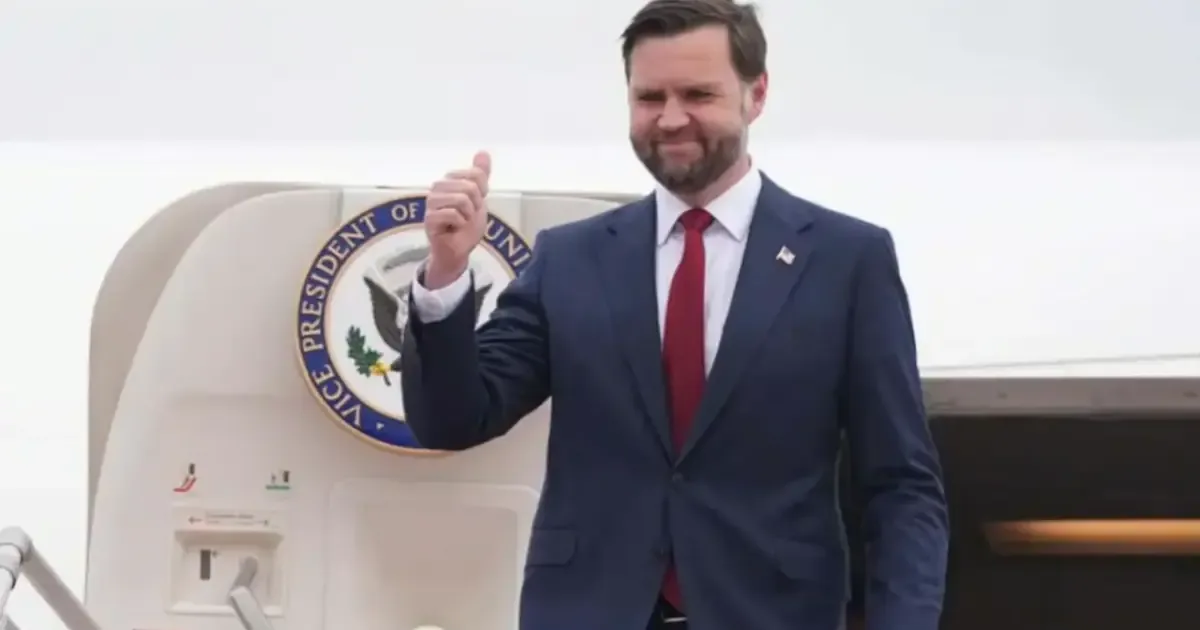
Vice President JD Vance has postponed a planned trip to Switzerland for technical peace talks with Iran, the White House announced Thursday, citing unresolved logistical issues. The JD Vance Iran talks postponed signifies a delay in diplomatic efforts.
The team led by Vance had been ready to depart but delayed the trip at the last minute. White House officials stated the decision was not due to political disagreements with Iran but rather practical problems in arranging the meeting.
These talks were intended to be a rare face-to-face engagement between senior US and Iranian officials. Switzerland, a neutral nation, frequently hosts such sensitive negotiations. However, the specific details could not be finalized in time for the scheduled departure.
White House Cites Logistical Challenges for Postponement
The White House issued a brief statement on April 10, 2025, indicating that Vice President Vance’s trip to Switzerland was postponed because of “difficult logistics” and “unresolved logistical issues.”
Officials did not elaborate on the nature of these challenges, leaving it unclear whether the problems pertained to travel arrangements, the meeting venue, security concerns, or coordination with the Iranian delegation. The statement provided no further specifics.
Multiple news organizations, including NDTV, India Today, Anadolu Ajansı, Deccan Herald, and Firstpost, reported the same basic information, with none offering additional details on the precise logistical hurdles.
The White House also did not confirm if the Iranian delegation had already arrived in Switzerland or was also awaiting the finalized arrangements. The statement simply noted that the US team was prepared to travel but had to delay its departure.
Such last-minute postponements are uncommon for high-level diplomatic missions. Typically, planning for these visits spans weeks or months. The indication that the team was “ready to leave” suggests that preparations were advanced, making the final-stage issues particularly noteworthy.
Switzerland: A Neutral Ground for US-Iran Diplomacy
Switzerland has a long-standing role in hosting negotiations between the United States and Iran. The two nations have lacked formal diplomatic relations since 1980, utilizing Switzerland as a protecting power for handling certain communications.
The Swiss government commonly provides a neutral setting for direct meetings. Cities like Geneva and Zurich have often served as venues for nuclear discussions and other diplomatic exchanges. While the specific city for Vance’s talks was not disclosed, it was likely one of these locations.
The choice of Switzerland underscores a mutual desire for a secure and neutral environment, avoiding the political complexities of meeting in either nation or a country aligned with one side. Switzerland’s non-aligned status and good relations with both the US and Iran make it an ideal facilitator.
Historically, Swiss-mediated talks have facilitated agreements on matters such as prisoner exchanges and other bilateral issues. The country’s established role as a neutral intermediary explains why Vance’s trip was scheduled there.
Understanding ‘Technical Peace Talks’
The term “technical peace talks” was first used by India Today to describe the planned negotiations, a phrase subsequently adopted by other outlets. These discussions focus on practical, incremental issues rather than broad political demands.
The objective of such talks is often to foster trust between adversaries by addressing smaller, resolvable problems before confronting larger disagreements. Examples could include ensuring safe maritime passage, preventing military miscalculations, or establishing communication channels.
These discussions differ from high-level political negotiations concerning nuclear programs or regional influence. They are more operational in nature and typically less public, aiming to de-escalate tensions and build a foundation for future diplomacy.
The administration’s decision to send Vice President Vance, a senior official, signaled the importance placed on these technical discussions. His participation would have lent significant weight and authority to the proceedings.
However, with the postponement, the specific technical issues on the agenda remain undisclosed by the White House.
Future Outlook: Rescheduling the JD Vance Iran Talks
As of now, the White House has not set a new date for the rescheduled trip. Officials are reportedly working to resolve the logistical challenges, but no timeframe has been provided.
The talks could potentially be rearranged within weeks, or the delay might extend for months, or the meeting could be canceled altogether. The duration of the delay will likely depend on the severity of the logistical problems.
If the issues were minor, such as scheduling conflicts or travel arrangements, a new date might be announced soon. More significant concerns, like security or format disagreements, could lead to a longer postponement.
Beyond the White House statement, neither the US nor Iran has publicly commented on the postponement. There have been no official reactions from Iranian officials or other regional stakeholders.
Diplomatic observers are closely monitoring the situation. Any interruption in US-Iran dialogue can impact the broader Middle East landscape, including tensions surrounding Iran’s nuclear activities and its support for various groups.
US-Iran Relations: A Complex Diplomatic Landscape
US-Iran relations have been strained for decades, marked by periods of both confrontation and negotiation since the 1979 Iranian Revolution. The current administration has aimed to reduce tensions through a combination of pressure and diplomacy.
Vice President Vance has played a key role in this strategy, leading several Middle East diplomatic initiatives. His planned trip was viewed as a sign of the administration’s willingness to engage directly with Iran at a high level.
The postponement, however, highlights the fragility of such diplomatic efforts and how practical obstacles can impede progress, even when both sides agree to meet. Logistics, security, and coordination are critical components of successful diplomacy.
While the delay is not necessarily indicative of a canceled meeting, it raises questions about the preparedness of both parties for substantive negotiations. The complexity of arranging meetings between US and Iranian officials, who lack direct diplomatic channels and rely on intermediaries like the Swiss, can lead to delays due to miscommunication.
The timing of the postponement is also significant, occurring amidst heightened regional tensions, including Iran’s uranium enrichment and increased US military presence in the Gulf. Such technical talks could serve to de-escalate the situation, but prolonged delays could exacerbate tensions.
Currently, the responsibility lies with the White House to resolve the logistical issues and propose a new meeting date. Until then, the diplomatic channel remains open but inactive.
The Iranian government has not officially responded regarding its continued willingness to meet. However, given that the postponement was attributed to US logistics rather than a rejection from Tehran, Iran likely remains open to dialogue. The absence of a new date, however, creates uncertainty.
Regional stakeholders, including European allies and Gulf states, who have encouraged US-Iran dialogue to mitigate conflict risks, are also observing the situation. While they may be concerned by the delay, no public statements have been issued yet.
Frequently Asked Questions
Why did JD Vance postpone his trip to Switzerland for Iran talks?
The White House announced that Vice President JD Vance's trip to Switzerland for technical peace talks with Iran was postponed due to unresolved logistical issues. Officials stated the delay was not political but related to practical problems in arranging the meeting.
What are 'technical peace talks' between the US and Iran?
Technical peace talks are meetings focused on practical, step-by-step issues rather than broad political demands. They aim to build trust by addressing smaller, solvable problems, such as maritime safety or communication hotlines, before tackling larger disagreements.
Why is Switzerland often chosen for US-Iran negotiations?
Switzerland serves as a neutral venue because the US and Iran do not have formal diplomatic relations. Its neutral status and good relations with both countries make it an ideal location for sensitive discussions, facilitating communication through its role as a protecting power.
When will the JD Vance Iran talks be rescheduled?
The White House has not announced a new date for the rescheduled talks. Officials are working to resolve the logistical issues, but no specific timeline has been provided for when the meeting might take place.
What is the current state of US-Iran relations?
US-Iran relations have been tense for decades. The current administration aims to reduce tensions through a mix of pressure and diplomacy, with technical talks being part of this strategy. However, the postponement highlights the fragility and complexities of these diplomatic efforts.
References
- JD Vance Postpones Switzerland Visit For Iran Talks: White House – Original report (NDTV World)
- Video | JD Vance Postpones Switzerland Visit For Iran Talks: White House – NDTV – NDTV
- JD Vance delays Switzerland trip for US-Iran technical peace talks – India Today – India Today added the phrase 'technical peace talks' to describe the nature of the negotiations.
- White House delays Vance's Switzerland trip for Iran talks over unresolved logistics – Anadolu Ajansı – Anadolu Ajansı emphasized 'unresolved logistics' as the specific reason from the White House.
- J D Vance delays Switzerland trip for talks with Iranian negotiators – Deccan Herald – Deccan Herald specified the talks are 'with Iranian negotiators,' clarifying the participants.
- Vance postpones Switzerland trip for US-Iran talks due to unresolved logistical issues, says White House – Firstpost – Firstpost reiterated the White House statement on unresolved logistical issues, adding no new details.