
Key Takeaways
The main points at a glance
- The first video footage of a Mishmi Takin has been captured in Sikkim after nearly 30 years without confirmed sightings.
- The sighting occurred during a routine patrol in the remote Bakuchen area of Tingda Reserve Forest.
- The Mishmi Takin, a Vulnerable goat-antelope, is native to the high-altitude forests of the eastern Himalayas.
- This video evidence confirms the species’ presence in Sikkim and suggests the Tingda Reserve Forest provides a suitable habitat.
- The discovery highlights the importance of regular forest patrols and conservation efforts in remote wildlife areas.
- Future conservation may involve further study, potential camera trapping, and cross-border collaboration to protect the species.
At a Glance
Forest officials in Sikkim have captured the first-ever video of a rare Mishmi Takin in the Bakuchen area of Tingda Reserve Forest, marking the first confirmed sighting in nearly 30 years. This elusive goat-antelope, listed as Vulnerable by the IUCN, was previously known in Sikkim only through historical records and indirect signs. The footage provides crucial evidence of its continued presence and the health of its habitat, offering hope for future conservation efforts.
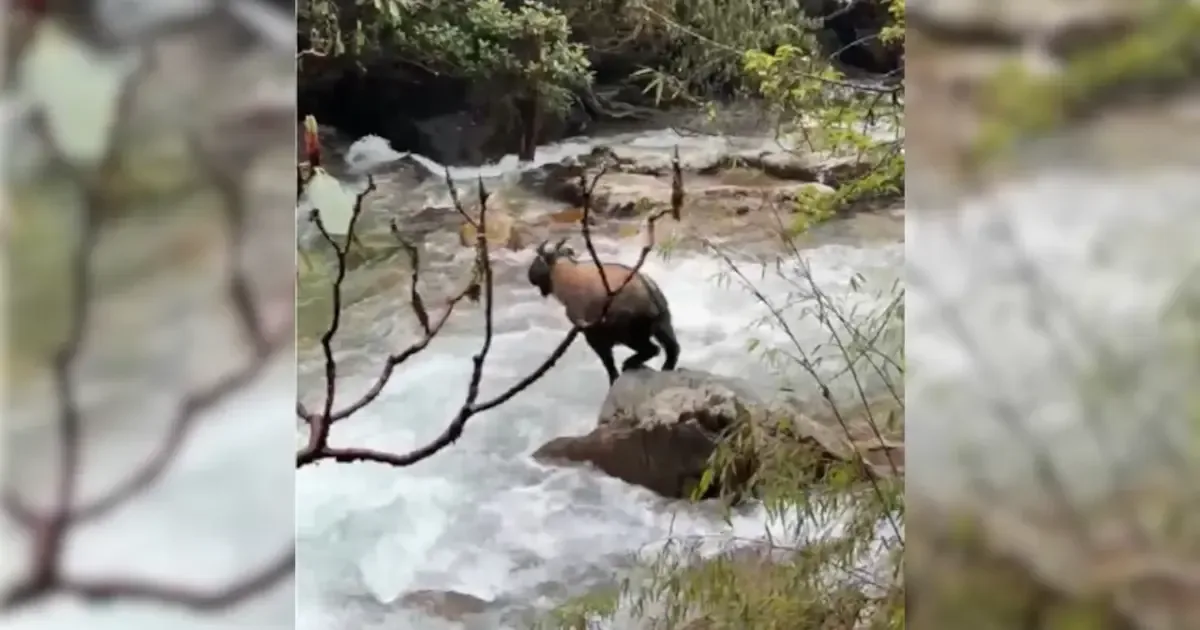
For the first time in nearly 30 years, a rare and little-studied creature called the Mishmi Takin has been spotted in the Indian state of Sikkim. Even more exciting: forest officials managed to capture video footage of the animal during a routine patrol. This is the first video evidence of the species ever recorded from that area.
The sighting happened in Bakuchen, a remote forest area under the Tingda Reserve Forest. Officials were on a regular patrol when they came across the Mishmi Takin and quickly pulled out their cameras. The footage confirms that this shy, high-altitude animal still roams the forests of Sikkim, even after decades without any confirmed sightings.
First-Ever Mishmi Takin Video Footage Captured in Bakuchen
The patrol team was doing its usual rounds through the dense, mountainous terrain of Tingda Reserve Forest when they spotted the Mishmi Takin. According to forest department sources, the team acted quickly to record the animal on video. This is not just any sighting: it is the first time anyone has filmed a Mishmi Takin in the Bakuchen area. Before this, the only proof of the animal’s presence in Sikkim came from old reports and a few scattered signs like footprints or droppings.
The video itself is a huge leap for wildlife documentation. It gives scientists and conservationists a clear, visual record of the Mishmi Takin in Sikkim. The exact date of the patrol and the number of animals seen were not released by officials, but the fact that it happened at all is being called a major achievement. The footage will now be studied closely to learn more about the animal’s behavior and how it lives in this part of the Himalayas.
Bakuchen is a small, forested area within the larger Tingda Reserve Forest. This reserve is part of Sikkim’s protected area network, designed to safeguard wildlife and their habitats. The presence of the Mishmi Takin here suggests that the reserve is doing its job. It also raises hope that other rare animals might be living undiscovered in these woods.
Understanding the Mishmi Takin
The Mishmi Takin (scientific name Budorcas taxicolor) is a type of goat-antelope, related to both goats and antelopes. It resembles a small bison with a thick golden coat, a stout body, short legs, and a distinctive hump on its shoulders. Both males and females have horns that curve backward.
This animal lives in the high-altitude forests of the eastern Himalayas. Its known range includes parts of northeastern India (especially Arunachal Pradesh), Bhutan, and China. The Mishmi Takin is adapted to cold, rugged terrain and feeds on grasses, leaves, and bamboo shoots. Despite its size, it is very shy and difficult to spot, which is why scientists call it “under-studied” – much remains unknown about its behavior and population.
The International Union for Conservation of Nature (IUCN) lists the Mishmi Takin as Vulnerable, meaning it faces a high risk of extinction in the wild. Main threats include habitat loss from logging and farming, and hunting for meat and fur. Because the Mishmi Takin lives in remote areas, it is challenging to protect and study.
In Sikkim, historical records from the early 1900s mention the Mishmi Takin. However, sightings became extremely rare afterward. For nearly three decades, no one had officially reported seeing one. This new sighting and video are therefore crucial, proving the species has not disappeared from Sikkim.
Significance of the Sikkim Sighting
For conservationists, this sighting is significant. It confirms the Mishmi Takin still inhabits Sikkim and that the forests of Tingda Reserve are healthy enough to support it. The video evidence provides researchers with a valuable visual record for studying the animal’s physical condition and behavior without disturbance.
This sighting also helps fill gaps in understanding the Mishmi Takin’s range. While its stronghold is in the Mishmi Hills of Arunachal Pradesh and across the border in Bhutan and Tibet, its presence in Sikkim, to the west, was uncertain. This sighting provides proof that the animal still utilizes this part of its historical range.
The fact that a routine patrol discovered the animal is also a positive sign. It demonstrates the active presence and vigilance of forest guards in remote areas, which is essential for such discoveries. Regular patrols are vital for monitoring wildlife, especially elusive species like the Mishmi Takin.
For the people of Sikkim, the sighting brings a sense of pride and highlights the state’s importance for rare wildlife, reinforcing the value of conservation efforts. Local communities near the Tingda Reserve Forest may also benefit from increased attention and potential ecotourism opportunities.
Future Conservation Efforts for Mishmi Takin
Forest officials and wildlife experts will now meticulously study the captured video to learn more about the Mishmi Takin’s age, health, and potential group size. Efforts may include setting up camera traps in the area to monitor for further sightings or the presence of other individuals.
This discovery could spur dedicated research into the Mishmi Takin in Sikkim. Scientists may aim to track its movements, understand its habitat requirements, and assess specific threats. This information is vital for developing effective conservation strategies, such as protecting movement corridors.
Tingda Reserve Forest already benefits from conservation measures as part of Sikkim’s protected area network, restricting logging and hunting. Patrols are a key enforcement tool. However, increased resources for species-specific monitoring, including training guards and utilizing technology like drones, could further enhance protection.
The finding may also foster collaboration with neighboring states and countries, as the Mishmi Takin’s habitat spans across Arunachal Pradesh, Bhutan, and China. Sharing data can help build a comprehensive understanding of the species’ population and movements across its range, emphasizing the importance of cross-border conservation efforts.
To protect the animal from potential poaching, the exact sighting location will likely remain confidential. This is a standard practice to prioritize the safety of rare species over public attention.
The sighting serves as a reminder of the vast unknown within the Himalayas. Even in a well-documented region like Sikkim, rare species can remain hidden for decades. This underscores the importance of continued vigilance, technological advancements, and a strong commitment to conservation to discover and protect such elusive wildlife.
The first-ever video of a Mishmi Takin in Bakuchen, though brief, carries a powerful message: the wild persists, and careful observation can lead to surprising and hopeful discoveries.
Frequently Asked Questions
What is a Mishmi Takin?
The Mishmi Takin is a rare goat-antelope species found in the high-altitude forests of the eastern Himalayas. It has a stout body, thick golden coat, and distinctive backward-curving horns. It is known for being shy and difficult to spot, making it under-studied.
Why is the Mishmi Takin considered vulnerable?
The Mishmi Takin is listed as Vulnerable by the IUCN due to threats like habitat loss from logging and farming, and hunting for its meat and fur. Its remote habitat also makes it difficult to protect and monitor effectively.
Where is the Mishmi Takin typically found?
The Mishmi Takin's known range includes parts of northeastern India, particularly Arunachal Pradesh, as well as Bhutan and China. Sikkim is at the western edge of its historical range.
Why is the video footage from Sikkim so important?
The video is the first concrete proof of the Mishmi Takin's presence in Sikkim in nearly three decades. It confirms the species has not disappeared from the area and suggests that the local protected forests are healthy enough to support it.
What are the next steps for conserving the Mishmi Takin in Sikkim?
Conservation efforts will likely involve studying the video footage, potentially setting up camera traps for further monitoring, and assessing the animal's habitat needs and threats. Increased resources for patrols and species-specific monitoring may also be considered.
Will the exact location of the sighting be revealed?
The exact location of the sighting will likely be kept confidential by forest officials. This is a common practice to protect rare and vulnerable species from potential poaching or disturbance by human activity.
References
- Rare, Under-Studied Goat-Antelope Spotted In Sikkim After Nearly 3 Decades – This source reports the first-ever video footage of a Mishmi Takin in the Bakuchen area of Tingda Reserve Forest during a routine patrol.