
At a Glance
A Ukrainian drone strike on a Moscow oil refinery caused a large explosion, blowing the lid off a fuel tank and sending black smoke into the sky. Residents reported black, oily rain falling in the aftermath, a phenomenon likely caused by burning fuel particles. This attack is noted as one of the most significant drone strikes on the capital in over two years, highlighting Ukraine’s increasing capability to target Russian infrastructure deep within its territory.
Key Takeaways
The main points at a glance
- A Ukrainian drone successfully struck an oil refinery near Moscow, causing a significant explosion that blew the lid off a fuel storage tank.
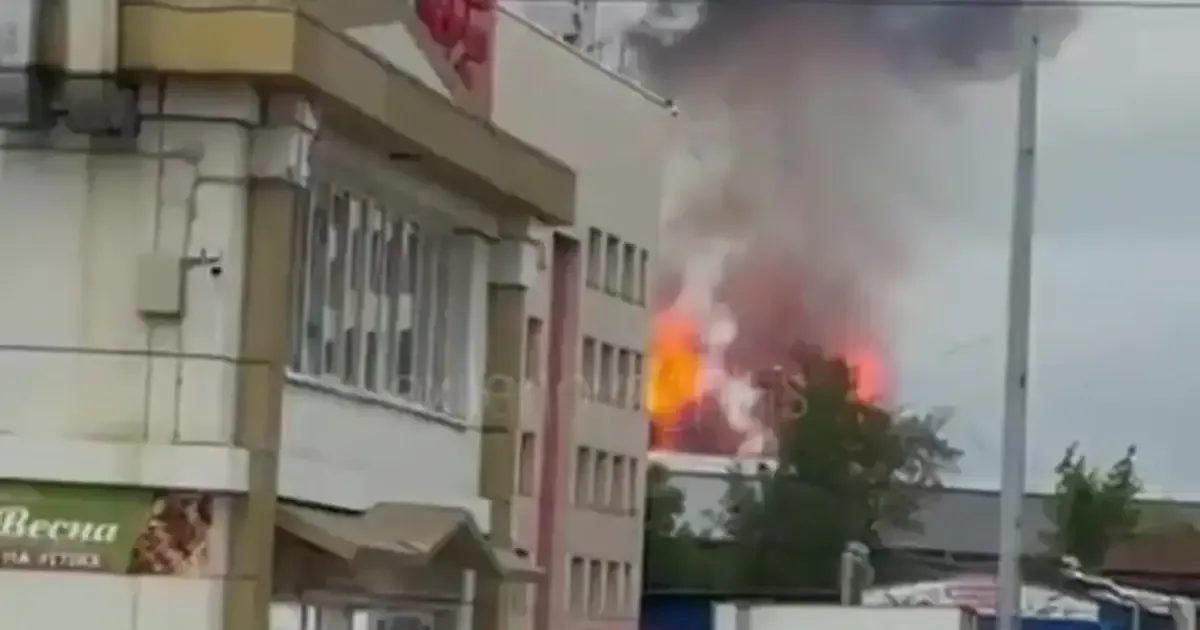
- Video footage captured the dramatic moment of the blast and the subsequent plume of black smoke.
- Residents in the affected area reported experiencing black, oily rain, attributed to burning fuel particles from the refinery.
- The attack is considered one of the largest drone strikes on Moscow in over two years of the conflict.
- The strike underscores Ukraine’s strategy of targeting Russian energy infrastructure to disrupt supplies and demonstrate the war’s reach.
- The incident raises concerns about the effectiveness of Russian air defenses and the potential for future, similar attacks on critical Russian facilities.
A massive explosion rocked an oil refinery near Moscow after a Ukrainian drone hit one of its fuel storage tanks. Dramatic video captured the moment the tank’s heavy metal lid flew into the air, followed by a plume of black smoke that rose high above the facility.
The attack, confirmed by Russian officials, marks one of the largest drone strikes on Moscow in more than two years of war. Residents in nearby areas reported a strange black rain falling from the sky, likely caused by burning fuel particles mixing with the atmosphere.
Ukrainian Drone Strike Hits Moscow Refinery
The video, shared widely on social media and verified by multiple news outlets, shows the refinery in the Moscow region just before the blast. A small drone is seen approaching the facility. Then, a bright flash. The explosion is powerful enough to lift the lid off a large cylindrical fuel tank. The lid spins through the air like a giant coin before crashing down. Thick black smoke pours out of the tank, forming a dark column that can be seen from miles away.
The attack happened in September 2024, though the exact date has not been officially confirmed. The refinery is located within the Moscow city limits or just outside, making it one of the closest strikes to the Russian capital since the war began in February 2022.
Ukrainian authorities have not officially claimed responsibility for the attack. But the pattern fits a broader strategy: using drones to hit Russian oil and energy infrastructure, both to disrupt fuel supplies and to show that Moscow is not safe from the war.
Black Rain Over Moscow After Refinery Attack
Hours after the explosion, residents in the Moscow region began posting about a strange, oily black rain falling from the sky. The rain left dark stains on cars, windows, and outdoor furniture. Some people described a strong smell of fuel in the air.
“The rain was black and greasy,” one resident told a local news site. “It felt like little drops of oil. I had to wash my car twice, and it still smells.”
The black rain is a direct result of the drone strike. When a fuel storage tank burns, soot and partially burned hydrocarbons rise into the air. As the smoke cloud cools, these particles mix with moisture in the atmosphere and fall back to earth as black rain. It is a common phenomenon after large oil fires, but for residents of Moscow, it was a shocking and unsettling reminder that the war is no longer far away.
Russian authorities have not issued any health warnings about the black rain. However, experts say the rain could contain toxic chemicals like benzene, which is found in crude oil and can cause health problems with prolonged exposure. The Russian government has not confirmed any tests on the rain’s composition.
Ukraine’s Escalating Drone Campaign Near the Capital
This drone attack is part of a steady escalation in Ukraine’s ability to strike deep inside Russian territory. In the early months of the war, Ukrainian drones rarely reached Moscow. But over the past year, the number of attacks has increased, and the drones have gotten more sophisticated.
Ukraine has developed and deployed a range of drones, including long-range models that can fly hundreds of miles. These drones are often small, hard to detect on radar, and can fly at low altitudes to avoid air defenses. Some are equipped with simple navigation systems that allow them to follow a pre-programmed route. Others are guided by satellite signals.
The drone that hit the Moscow refinery likely evaded Russian air defenses by flying low and fast. Russia has deployed multiple layers of air defense around the capital, including S-400 missile systems and electronic jamming equipment. But no defense system is perfect. Drones that fly close to the ground can disappear into the clutter of buildings and terrain. They can also be harder to target than larger missiles.
Previous Ukrainian drone strikes on Russia have targeted military bases, ammunition depots, and oil refineries. In May 2023, two drones struck the Kremlin itself, causing minor damage but big headlines. In August 2023, drones hit an office building in central Moscow. Each attack has pushed the Russian government to respond, but the drones keep getting through.
This September 2024 strike is one of the largest in terms of visible damage. The tank lid being blown off is a dramatic image that shows the power of the explosion. It also shows that Ukraine is willing to strike close to the heart of Russian power, not just at military targets far from Moscow.
Significance of the Moscow Refinery Attack
The Moscow refinery is a key part of Russia’s fuel infrastructure. It produces gasoline, diesel, jet fuel, and other petroleum products for the capital region. Moscow is one of the largest cities in the world, with a population of over 12 million people. The city’s cars, buses, trucks, and heating systems all depend on a steady supply of fuel.
If the refinery were to shut down for a long time, it could cause fuel shortages in Moscow. Queues at gas stations could form. Prices could rise. The Russian government would have to import fuel from other parts of the country, which takes time and money.
Even a temporary halt in production at the refinery can cause problems. The drone strike on the fuel tank likely started a fire that may take hours or days to put out. The tank itself is damaged and will need repairs before it can be used again. The black rain has also created a cleanup problem for authorities.
Beyond the immediate damage, the attack sends a message. Ukraine is targeting the economic engine of the Russian war effort. Oil and gas exports are a major source of revenue for the Russian government. By hitting refineries, Ukraine hopes to reduce Russia’s ability to produce fuel for its military and to sell on the global market.
The Kremlin has responded by increasing security at energy sites. But the drone threat is not easy to stop. Drones are cheap to build compared to the missiles they replace. Ukraine can afford to lose dozens of drones if just one gets through to a valuable target.
Future Implications of Drone Strikes
Russian authorities are likely to step up air defense measures around Moscow. That could mean more radar systems, more missile batteries, and more electronic jammers. But it is not clear if that will be enough. Drones are evolving quickly, and defenses are always playing catch-up.
Ukraine, for its part, has shown no signs of slowing down its drone campaign. President Volodymyr Zelensky has said that Ukraine must bring the war home to Russia to make it real for Russian citizens. As long as the war continues, more drone attacks on Russian soil are expected.
For residents of Moscow, the black rain was a warning. The war that started in February 2022 is no longer just something they see on television. It is now raining down on their streets. The Russian government has tried to keep daily life in the capital normal, but attacks like this one make that harder.
In the immediate term, the refinery fire will need to be put out. Firefighters and hazmat teams will need to clean up the area. The damaged tank will have to be repaired or replaced. The black rain in the surrounding neighborhoods will need to be washed away, though the oily residue may linger.
The strike also raises questions about how much damage Ukraine can do over time. If drones keep hitting Russian refineries, it could eventually affect Russia’s ability to fuel its military in the field. That would be a strategic win for Ukraine. But the war is far from over, and Russia has deep resources to draw on.
For now, the video of the tank lid flying off will stay in people’s minds. It is a simple, powerful image of the war reaching a place that once felt safe. The black rain that fell on Moscow is a sign that no one is entirely immune from the conflict’s fallout.
Frequently Asked Questions
What happened at the Moscow oil refinery?
A Ukrainian drone struck a fuel storage tank at an oil refinery near Moscow, causing a large explosion. The blast blew the heavy metal lid off the tank and released a significant amount of black smoke.
What is the 'black rain' reported by residents?
The black rain is likely composed of soot and partially burned fuel particles that rose into the atmosphere after the explosion. As the smoke cloud cooled, these particles mixed with moisture and fell back to earth, leaving dark, oily stains.
Is this the first drone attack on Moscow?
No, this is one of the largest drone attacks on Moscow in over two years of war. Ukraine has conducted numerous drone strikes on Russian territory, targeting various infrastructure, including previous attacks on the Kremlin and other buildings in Moscow.
What is the significance of targeting an oil refinery?
Targeting oil refineries is part of Ukraine's strategy to disrupt Russia's fuel supply for its military and reduce its revenue from oil exports. It also serves to demonstrate that Russian territory is not immune to the conflict.
How effective are Ukraine's drones against Russian defenses?
Ukraine has developed increasingly sophisticated long-range drones that can evade radar detection by flying at low altitudes. While Russia has layered air defenses, these drones pose a persistent challenge, with attacks continuing to penetrate.
What are the potential health risks of the black rain?
Experts suggest the black rain could contain toxic chemicals like benzene, found in crude oil. Prolonged exposure to such chemicals can potentially cause health problems, though Russian authorities have not issued specific health warnings.
What is the likely impact on fuel supply in Moscow?
While the immediate impact on fuel supply is not fully known, a significant refinery fire and damage to a storage tank could lead to temporary disruptions, potential fuel shortages, and price increases in the Moscow region if production is halted for an extended period.
References
- Video: Ukrainian Drone Hits Russian Refinery, Blows Tank Lid Off – Original report (NDTV World)
- Video: Ukrainian Drone Hits Russian Refinery, Blows Tank Lid Off – NDTV – NDTV
- Moscow residents complain of black rain after largest Ukrainian attack hits oil refinery – BBC – Added detail about black rain complaints from Moscow residents.
- Tank lid blown off, black smoke billows: Dramatic video captures Ukrainian strike on Moscow refinery | Watch | World News – Hindustan Times – Emphasized the dramatic video of black smoke and tank lid.
- Video Fuel storage tank's lid blown off as Moscow refinery targeted by Ukraine – ABC News – Breaking News, Latest News and Videos – Confirmed the strike on the Moscow refinery with video evidence.
- Ukraine brings the war to Moscow as huge blasts shake refinery – Reuters – Framed the attack as Ukraine bringing war to Moscow with huge blasts.