
At a Glance
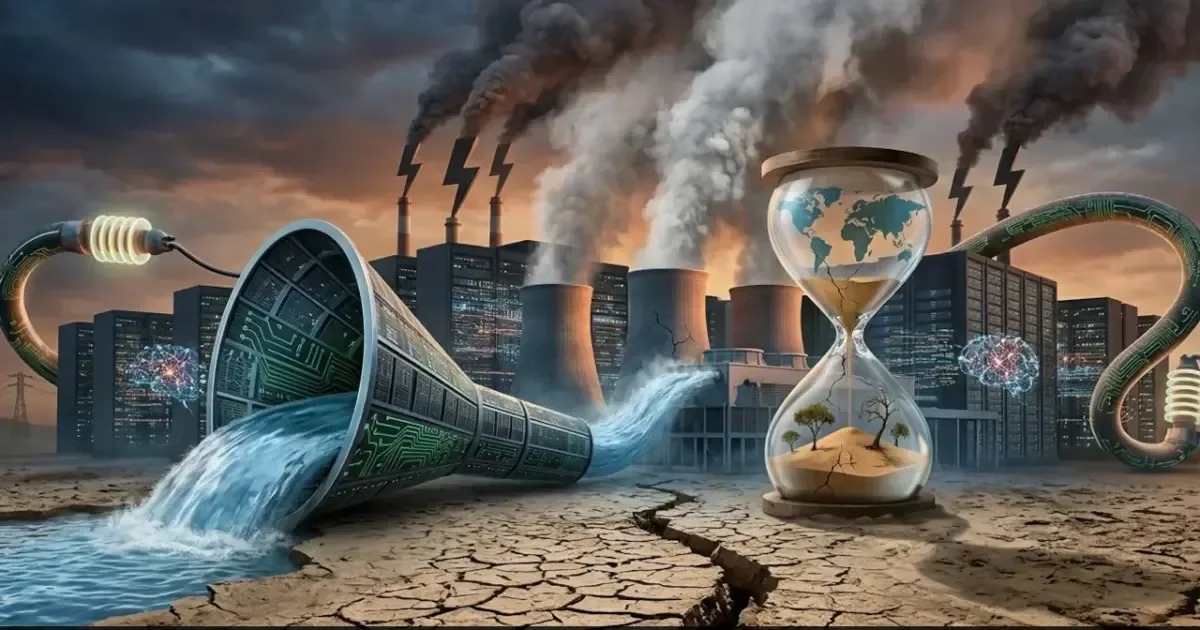
India’s ambitious plans for AI data centers face a significant challenge from rising global temperatures, as a new report highlights the vulnerability of these facilities to heat. While tech leaders explore radical solutions like space-based data centers, the immediate need for India is to develop practical strategies for cooling its ground-based infrastructure, managing power and water resources, and selecting suitable locations to overcome the India AI data centers heat hurdle and capitalize on opportunities presented by global infrastructure constraints.
Key Takeaways
The main points at a glance
- India’s AI data center expansion plans are at risk due to increasing global temperatures and heatwaves, as detailed in a global climate risk report.
- Data centers generate significant heat and require constant cooling, a challenge exacerbated by India’s already hot climate and the increasing intensity of heatwaves.
- While space-based data centers are being discussed, they are not a practical solution for India’s immediate needs due to high costs and technological immaturity.
- The US facing power limitations for its AI data centers presents a potential window of opportunity for India to attract investment, but this requires solving its own heat and infrastructure challenges.
- Key solutions for India include investing in advanced cooling technologies, strengthening the power grid, improving water management, strategic site selection, and supportive government policies.
- Successfully addressing the India AI data centers heat hurdle is crucial for the country to realize its AI ambitions and become a global hub for AI infrastructure.
The Heat Beneath the Hype: India’s Data Center Dilemma
Imagine a sweltering Indian summer day. Inside a new building, thousands of computer servers hum, processing data for India’s artificial intelligence ambitions. The cooling systems work hard to prevent overheating, but the relentless heat outside strains power and water resources, potentially slowing down the servers.
This scenario highlights a real challenge for India’s ambitious plans to build a vast network of AI data centers. A recent global report indicates that many planned data centers worldwide, including in India, face significant climate change risks, with heat being the primary concern.
India aims to be a global AI leader, attracting investment in AI infrastructure. Tech giants are investing heavily, but data centers generate immense heat and require constant cooling. India’s hot climate presents a significant hurdle for these operations.
The 2026 Global Analysis of Planned Data Centres for Physical Climate Risk and Resilience examined 2,595 planned data centers globally, assessing their exposure to climate damage. The findings are concerning for India, as rising global temperatures increase the frequency and intensity of heatwaves, making data center cooling more difficult and expensive, while also straining power grids and water supplies.
India’s climate poses challenges for data centers, with extreme heat common for months, often exceeding 40 degrees Celsius and reaching 50 degrees in some regions. Unlike cooler regions like the Nordics, which benefit from natural cooling, India relies on energy-intensive air conditioning and water-based cooling systems, both of which are costly and resource-draining.
The stakes are high, as AI is crucial for economic growth and national competitiveness. India’s government prioritizes AI development, but the success of its infrastructure plans hinges on the ability of data centers to operate reliably despite the heat.
2,595 Data Centers and Counting: Global Climate Risk Report Findings
The report analyzed 2,595 planned data centers, reflecting rapid global digital infrastructure growth. Its key message is that many of these facilities are being built in areas prone to significant climate risks.
The report focused on physical climate risks like heatwaves, floods, storms, and rising sea levels. For data centers, heat is the most immediate threat, reducing cooling efficiency, causing server crashes, and potentially leading to complete shutdowns, resulting in data loss, financial losses, and damaged trust.
While India faces this challenge globally, its situation is particularly difficult due to its size, population, and climate. The country is already experiencing more frequent and severe heatwaves, a trend expected to worsen.
The report serves as a warning to the industry, urging data center operators to carefully consider location and cooling strategies, planning for a hotter, more unpredictable future rather than assuming stable climate conditions.
For India, this necessitates a strategic rethink. Despite advantages like a skilled workforce, a growing digital economy, and lower labor costs, the climate risk is a major disadvantage. Failure to address the heat problem could cause India to lose out to cooler, more reliable locations.
The Space Solution: Musk, Pichai, and the Great Escape
Some tech leaders propose a radical solution: moving data centers to space. Elon Musk and Sundar Pichai have suggested building data centers in orbit, where the absence of an atmosphere, abundant solar power, and the vacuum of space could provide natural cooling.
This concept involves placing data centers on satellites or space stations, powered by solar panels, cooled by space, and transmitting data back to Earth via lasers or radio waves. The potential benefits include immunity to Earth’s climate, no need for water cooling, and continuous clean energy operation.
However, the challenges are immense. Launching equipment into space remains extremely expensive, potentially costing billions for a single data center. Maintenance is another significant hurdle, requiring robotic systems or pre-positioned spare parts, adding complexity and cost.
Latency is also a concern, as data travel time from space to Earth could be too slow for certain AI applications.
Despite these difficulties, the idea is gaining attention. News Arena India has covered the hurdles of space-based data centers, noting that while the concept is exciting, the technology is not yet practical or affordable for widespread use.
For India, the space solution is a long-term vision, not an immediate fix for its current heat challenges.
Why Amazon Says ‘No’ to Space Data Centers
Amazon’s AWS CEO has publicly disagreed with the space data center concept, favoring terrestrial solutions. According to the Times of India, the AWS chief believes that improving the efficiency and sustainability of Earth-based data centers is a more viable approach.
As the world’s largest cloud computing provider, Amazon’s perspective is significant. The company is investing in renewable energy and water-efficient cooling for its existing data centers, arguing that these advancements can address the heat problem effectively.
This disagreement highlights a broader debate: should the industry pursue radical new technologies or focus on optimizing existing ones? Both strategies involve risks and rewards.
For India, Amazon’s focus on practical, ground-based solutions is more relevant. The country needs to build its AI infrastructure now, requiring immediate solutions for cooling data centers in hot climates through investment in advanced cooling technology, renewable energy, and water management, alongside strategic site selection.
America’s Power Wall: India’s Opening Window?
While India grapples with heat, the United States faces an electricity shortage for its AI data centers, as reported by News18. The aging US power grid struggles to meet the immense demand from new data centers, creating potential opportunities for other countries like India.
If the US cannot expand its data center capacity, companies may seek alternatives. India, with its growing power grid, skilled workforce, and favorable business environment, could potentially fill this gap.
The US power constraints present a temporary opening for India to become a leader in AI infrastructure. However, this opportunity depends on India’s ability to provide reliable, cool, and affordable data center space, competing with other potential locations like Scandinavia or Canada.
The US power issues are likely to persist, offering India a window of perhaps a decade or more. However, this window will not remain open indefinitely, emphasizing the need for India to act decisively.
Can India Beat the Heat? What Must Change
For India’s AI data center plans to succeed, multifaceted changes are necessary.
Firstly, investment in advanced cooling technologies is crucial. Beyond traditional air conditioning, innovations like liquid cooling, immersion cooling, and evaporative cooling offer greater efficiency. Utilizing waste heat for other purposes, such as heating buildings, should also be encouraged through incentives.
Secondly, strengthening the power grid is essential for stable electricity supply. Investing in grid upgrades and renewable energy sources like solar and wind can mitigate the impact of heatwave-driven demand spikes and ensure reliable power for data centers.
Thirdly, water management is critical. Given water scarcity, adopting water-efficient cooling systems, recycling water, and avoiding data center construction in water-stressed areas are vital.
Fourthly, strategic location selection is important. Building data centers in cooler regions like hill stations or coastal areas could offer natural advantages, though challenges like terrain and infrastructure must be considered.
Fifthly, robust policy support is needed. This includes clear regulations, streamlined approvals, and incentives for green energy and water conservation to attract and facilitate data center development.
Finally, long-term planning for a hotter, more unpredictable future is imperative. Data centers must be designed for resilience against extreme weather events, prioritizing adaptability and sustainability.
The Bottom Line: Climate, Compute, and the Next AI Frontier
India’s AI ambitions are significant, with the potential to establish it as a global AI powerhouse. However, the India AI data centers heat hurdle is a substantial obstacle, as highlighted by the global report on planned data centers and climate risk.
While the debate around space data centers reflects concerns about Earth-based computing limits, space is not a viable solution for India’s immediate needs. The focus must remain on developing smarter, cooler, and more resilient data centers on the ground.
The US power challenges present India with a valuable window of opportunity. Seizing this chance requires addressing the heat problem effectively, otherwise, the opportunity may pass to other nations.
Ultimately, India’s AI future hinges on its capacity to manage the heat challenge. This demands investment in technology, infrastructure, and policy, alongside a serious commitment to addressing climate risk and acting promptly.
India has a chance to lead in the AI frontier, but overcoming the heat hurdle is the critical first step.
Frequently Asked Questions
What is the main challenge facing India's AI data center plans?
The primary challenge is the increasing heat due to climate change, creating an India AI data centers heat hurdle. Data centers generate immense heat and require constant cooling, which becomes more difficult and expensive in India's hot climate, especially with more frequent and intense heatwaves.
What did the global report on data centers find?
The report analyzed 2,595 planned data centers worldwide and found that many are at significant risk from physical climate damage, particularly heatwaves. It highlights that rising global temperatures make cooling data centers harder and more costly, straining power grids and water supplies.
Are space-based data centers a solution for India?
While proposed by tech leaders like Elon Musk and Sundar Pichai, space-based data centers are currently not a practical solution for India. The high costs of launching and maintaining them, along with technological limitations, make them unfeasible for immediate needs.
How can India overcome the heat challenge for its data centers?
India needs to invest in advanced cooling technologies like liquid cooling, strengthen its power grid with renewable energy sources, improve water management by using water-efficient systems, choose cooler locations for data centers, and implement supportive government policies.
Why is the US power situation relevant to India's data centers?
The US is facing an electricity shortage for its AI data centers due to an aging power grid. This creates a potential opportunity for India to attract investment and become a hub for AI infrastructure if it can offer reliable and cool data center solutions.
What are the risks if India fails to address the heat hurdle?
If India cannot solve the heat problem, it risks falling behind other countries that can offer more reliable and cost-effective data center operations. This could hinder its ambition to become a global AI powerhouse and lead to missed economic opportunities.
References
- India's Artificial Intelligence Data Centres Plan May Hit 'Heat' Hurdle – Original report (NDTV India)
- India's Artificial Intelligence Data Centres Plan May Hit 'Heat' Hurdle – NDTV – NDTV
- Data centres in space? The hurdles we must solve first – News Arena India – Adds context on the challenges of building data centers in space, relevant to a proposed alternative solution.
- Tech3 | PhonePe, Google Pay feel the heat; Bengaluru startup ecosystem nears $153 billion; and more – Moneycontrol.com – While primarily about fintech and startups, the title includes 'feel the heat,' loosely linking to the heat theme; provides regional economic context for Bengaluru.
- America’s AI Dreams Just Hit A Power Wall: Will India Step In To Run The Future? – News18 – Highlights the US power constraint as a catalyst for India to become a major AI data center hub.
- Amazon's AWS CEO does not agree with Elon Musk and Sundar Pichai 'Space solution' for data centres; says: – The Times of India – Reports Amazon's AWS CEO publicly rejecting the idea of space-based data centers, adding an industry counterpoint to the Musk-Pichai vision.