India has achieved a diplomatic milestone by securing the FATF vice-presidency, a leadership role in the global watchdog against money laundering and terrorist financing. For the first time, an Indian official will hold one of the top two leadership positions in this powerful international body.
The appointment marks a significant step for India in global financial governance, giving New Delhi a direct hand in shaping how the world fights dirty money and funds for terrorism. This article explains what the FATF is, why this role matters for India, and what comes next.
What is the FATF?
The Financial Action Task Force (FATF) is an intergovernmental organization established in 1989 by the G7 countries. Its primary mission is to set global standards for combating money laundering. Over time, its mandate expanded to include fighting terrorist financing and, more recently, preventing the proliferation of weapons of mass destruction.
The FATF acts as the world’s rulebook for financial crime. It guides countries on the laws and systems needed to track suspicious financial activities, making it harder for criminals and terrorists to move illicit funds undetected. The organization currently has 39 member countries and several regional bodies, covering most major financial centers around the globe.
While the FATF lacks direct enforcement powers like arresting individuals or freezing assets, it wields significant influence through its peer review process and by maintaining lists of countries that are non-compliant or have insufficient measures against money laundering and terrorist financing. The “grey list” includes countries under increased monitoring that have committed to addressing deficiencies, while the “black list” includes high-risk jurisdictions subject to counter-measures. Pakistan, for example, was on the grey list for several years until late 2022, after demonstrating improved compliance. Other countries like North Korea and Iran have been on the black list for years. The FATF’s evaluations are conducted through mutual evaluations, where teams of experts from member countries assess each other’s legal and regulatory frameworks. These evaluations are rigorous and involve on-site visits, leading to detailed reports that identify strengths and weaknesses. The FATF also sets recommendations-currently 40-that serve as a comprehensive framework for anti-money laundering and counter-terrorist financing (AML/CFT) efforts worldwide. Countries are expected to implement these recommendations in their domestic laws and regulations, and their progress is tracked through follow-up reports. The FATF’s standards are recognized by the United Nations and are enforced through the Financial Action Task Force-style regional bodies (FSRBs) that extend its reach to non-member states.
India has been a member of the FATF since 2010 and has undergone mutual evaluations, including the most recent one in 2024 which resulted in a high compliance rating. The country has steadily improved its AML/CFT regime, introducing legislation such as the Prevention of Money Laundering Act (PMLA) and the Unlawful Activities (Prevention) Act (UAPA) to meet international standards. India’s election to the vice-presidency reflects its growing credibility and active participation in FATF’s work over the years.
Who is Vivek Aggarwal?
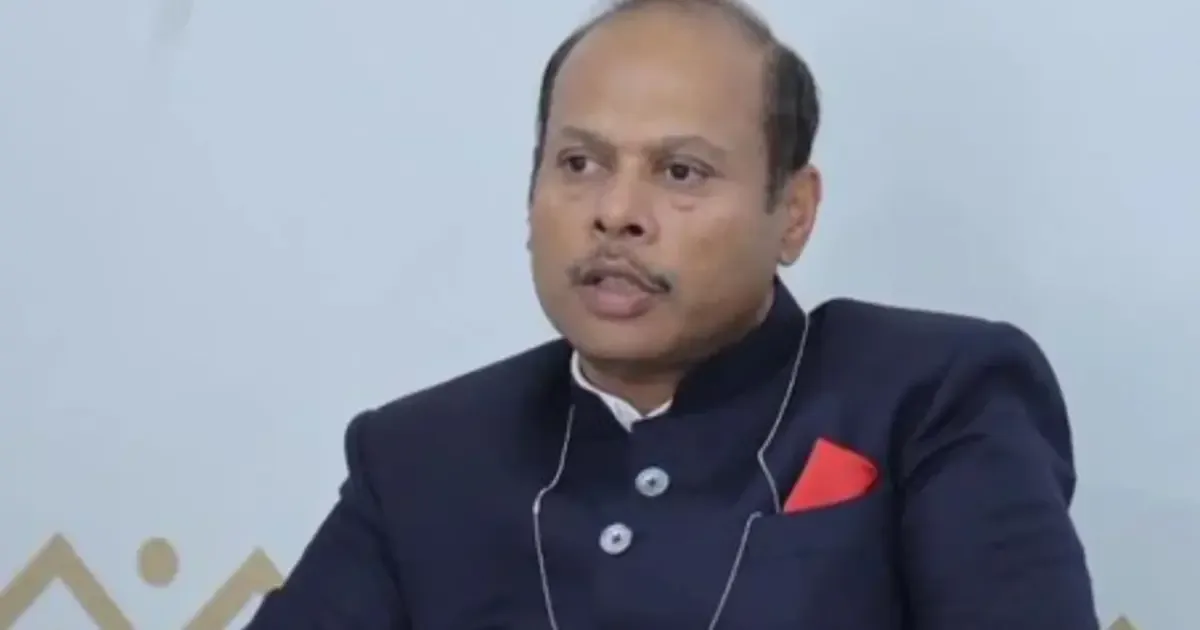
Vivek Aggarwal is a 1994-batch Indian Administrative Service (IAS) officer from the Madhya Pradesh cadre, currently serving as Secretary to the Government of India in the Ministry of Culture. He was elected FATF Vice-President for a term expected to run from July 2026 to June 2028, based on the standard two-year term for such positions. His election marks the first time an Indian has held the vice-presidency, a role that positions him to become President after the current president’s term ends, following FATF’s tradition of vice-presidents succeeding to the presidency.
Aggarwal brings a blend of administrative and policy experience to the role. As Culture Secretary, he has overseen heritage preservation and cultural diplomacy, but his career spans multiple ministries and departments. Prior to his current assignment, he held positions in the Ministry of Finance, where he dealt with financial sector policies, and earlier served in state-level assignments in Madhya Pradesh, including in finance and planning. His experience in both financial regulation and international cooperation is expected to be valuable in the FATF’s work. The fact that a bureaucrat with a diverse background-rather than a career diplomat or financial regulator-was chosen for this role underscores the Indian government’s effort to project its bureaucratic expertise onto the global stage.
The election process for FATF leadership involves a vote by member countries during plenary meetings. Aggarwal’s candidacy was likely backed by broad support, including from other regional members and allied nations. His term will begin after the current vice-president’s tenure ends, with the exact transition date to be confirmed. The appointment was widely reported in Indian media, with NDTW, Deccan Herald, WION, and NDTV Profit all highlighting the historic nature of the milestone.
Implications for India
India’s vice-presidency of the FATF has several important implications, both domestically and internationally. First, it gives India a direct role in setting the global agenda on financial crime. The FATF vice-president is a member of the organization’s leadership team and participates in strategic decisions, such as updating the 40 recommendations, determining which countries to list, and shaping the future direction of AML/CFT standards. This means India can help prioritize issues that matter to it, such as cross-border financial flows linked to terrorism in South Asia, the misuse of informal value transfer systems like hawala, and the need for greater transparency in international financial transactions.
Second, the role boosts India’s standing as a responsible world power in financial governance. It signals that India is not just a rule-taker but a rule-maker in global regulatory bodies. This aligns with the broader push from the Carnegie Endowment for International Peace, which in a recent opinion piece urged India to become an international leader in financial intelligence. The Carnegie article argued that with its growing economy and sophisticated financial system, India should leverage its FATF role to champion reforms, such as enhancing information sharing between countries and improving the oversight of virtual assets and cryptocurrencies, which are increasingly used in illicit finance.
Third, the vice-presidency may have near-term regional implications. Pakistan’s previous inclusion on the FATF grey list was a point of tension between India and Pakistan, as India pressed for stronger action against terror financing. Now, with India at the helm of the FATF in a leadership capacity, it will have a formal voice in decisions that affect its neighbors. However, the FATF operates by consensus, and any listing decision requires agreement among members. Therefore, India’s influence will be exercised within the multilateral framework rather than unilaterally.
On the domestic front, the appointment could accelerate India’s own AML/CFT reforms. Holding a leadership position often encourages countries to lead by example. India may prioritize further tightening its laws, enhancing coordination between enforcement agencies like the Enforcement Directorate (ED) and the Financial Intelligence Unit (FIU), and adopting emerging best practices in areas such as beneficial ownership transparency and risk-based supervision of non-financial sectors (like real estate and precious stones). The vice-presidency also provides a platform to showcase India’s progress in these areas, potentially attracting investment by demonstrating compliance with international norms.
More broadly, India’s role at the FATF reinforces its position in other multilateral financial bodies. It comes at a time when India has held the presidency of the G20 (2023) and the Shanghai Cooperation Organisation (SCO), and is pushing for reforms of international financial institutions like the International Monetary Fund and the World Bank. The FATF vice-presidency adds another feather to India’s cap in its quest for a greater say in global governance.
Challenges remain. The FATF’s work is technical and complex, requiring diplomacy and expertise. Aggarwal will need to balance India’s national interests with the organization’s collective goals. He will also have to navigate ongoing debates about the effectiveness of FATF’s grey list as a compliance tool, and about how to adapt standards to emerging technologies like decentralized finance (DeFi) and non-fungible tokens (NFTs), which pose new AML/CFT risks. Nonetheless, India’s historic election is a clear vote of confidence in its ability to contribute to this critical area of international security.
References
- India Secures Historic Vice-Presidency Of Anti-Money Laundering Body FATF – Original report (NDTV World)
- India Secures Historic Vice-Presidency Of Anti-Money Laundering Body FATF – NDTV – NDTV reported the historic election of Vivek Aggarwal as FATF Vice-President, emphasizing India’s financial leadership.
- India appointed to FATF vice presidency for the first time – Deccan Herald – Deccan Herald noted that this is the first time India has been appointed to the FATF vice presidency, confirming the milestone.
- India secures major role at FATF: All about the watchdog that previously put Pakistan on the grey list – WION – WION highlighted FATF’s role as a watchdog that previously placed Pakistan on the grey list, providing regional context for India’s new role.
- India Secures Top FATF Role As Vivek Aggarwal Elected Vice-President – NDTV Profit – NDTV Profit confirmed India securing the top FATF role and the election of Vivek Aggarwal as Vice-President.
- Follow the Money: India Should Become an International Leader in Financial Intelligence – Carnegie Endowment for International Peace – Carnegie Endowment argued that India should leverage its FATF role to become a global leader in financial intelligence, providing strategic context.