
At a Glance
Learn to make authentic Kerala-style raw mango curry with coconut milk using these five essential tips. This guide covers selecting the right mangoes, using fresh coconut milk, balancing spices, adding a flavorful tempering, and cooking the mangoes perfectly for a delicious, tangy, and creamy summer dish.
Key Takeaways
The main points at a glance
- Select firm, unripe green mangoes for the best tangy flavor and texture.
- Use thick, fresh coconut milk for a rich and creamy curry base; avoid boiling it.
- Balance spices with mustard seeds, curry leaves, green chilies, and turmeric; keep it simple.
- Add a tempering of hot coconut oil with mustard seeds, curry leaves, and chilies at the end for aroma.
- Cook mangoes until tender but still slightly firm (al dente) to prevent mushiness.
- Avoid common mistakes like using ripe mangoes, boiling coconut milk, skipping tempering, or overcooking the mango.
Kerala Raw Mango Curry: A Taste of Summer
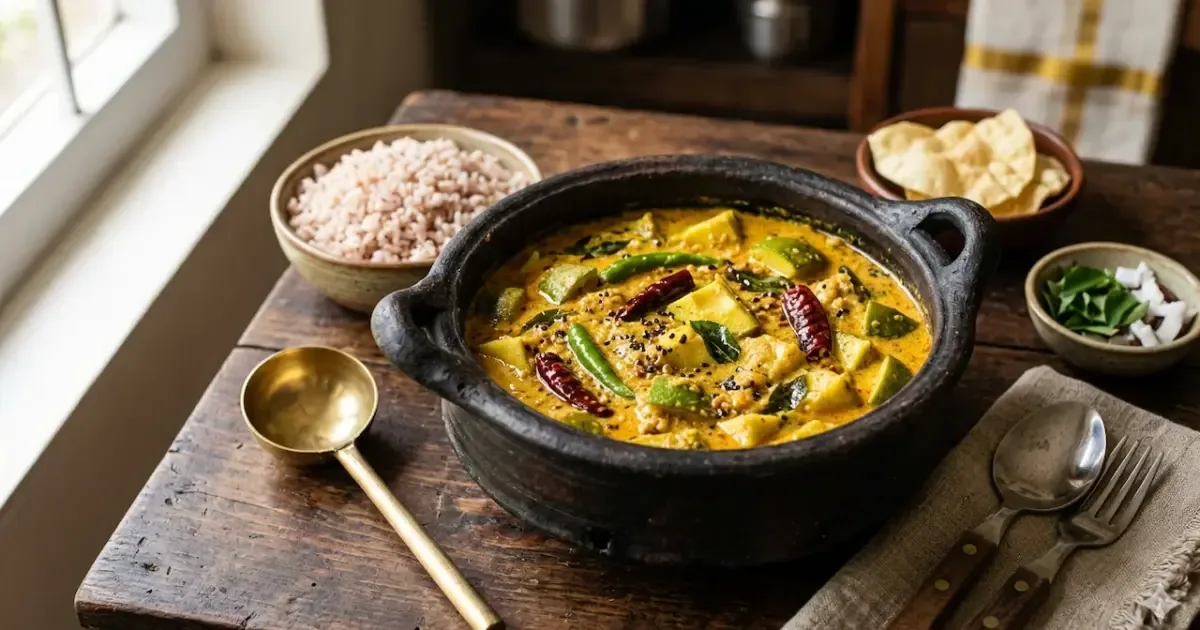
Imagine a warm Kerala afternoon. The air is fragrant with curry leaves sizzling in coconut oil. A pot simmers, filled with raw green mango pieces in a creamy, golden coconut gravy. This is the comforting aroma of Kerala-style raw mango curry, a dish that is both simple and bursting with flavor.
This light yet satisfying curry is a perfect blend of sour and creamy. It comes together quickly, making it ideal for home cooks. This guide shares five practical tips to achieve that authentic taste every time.
Why Raw Mango and Coconut Milk Are a Perfect Match
Kerala, the land of coconuts, naturally pairs its abundant coconuts with local produce. Raw mangoes provide a fresh, fruity sourness, eliminating the need for tamarind or lemon. Coconut milk adds a rich, gentle sweetness that perfectly balances the mango’s tang.
This combination creates a curry that is neither too heavy nor too light, ideal for summer lunches. It’s a staple in Kerala’s traditional feast, the sadya, served on a banana leaf. Its refreshing tang cuts through the richness of other dishes.
Beyond feasts, this versatile curry pairs wonderfully with simple steamed rice or roti, fitting perfectly into everyday meals and special occasions alike.
Tip 1: Choose the Right Raw Mangoes
Selecting the right raw mango is crucial for the best Kerala raw mango curry. Choose firm, unripe mangoes with green skin. Avoid those that are soft, yellow, or orange, as they will be too sweet and mushy.
A ripe raw mango will have pale green or white flesh that requires some effort to cut. Its immediate sourness is the key flavor. Any variety of raw mango will work, but look for green mangoes at Asian grocery stores if you’re outside India.
Mango season, typically March to June in India, offers the freshest and most flavorful mangoes. If fresh ones are unavailable, frozen raw mango pieces can be used; thaw them before cooking.
Always wash mangoes thoroughly. You can choose to peel them or leave the skin on for added texture. The skin is edible and adds a nice bite.
Tip 2: Use Fresh Coconut Milk for Creaminess
Fresh coconut milk is the heart of this curry, providing its signature creaminess and mild sweetness. For the best flavor and texture, use milk extracted from freshly grated coconut.
If fresh coconut isn’t available, canned coconut milk is a good alternative. Opt for brands without added sugar or preservatives. Shake the can well before use, as separation is common.
Use only the thick coconut milk, which is the first press or the cream from the top of canned milk. Thin milk, from a second press or the watery part of canned milk, will result in a less rich curry.
To make fresh coconut milk, grate fresh coconut, add a little warm water, and squeeze the mixture through a cloth. The first press yields thick milk; subsequent presses with more water produce thin milk.
Remember to add coconut milk towards the end of cooking and simmer gently. Boiling coconut milk for too long can cause it to curdle.
Tip 3: Balance Spices Without Overpowering
Kerala cuisine is known for its spices, but this curry focuses on balance. The spices should enhance, not dominate, the mango and coconut flavors.
Essential spices include mustard seeds, curry leaves, green chilies, and a pinch of turmeric. Avoid heavy spice blends like garam masala to maintain a clean, simple flavor profile.
Mustard seeds are used for tempering, releasing a nutty flavor. Curry leaves add an earthy, citrusy note, while green chilies provide gentle heat. Turmeric offers a warm yellow color and mild taste.
Rely on green chilies for heat; slit them and add them whole for controllable spiciness. Salt is crucial for balancing the sourness and sweetness. Add it gradually and taste as you go.
A pinch of sugar is optional, only if needed to balance excessive sourness. Always use fresh curry leaves for the best aroma; dried ones lack flavor. Ginger and garlic are generally omitted to keep the flavor delicate.
Tip 4: Add a Temper for Authentic Flavor
Tempering, or ‘tadka’, is a vital step that adds a final layer of aroma and flavor to the Kerala raw mango curry. It involves heating oil and frying spices before pouring them over the finished dish.
For this curry, heat a tablespoon of coconut oil in a small pan. Add mustard seeds and wait for them to pop. Then, add fresh curry leaves and slit green chilies. Fry briefly until the leaves are crisp.
Pour this spiced oil mixture over the curry just before serving. This preserves the freshness and vibrancy of the flavors. Coconut oil is traditional and complements the curry’s ingredients perfectly.
A pinch of asafoetida (hing) can be added to the tempering for a subtle onion-garlic note, but it’s optional. Do not skip the tempering; it significantly elevates the dish’s taste and aroma.
Tip 5: Keep the Mangoes Al Dente
The texture of the mango is key. You want pieces that are tender but still hold their shape, offering a slight bite. This is achieved by not overcooking the mangoes.
Cut mangoes into uniform, approximately 1-inch cubes. Add them to the simmering coconut milk and cook for about 5 to 7 minutes. They should be tender but retain a slight crunch.
Taste a piece to check for doneness. If still too hard, cook for another 2 minutes, but avoid exceeding 10 minutes total cooking time for the mango.
Add mango pieces to the curry only after the coconut milk has reached a gentle simmer to ensure even cooking. Uniformly sized pieces also contribute to even cooking.
If using frozen raw mango, reduce the cooking time to 2 to 3 minutes, as it will be softer from the freezing process.
Serving Suggestions and Variations
This Kerala raw mango curry is traditionally served with steamed rice, allowing the grains to soak up the creamy, tangy gravy. It also pairs well with roti, chapati, or dosa.
For a more elaborate meal, serve it as part of a sadya on a banana leaf, alongside other South Indian dishes. The curry’s tanginess provides a refreshing contrast.
Variations exist across South India. Some versions use grated coconut for a thicker consistency, while others incorporate more spices or a touch of jaggery for a sweet-sour balance.
Feel free to adjust the spice level by adding more or fewer green chilies. For a thicker curry, reduce the coconut milk or add a rice flour slurry. Experiment with adding cumin powder or extra curry leaves during cooking.
Leftovers can be stored in the refrigerator for 2 to 3 days; flavors deepen over time, but the mango will soften further. Reheat gently, avoiding boiling to prevent the coconut milk from separating. Freezing is not recommended as it alters the texture.
Common Mistakes to Avoid
Using ripe mangoes: This is the most common error. Ripe mangoes turn mushy and sweet, losing the curry’s signature tangy flavor. Always use raw, unripe mangoes.
Boiling the coconut milk: High heat can cause coconut milk to curdle and separate. Always simmer gently, adding coconut milk at the end and cooking on low heat.
Skipping the tempering: This simple step adds crucial flavor and aroma. Do not omit it; it takes only a minute and makes a significant difference.
Overcooking the mango: Raw mango cooks quickly. Overcooking results in mushy mangoes. Monitor the cooking time and taste frequently.
Using too many spices: Keep the spice profile simple to let the mango and coconut flavors shine. Avoid overpowering the delicate taste with excessive or heavy spices.
Frequently Asked Questions
What kind of mangoes should I use for Kerala raw mango curry?
You should use raw, unripe mangoes that are firm to the touch. They should have green skin and a sour taste. Avoid ripe mangoes, as they will be too sweet and turn mushy in the curry.
Can I use canned coconut milk instead of fresh?
Yes, canned coconut milk is a good substitute. Opt for full-fat versions without added sugar. Use the thick cream from the top for the best richness, and avoid boiling it to prevent curdling.
How do I prevent the coconut milk from curdling?
To prevent coconut milk from curdling, add it towards the end of the cooking process. Simmer the curry gently on low heat and avoid boiling it vigorously. High temperatures are the main cause of curdling.
How long should I cook the raw mango pieces?
Cook the raw mango pieces for about 5 to 7 minutes after adding them to the simmering coconut milk. They should be tender but still have a slight bite. Avoid cooking for more than 10 minutes to keep them from becoming mushy.
What is tempering and why is it important?
Tempering, or tadka, involves heating oil and frying spices like mustard seeds and curry leaves. This process releases their flavors and aromas. Adding the tempered oil to the curry just before serving enhances its taste significantly.
Can I make this curry ahead of time?
Yes, the curry can be made ahead and stored in the refrigerator for 2-3 days. The flavors tend to deepen overnight. However, the mango pieces will soften further upon reheating.
References
- 5 Tips To Make Kerala-Style Raw Mango Curry Using Coconut Milk – Original report (NDTV Health)
- 41 Onam Menus Across India That Bring Kerala’s Grand Sadya Feast To Your Plate – curlytales.com – Contributes context of Kerala food in festive Onam celebrations.
- Mambazhakaalam – The New Indian Express – Likely focuses on mango season in Kerala, reinforcing the seasonal angle.
- 8 light and nutrient-rich desi lunch ideas perfect for summer – Times Food – Positions the curry as a healthy summer lunch option.
- South Indian traditions come alive at Delhi’s new canteen-style restaurant – YourStory.com – Indicates growing interest in South Indian food traditions, including such curries, beyond Kerala.
- How To Remove Excess Sweetness From Curries – Easy Tips And Hacks – NDTV Food – NDTV Food