At a Glance
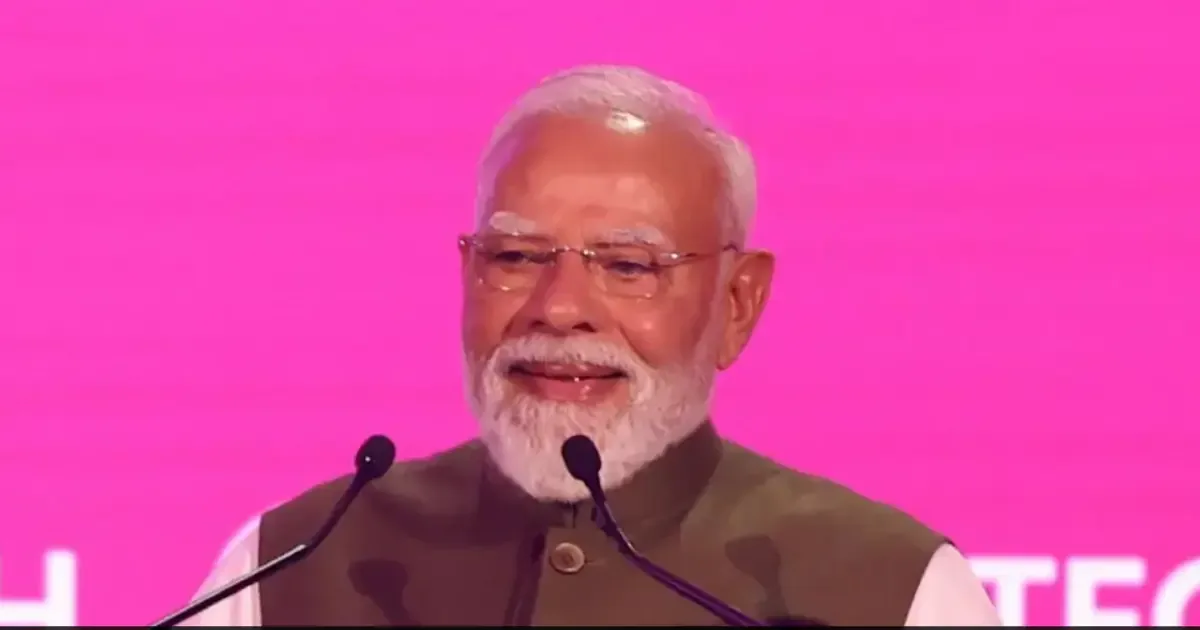
At VivaTech 2026 in Paris, Prime Minister Narendra Modi declared that for India, AI stands for ‘All Inclusive,’ emphasizing a human-centric approach to artificial intelligence. He highlighted India’s commitment to ensuring AI benefits everyone, from farmers to students, and invited global tech companies to invest in the country’s rapidly growing digital economy.
Key Takeaways
The main points at a glance
- Prime Minister Modi defined AI for India as ‘All Inclusive,’ not just ‘Artificial Intelligence,’ stressing a focus on equitable benefits.
- He advocated for human-centric AI that augments human abilities and serves societal needs, contrasting with purely profit-driven development.
- Modi highlighted India’s decade of digital transformation, including massive infrastructure projects like Aadhaar and UPI, as a foundation for AI advancement.
- An open invitation was extended to global tech players to invest, partner, and build AI solutions in India, leveraging its large market and skilled workforce.
- India aims to be a global hub for AI development and manufacturing, with a focus on creating AI that is safe, fair, and transparent.
- The ‘All Inclusive’ AI vision offers an alternative model for global AI development, prioritizing human rights and inclusion.
“For India, AI means All Inclusive.”
That was Prime Minister Narendra Modi’s message on a big stage in Paris this week. He spoke at VivaTech 2026, Europe’s largest technology and startup event. His words set the tone for how India wants to approach artificial intelligence, a topic that is reshaping the world.
PM Modi emphasized that India’s path with AI will be human-centric, focusing on fairness and ensuring technology benefits everyone.
The event drew thousands of attendees, from startup founders to top executives of global tech giants. It is a place where the future of technology gets discussed. And this year, India’s prime minister was one of the main voices.
PM Modi’s Vision: AI as ‘All Inclusive’
Modi’s central message was simple and direct. He stated that for India, the letters AI do not stand for “artificial intelligence” alone. They stand for “All Inclusive.”
This was not just a clever play on words but a statement of policy and philosophy. PM Modi argued that technology, especially something as powerful as AI, must work for everyone, not just for the privileged.
He spoke about building systems that help farmers get better prices for their crops, using AI to improve education in remote villages, and highlighted how India is using technology to deliver government services to hundreds of millions of people.
The message was clear: India aims to be a leader in AI, but in a way that lifts people up.
This concept of “All Inclusive” AI contrasts with approaches focused solely on rapid development and profit. India emphasizes that the benefits of AI must reach the most vulnerable.
Modi’s phrasing connects to India’s national motto of “Sabka Saath, Sabka Vikas,” meaning “collective effort, inclusive growth.” Applying this to AI gives the technology a human face.
VivaTech 2026: A Global Platform for Innovation
VivaTech is a major annual event in Paris, bringing together thousands of startups, investors, and world leaders to discuss the future of technology.
This year, AI was a strong focus, with many companies showcasing new tools. However, the conversation also centered on the ethical and societal implications of AI use.
PM Modi’s speech was a highlight, shared with French President Emmanuel Macron. The two leaders discussed the importance of regulating AI while fostering innovation.
Executives from major global tech companies like Google, Microsoft, and Meta attended, listening to Modi’s vision for AI in India.
For India, VivaTech offered a chance to showcase its technological advancements. For the global tech community, it was an opportunity to hear directly from a leader of a nation with a vast population and a rapidly growing digital economy.
India’s Decade of Digital Transformation
Modi reflected on India’s technological progress over the past decade, driven by innovation at scale.
India now has over 800 million internet users, supported by the Digital India program’s massive digital infrastructure. This includes the Aadhaar biometric ID system, the UPI payment system, and extensive health and education platforms.
This digital foundation has created fertile ground for AI, with India possessing vast amounts of data, a young tech-savvy population, and a government committed to digital solutions.
Modi highlighted that India’s approach to building technology for its billion-plus population forces innovation, efficiency, and inclusion.
Examples include a digital payment system working on basic phones, a health platform for vaccine delivery, and an education platform used during lockdowns. These systems are now being enhanced with AI to be smarter and more personalized, while maintaining the principle of universal access.
The last decade also saw a boom in Indian startups, attracting billions in global investment. Modi indicated that this growth is just the beginning.
Emphasizing Human-Centric AI Development
PM Modi stressed the importance of AI being human-centric, meaning technology should serve people, not the other way around.
He advocated for AI as a tool to assist humans, warning against its use for displacement or harm, and emphasizing augmentation of human abilities over replacement of human judgment.
Acknowledging global concerns about job losses and inequality due to AI, Modi presented a vision where AI supports professionals like doctors in rural areas by providing more information and time for patient care.
In agriculture, AI can help farmers with soil health, weather prediction, and market access, increasing yields and reducing waste.
For education, AI can assist teachers in creating personalized lessons, addressing the challenges of large class sizes in India.
Modi also highlighted India’s commitment to data privacy and security, referencing the country’s comprehensive data protection law passed in 2023.
The human-centric approach is crucial for India’s diverse population, requiring AI systems that are flexible, adaptable, and respectful of local languages and cultures.
India is investing in AI that supports its numerous languages, aiming to make AI truly inclusive by moving beyond English-centric models.
An Open Invitation to Global Technology Investors
PM Modi extended a clear invitation to global tech players to invest, partner, and build in India, positioning the country as a hub for AI development and manufacturing.
India offers a large, young, English-speaking workforce, a stable democracy, a vast domestic market, and a growing network of research institutions.
Government initiatives like production-linked incentive schemes aim to attract further investment in AI and related technologies.
Many global companies already have AI research labs in India, and Modi emphasized there is ample room for more.
He encouraged international startups to consider India as a testing ground, suggesting that solutions successful in India can be globally applicable.
The invitation also focused on partnership, with India seeking to collaborate on setting global standards for safe, fair, and transparent AI, emphasizing the need for international cooperation.
The Impact of India’s AI Vision
PM Modi’s address at VivaTech 2026 signals India’s future direction in technology, emphasizing its use as a tool for development.
This includes increased investment in AI research, digital infrastructure, and skill training, alongside regulations that balance innovation and citizen protection.
India’s AI strategy is long-term, supported by initiatives like a national AI mission and research centers, aiming to build a national data set for AI training.
For the world, India’s inclusive AI approach offers an alternative model, challenging the notion that AI is solely for the technologically advanced or affluent.
This vision encourages other nations to consider equity in AI development and deployment, potentially influencing global AI governance discussions.
Challenges remain, including expanding internet access, improving digital literacy, and addressing potential biases in AI systems. However, Modi’s message was optimistic, highlighting India’s capacity for change and its invitation for global collaboration in harnessing AI for accelerated progress.
The message that “For India, AI means All Inclusive” resonated widely, signaling a significant vision for the future of artificial intelligence.
Frequently Asked Questions
What did PM Modi mean by 'AI means All Inclusive'?
PM Modi used 'AI means All Inclusive' to signify that artificial intelligence in India should benefit all segments of society, not just a select few. It emphasizes fairness, equitable access, and technology's role in uplifting everyone, especially the underprivileged.
What is VivaTech 2026?
VivaTech 2026 is Europe's largest technology and startup event, held annually in Paris. It serves as a global platform where innovators, investors, and leaders gather to discuss and showcase the future of technology.
How is India leveraging its digital infrastructure for AI?
India has built a robust digital infrastructure over the last decade, including the Aadhaar ID system, UPI payments, and extensive digital platforms for health and education. This vast data and user base provide a strong foundation for developing and deploying AI solutions at scale.
What is India's approach to human-centric AI?
India's human-centric AI approach focuses on using technology as a tool to empower people. This means AI should assist professionals like doctors and farmers, enhance education, and improve public services without replacing human judgment or displacing workers.
What opportunities does India offer to global tech companies?
India offers global tech companies a large and growing domestic market, a skilled and English-speaking workforce, and government incentives for investment and manufacturing. It aims to become a hub for AI development and innovation.
What are the key challenges India faces in AI adoption?
Key challenges include ensuring widespread internet access, improving digital literacy across the population, and addressing potential biases within AI systems. India is actively working on regulations and initiatives to overcome these hurdles.
How does India's AI vision compare to other countries?
While many countries focus on rapid AI development for economic competitiveness, India emphasizes inclusivity and societal benefit. Its 'All Inclusive' approach offers a model that prioritizes reaching the most vulnerable and ensuring technology serves human needs.
References
- "For India, AI Means All Inclusive": PM Modi At VivaTech 2026 In Paris – Original report (NDTV India)
- "For India, AI Means All Inclusive": PM Modi At VivaTech 2026 In Paris – NDTV – NDTV
- For India, AI is 'All Inclusive', must be human-centric: PM Modi – The Times of India – The Times of India emphasized that PM Modi described AI as 'All Inclusive' and must be human-centric.
- 'AI means all inclusive': PM Modi pushes India’s tech vision at VivaTech Paris | Watch – Moneycontrol.com – Moneycontrol reported PM Modi pushing India's tech vision at VivaTech Paris with the 'all inclusive' message.
- At VivaTech, Modi says AI means ‘all inclusive’ for India – Telangana Today – Telangana Today echoed the same 'all inclusive' message from PM Modi's VivaTech speech.
- PM Modi outlines India's AI vision at VivaTech 2026, rolls out red carpet for global tech players – Rising Kashmir – Rising Kashmir highlighted that PM Modi outlined India's AI vision and rolled out a red carpet for global tech players at VivaTech 2026.