At a Glance
Thousands of Hindus in Dhaka held a torchlight procession to protest the alleged desecration of an image of Lord Ram. Chanting ‘Jai Shri Ram,’ the demonstrators demanded swift arrests of those responsible, issuing a 72-hour ultimatum to authorities. The protest highlighted concerns over religious minority safety and respect in Bangladesh.
Key Takeaways
The main points at a glance
- Thousands of Hindus participated in a torchlight procession in Dhaka to protest an alleged desecration of Lord Ram’s image.
- The protest featured chants of ‘Jai Shri Ram’ and was organized by Hindu community groups demanding justice.
- A 72-hour ultimatum has been issued to authorities for the arrest of those responsible for the alleged act.
- The incident has raised concerns about the safety and respect for religious minorities in Bangladesh.
- The protest’s visual nature and clear demands aim to pressure the government into taking swift action.
Dhaka Streets Aglow: Thousands Join Torchlight Procession
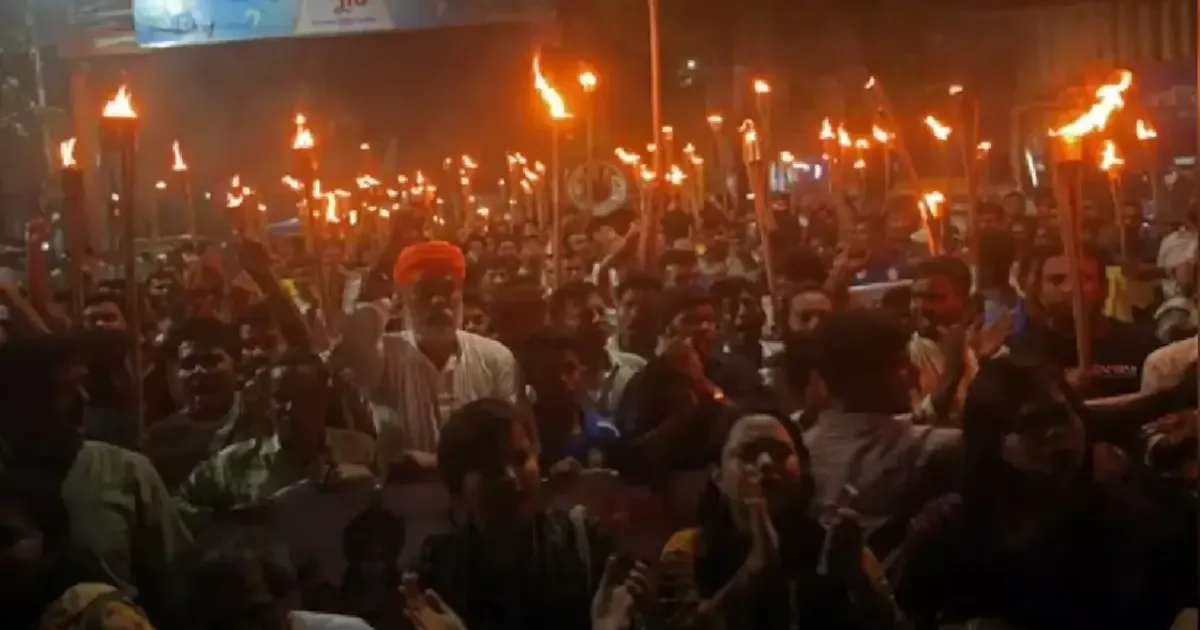
Thousands of Hindus took to the streets of Dhaka on Friday night in a massive torchlight procession. The demonstration, marked by flickering flames and chants of ‘Jai Shri Ram,’ was a powerful display of community anger and a demand for justice following an alleged desecration of an image of Lord Ram.
Organized by Hindu community groups, the protest saw participants carrying banners and placards, but the torches themselves served as the most potent symbol. The procession moved through the city’s streets, with participants chanting slogans that resonated through the night. Police maintained a distant presence, and the event remained peaceful.
The torchlight procession is a traditional form of protest in Bangladesh, known for its visual impact and ability to unite participants. The flames symbolized the community’s burning frustration and their collective demand for accountability. The event stretched for several blocks, lasting for hours until the torches extinguished, leaving behind a 72-hour ultimatum for authorities.
Alleged Desecration of Lord Ram’s Image Sparks Outrage
The protest was ignited by an alleged act of disrespect towards an image of Lord Ram, a revered deity in Hinduism. For millions of Hindus in Bangladesh, such an act is considered a direct attack on their faith and religious identity.
While specific details of the alleged desecration remain unclear, with varying accounts from different news sources, the core issue is the defacement or disrespect shown to a sacred image. The incident reportedly occurred within Dhaka, though the exact location has not been officially confirmed.
News of the alleged desecration spread rapidly, amplified by social media, leading to swift calls for action from community leaders. The torchlight procession was organized as an immediate response to what many perceived as a grave insult to their religious heritage.
This incident echoes past tensions in Bangladesh concerning religious symbols, where the Hindu minority has often felt vulnerable. Previous instances of vandalism and damage to religious sites have also led to significant public demonstrations. This time, the focus was on a sacred image, but the community’s reaction was equally strong.
The alleged desecration has deeply affected the Hindu community, as Lord Ram is a significant symbol of their heritage and culture. The protesters aimed to convey that they would not remain silent in the face of such disrespect.
No group has yet claimed responsibility for the alleged act, and no suspects have been named by the police. This lack of information has intensified the protesters’ anger, who feel the authorities are not treating the matter with the seriousness it deserves.
‘Jai Shri Ram’ Chants Echo Through Dhaka
A prominent feature of the protest was the continuous chanting of ‘Jai Shri Ram,’ a common Hindu slogan meaning ‘Victory to Lord Ram.’ This slogan served as a powerful expression of faith, defiance, and a unified demand for justice.
The chanting was widely reported by various news outlets, highlighting its significance in the protest. The rhythmic slogans filled the night air, serving as a reclamation of identity for the protesters and a stark reminder of the deep religious sentiments involved for onlookers.
‘Jai Shri Ram’ is more than a greeting; it is a declaration of faith and resilience, asserting that devotion remains strong despite acts of disrespect. The protesters used it to demonstrate the unwavering strength of their faith.
While the slogan is widely recognized, its prominent use in a protest in Dhaka also reflects the influence of cross-border religious currents. However, the protesters’ focus remained on their own government, demanding local action rather than making a political statement about India.
The combination of torches, darkness, and the powerful chants created an electric and dramatic atmosphere, making the protest a sensory experience for those present and observing.
Reports indicate that the protest maintained a focused message, centering on the demand for justice without calls for violence or anti-government rhetoric, suggesting a deliberate strategy by community leaders to ensure the protest’s message remained clear and constructive.
72-Hour Ultimatum Issued: Demand for Swift Arrests
The protest culminated in the issuance of a 72-hour ultimatum by Hindu community groups. They demanded the swift arrest of those responsible for the alleged desecration of Lord Ram’s image, warning of further demonstrations if their demand is not met.
This ultimatum, reported by multiple news sources, sets a tight deadline for authorities to act and places pressure on the police to expedite their investigation. The protesters are seeking immediate arrests, emphasizing their desire for the system to provide timely justice.
While the specific coalition of Hindu organizations issuing the ultimatum has not been named, it is understood to have widespread support within the community. Groups like the Bangladesh Hindu Buddhist Christian Unity Council and the Bangladesh Puja Udjapan Parishad are often at the forefront of such actions.
The 72-hour timeframe is a strategic move, allowing the government a chance to respond promptly while simultaneously raising the stakes. Failure to act within this period could compel protesters to consider more significant actions, such as larger gatherings or blockades.
As of now, there has been no official statement from the Bangladeshi government or the home ministry regarding the incident or the ultimatum. This silence is a cause for concern among protesters, who interpret it as a lack of urgency and a disregard for their religious sentiments.
The ultimatum also serves as a strong message to the broader public, signaling the Hindu community’s intolerance for disrespect and their organized capacity to act. For a minority group that often feels marginalized, this demonstration of strength is crucial and may encourage others to voice their concerns against injustice.
Future Actions: Police Investigation and Minority Concerns
The coming days are critical as the 72-hour deadline approaches. The absence of any announced arrests means police may be conducting a discreet investigation or awaiting a de-escalation of tensions. Protesters are closely monitoring the situation.
There have been no reports of counter-protests or public reactions from other religious communities in Dhaka, indicating the protest has so far remained within the Hindu community. However, this could change if the situation escalates.
Bangladesh has a history of similar protests. Following the vandalism of a temple in Chattogram in 2021, thousands of Hindus demonstrated, including torchlight processions. While arrests were eventually made, the slow response left many feeling dissatisfied. The community is less willing to wait this time.
The alleged desecration has also reignited concerns about the safety and security of religious minorities in Bangladesh. Human rights organizations have frequently documented attacks on minority groups, though the government maintains it does not engage in systematic persecution.
For the protesters, this is not solely about a single desecrated image but about fundamental rights to respect and equality. They aspire to live in a nation where their faith is not subjected to insult and where the law offers equal protection to all citizens. The torchlight procession and ultimatum are steps towards achieving these goals.
All eyes are now on the authorities. Their response within the deadline will significantly influence the prevailing mood in Dhaka. While the torches have been extinguished, the community’s resolve remains strong.
Frequently Asked Questions
What triggered the protest in Dhaka?
The protest was triggered by an alleged act of desecration of an image of Lord Ram, a highly revered deity in Hinduism. This incident was perceived by the Hindu community as a direct attack on their faith and religious identity.
What form did the protest take?
Thousands of Hindus participated in a massive torchlight procession through the streets of Dhaka. They carried banners and placards, chanting slogans like 'Jai Shri Ram' to express their anger and demand justice.
What is the main demand of the protesters?
The primary demand of the protesters is the swift arrest of the individuals responsible for the alleged desecration of Lord Ram's image. They have issued a 72-hour ultimatum to the authorities to fulfill this demand.
Has the Bangladeshi government responded to the protest and ultimatum?
As of the latest reports, there has been no official statement or public response from the Bangladeshi government or the home ministry regarding the incident or the issued ultimatum.
Are there concerns about religious minority safety in Bangladesh?
Yes, incidents like this have reignited concerns about the safety and security of religious minorities in Bangladesh. Human rights groups have often highlighted attacks on minority communities, although the government denies systematic persecution.
What is the significance of the 'Jai Shri Ram' chant?
The chant 'Jai Shri Ram,' meaning 'Victory to Lord Ram,' is a common Hindu slogan. In the context of the protest, it served as a powerful expression of faith, defiance, and a unified demand for justice, asserting the community's devotion.
What might happen if the ultimatum is not met?
If the 72-hour ultimatum is not met with arrests, protesters have warned of further demonstrations. This could potentially lead to larger gatherings, road blockades, or other forms of protest, escalating the situation.
References
- 'Jai Shri Ram' Chants In Dhaka As Thousands Protest 'Desecration' Of Image – Original report (NDTV World)
- 'Jai Shri Ram' Chants In Dhaka As Thousands Protest 'Desecration' Of Image – NDTV – NDTV
- Bangladesh Hindus issue 72-hour ultimatum over Lord Ram desecration – MSN – MSN highlighted the 72-hour ultimatum given by Hindu groups in Bangladesh to authorities.
- Chaos in Dhaka as Hindus hold massive protest, raise Jai Shri Ram chants – India Today – India Today described the protest as 'chaos' and emphasized the massive turnout and religious chants.
- Jai Shri Ram chants raised in Bangladesh as thousands of protestors protest in Dhaka over alleged insult to L – India.Com – India.Com reported the protest as a reaction to an 'alleged insult' to a deity, focusing on the chants.
- Dhaka Erupts In Protest As Hindus Hit Streets With 'Jai Shri Ram' Chants | Watch – The Times of India – The Times of India highlighted the 'erupting' nature of the protest and encouraged readers to 'watch' footage.