“All the Jews are sick of you.”
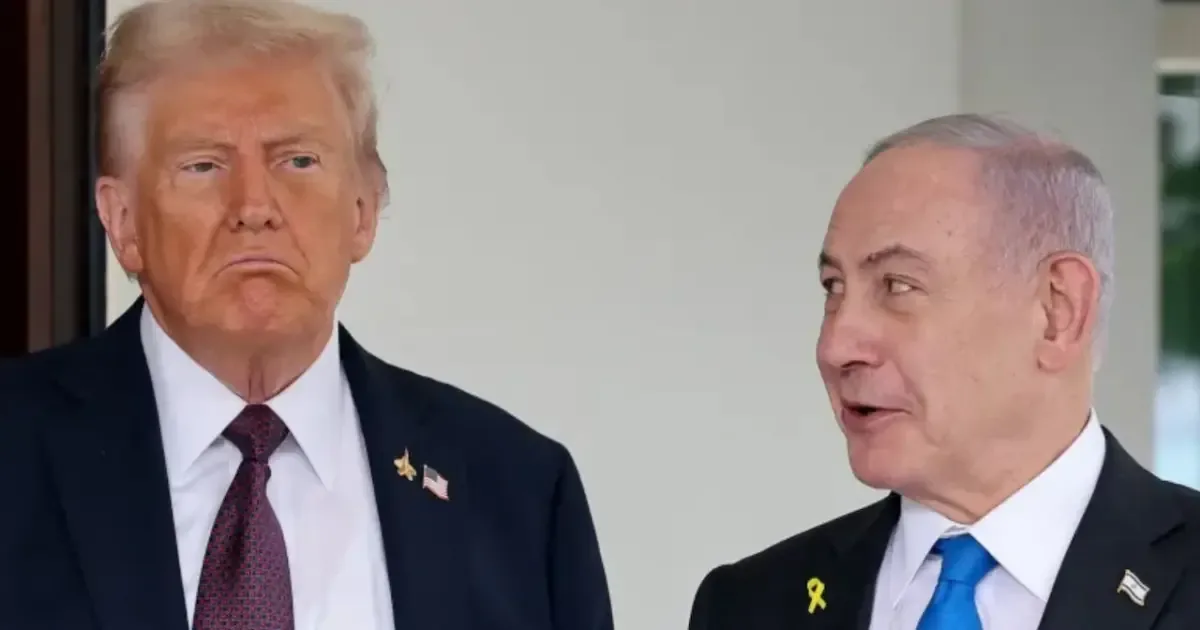
That is what former President Donald Trump allegedly told Israeli Prime Minister Benjamin Netanyahu during a tense phone call in 2025, according to a new book detailing Trump’s second term. The heated exchange reportedly occurred as Trump urged Netanyahu to accept a ceasefire deal to end the war in Gaza. The claim appears in the book “Regime Change: Inside the Imperial Presidency of Donald Trump,” with excerpts gaining attention from multiple news outlets.
The Book’s Claim: Trump’s Alleged Outburst to Netanyahu
The book describes a 2025 phone call between Trump and Netanyahu concerning the Gaza ceasefire negotiations. According to the book, Trump used strong language to pressure Netanyahu. While the exact wording varies slightly in reports-with some quoting “All the Jews are sick of you,” others “Everybody’s sick of you,” or “Even Jews are sick of you”-all accounts agree on the core assertion: Trump expressed significant frustration with Netanyahu.
Six news outlets, including NDTV, Moneycontrol, Türkiye Today, bdnews24, News18, and the Express Tribune, have reported on this revelation, indicating a coordinated media release or widely shared excerpt from the book. The consistency across these sources lends weight to the claim, even though none provide the author’s name or the book’s publisher. The Express Tribune framed the incident as a potential turning point for US-Israel relations, suggesting the rift may have lasting consequences.
The context of the call is critical. According to the book, Trump was personally brokering the ceasefire between Israel and Hamas during his second term. This marked a significant departure from the more hands-off approach of the Biden administration, which had struggled to achieve a lasting truce. Trump’s direct involvement placed him in the role of a mediator with high stakes, and the pressure on Netanyahu to agree to terms was immense. The book alleges that Trump’s frustration boiled over into a personal attack, reflecting the strain of the negotiations.
Donald Trump and Benjamin Netanyahu have a long and complex history. During Trump’s first term, the former president was widely seen as one of Israel’s strongest allies. He moved the US embassy to Jerusalem, recognized Israeli sovereignty over the Golan Heights, and brokered the Abraham Accords, which normalized relations between Israel and several Arab nations. Netanyahu, in turn, often praised Trump as a great friend of Israel. However, their relationship appeared to sour after Trump’s election loss in 2020. Netanyahu was one of the first world leaders to congratulate Joe Biden on his victory, a move that reportedly angered Trump. The book’s claim suggests that by 2025, the relationship had deteriorated to the point of open hostility.
The exact nature of the ceasefire deal Trump was pushing remains unclear from the reports, but the war in Gaza had been ongoing for over a year by 2025. The conflict began with the Hamas-led attack on southern Israel in October 2023, which killed approximately 1,200 Israelis and saw 251 hostages taken, according to Israeli tallies. Israel’s subsequent military campaign in Gaza resulted in massive destruction and a high civilian death toll, with the Hamas-run health ministry reporting over 45,000 Palestinian dead by the end of 2024. International pressure for a ceasefire had mounted throughout 2024 and into 2025, with the US playing a central role in mediation efforts.
The book “Regime Change: Inside the Imperial Presidency of Donald Trump” appears to focus on the actions of Trump’s second term, a hypothetical period that would have run from January 2025 onward. The claim about the phone call is likely one of several revelations designed to portray Trump as a volatile and unconventional leader, even on the world stage. The title itself suggests a critical perspective, examining how Trump exercised power and influenced US foreign policy during his second term.
Netanyahu’s response to the alleged outburst has not been reported, nor has the outcome of the specific call. However, the broader ceasefire deal that Trump was reportedly pushing did eventually come into effect. In early 2025, a six-week truce was announced, followed by negotiations for a permanent end to hostilities. Trump claimed credit for the breakthrough, stating that his team had made the deal possible. The book’s narrative, however, suggests that behind-the-scenes diplomacy was fraught with tension and personal conflict.
The variations in the reported quote are noteworthy. Moneycontrol reported the phrase as “Everybody’s sick of you,” while News18 used “Even Jews Are Sick Of You.” The difference may stem from paraphrasing or from different excerpts of the book being shared with different outlets. NDTV and Türkiye Today directly quoted “all the Jews are sick of you,” which appears to be the most widely circulated version. The use of the word “Jews” is particularly striking, as Trump has often positioned himself as a staunch supporter of the Jewish state and has frequently invoked Jewish support for his policies. The alleged remark could be seen as an attempt to pressure Netanyahu by suggesting he had lost support within his own base and among Jewish communities worldwide.
The implications for US-Israel relations are significant. If the account is accurate, it reveals a level of personal animosity between the leaders that could affect future cooperation. Israel relies heavily on US political and military support, and a breakdown in the personal relationship between the prime minister and the US president could complicate diplomatic and strategic coordination. The Express Tribune analyzed this angle, suggesting that the spat might be a temporary blip or a sign of deeper, structural issues in the alliance.
Critics of Trump have seized on the report as evidence of his erratic decision-making style, which they argue could undermine US credibility in the Middle East. Supporters, however, may view the outburst as a sign of Trump’s willingness to stand up to Netanyahu when necessary to achieve peace. The lack of official comment from either Trump’s team or Netanyahu’s office leaves the account unverified, but the book’s release and the media coverage ensure it will be a topic of debate.
The book’s release strategy-with excerpts given to multiple outlets simultaneously-suggests a well-planned publicity campaign. The absence of the author’s name in the press reports is unusual but may indicate that the author prefers anonymity or that the book is published under a pseudonym. This lack of transparency could invite skepticism about the accuracy of the claims. However, the willingness of six credible news organizations to report the story suggests that the publisher provided sufficient documentation or that the excerpt is verifiable.
In the broader context of Trump’s political career, the alleged outburst fits a pattern of confrontational diplomacy. Trump has often prided himself on his ability to intimidate and pressurize world leaders, from North Korea’s Kim Jong-un to Mexico’s former president Enrique Peña Nieto. His approach has been praised by some as effective and criticized by others as undiplomatic. The alleged exchange with Netanyahu would be a continuation of that style, applied to one of America’s closest allies.
The timing of the book’s release is also important. Coming out in the middle of Trump’s second term, it provides a behind-the-scenes look at the administration’s dealings during a critical period. The Gaza ceasefire was one of Trump’s major foreign policy achievements, and any suggestion that it was achieved through personal conflict could complicate the narrative of success. The book appears to offer a more nuanced and perhaps darker view of how that success was achieved.
As of now, the full book has not been released to the public, and only these key excerpts have been shared. Readers and analysts will be watching for further revelations that could shed more light on the relationship between Trump and Netanyahu, as well as on the inner workings of the Trump administration during its second term. The claim, if corroborated by other evidence, could become a defining moment in the history of US-Israel relations under Trump.
In summary, the book “Regime Change: Inside the Imperial Presidency of Donald Trump” alleges that during a 2025 phone call about the Gaza ceasefire, Donald Trump told Benjamin Netanyahu that “all the Jews are sick of you.” The claim, reported by multiple outlets, highlights a strained relationship between the two leaders and raises questions about the personal dynamics behind high-stakes diplomacy. While the exact wording and context remain subject to verification, the consistency of the reporting and the significance of the figures involved ensure that this story will continue to generate debate and scrutiny.
References
- "Jews Sick Of You": Book Reveals Trump's Outburst At Netanyahu In 2025 Call – Original report (NDTV World)
- 'Everybody’s sick of you': New book claims Trump exploded at Netanyahu during heated Gaza ceasefire call – Moneycontrol.com – Reported the claim with the phrase 'Everybody’s sick of you' and emphasized the heated nature of the call.
- New book reveals Trump told Netanyahu 'all the Jews are sick of you' in 2025 call – Türkiye Today – Directly quoted the phrase 'all the Jews are sick of you' and confirmed the 2025 call.
- 'All the Jews are sick of you,' Trump yelled at Netanyahu before Gaza ceasefire deal, new book reveals – bdnews24.com – Repeated the same quote and linked it to the Gaza ceasefire deal timeline.
- ‘Even Jews Are Sick Of You’: Trump Pressured Netanyahu To Accept Gaza Truce In Heated Call – News18 – Used the phrase 'Even Jews Are Sick Of You' and highlighted Trump pressuring Netanyahu to accept the truce.
- Trump-Netanyahu rift: Temporary spat or turning point for US-Israel relations? – The Express Tribune – The Express Tribune