The Bottom Line: FIFA World Cup Trophy Gold Value Doubles
The gold inside the FIFA World Cup trophy is now worth approximately USD 713,000, according to new data from financial markets provider LSEG (London Stock Exchange Group). This marks a more than two-fold increase in value since the 2022 tournament held in Qatar, when the same gold content was valued at around USD 350,000. The surge is driven by a sharp rise in global gold prices, which have climbed over 50% since 2022. LSEG is a globally recognized financial infrastructure and data provider, and its precious metal pricing is widely used by investors, analysts, and central banks, lending credibility to this valuation.
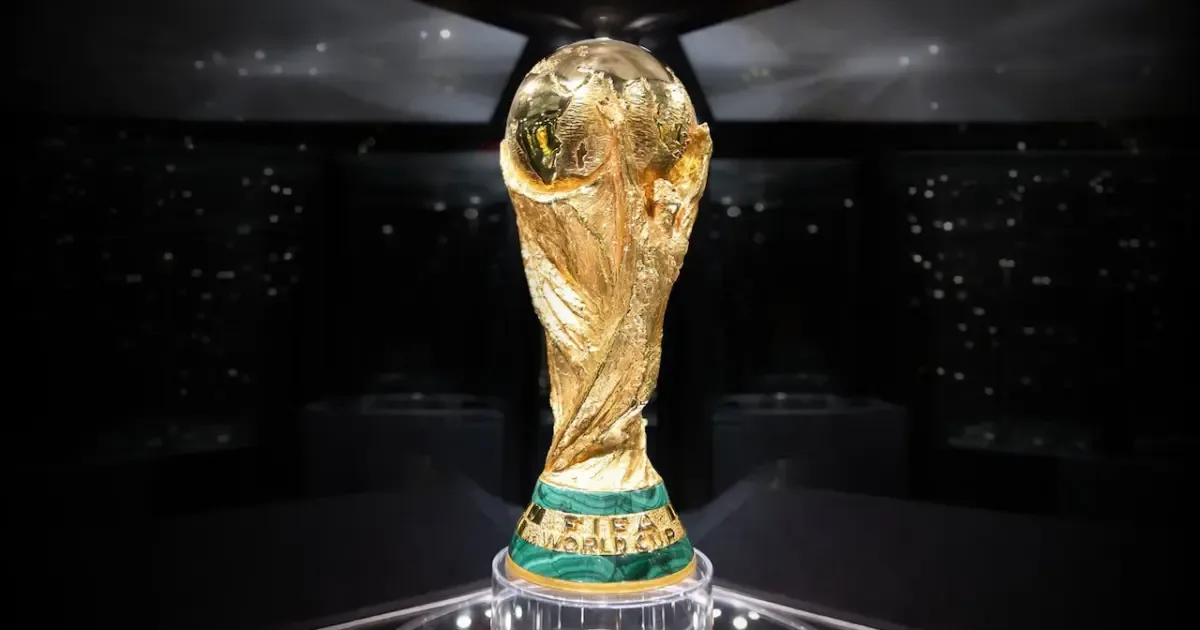
The trophy itself is made of solid 18-carat gold and weighs about 6.175 kilograms (roughly 13.6 pounds). However, it is not a solid block of metal throughout; the trophy is hollow but still holds a substantial amount of gold. For context, 18-carat gold is 75% pure gold mixed with other metals like copper and silver for durability. The use of 18-carat gold ensures the trophy is both visually appealing and robust enough to withstand decades of handling during victory celebrations. Pure 24-carat gold would be too soft for such an iconic object. The current gold price per troy ounce (a standard measure for precious metals) has pushed the trophy’s material value to a record high. Even though hollow, the gold content accounts for the vast majority of the trophy’s mass and value.
In Indian rupees, the trophy’s gold content is now valued at approximately Rs 6.73 crore (that is, 67.3 million rupees). This conversion highlights the trophy’s growing worth in one of the world’s largest gold-buying markets. India is a major consumer of gold, driven by cultural traditions, festivals, and investment demand. The sharp increase in the trophy’s rupee value directly mirrors the global rally in precious metals, which has been particularly felt in the South Asian market. The LSEG data, considered reliable for financial valuations, confirms that the trophy’s material value has more than doubled since 2022, reflecting broader trends in precious metals markets as investors seek safe-haven assets amid global economic uncertainty.
The FIFA World Cup trophy was first crafted in 1974, replacing the original Jules Rimet trophy. The Jules Rimet trophy, made of gold-plated sterling silver and depicting the goddess of victory, was stolen in 1966 (later recovered by a dog named Pickles) and eventually awarded permanently to Brazil after their third World Cup win in 1970. Since 1974, the current trophy has been awarded to the winning team at every tournament. The trophy is one of the most iconic sports prizes in the world, recognized for its elegant design by Italian artist Silvio Gazzaniga and the immense prestige it carries. While its material worth is now USD 713,000, this does not include its historic, emotional, or symbolic value-which is incalculable. The trophy is often regarded as priceless by fans and players alike, embodying the pinnacle of football achievement.
The 2026 FIFA World Cup is scheduled to be hosted jointly by the United States, Canada, and Mexico. This will be the first time the tournament is held across three countries, and the trophy will again be the ultimate prize. The tri-nation hosting is unprecedented and is expected to draw enormous global audiences. As gold prices continue to fluctuate, the trophy’s material value may change by the time of the next tournament, but its status as a global sports icon remains secure. The 2026 edition will also feature an expanded 48-team format, making it the largest World Cup in history.
Background: Gold prices have been rising due to a combination of factors, including inflation concerns, geopolitical tensions (such as the Russia-Ukraine war and Middle East instability), and increased demand from central banks and investors seeking safe-haven assets. Central banks around the world have been net buyers of gold in recent years, further boosting prices. Since 2022, the price of gold has surged significantly, making the World Cup trophy’s gold content a tangible reflection of these macroeconomic trends. The trophy’s weight and composition are well-documented, making LSEG’s valuation straightforward: multiply the gold content by the current market price of 18-carat gold.
It is important to note that the trophy is not solid gold throughout. FIFA has stated that the trophy is hollow, which reduces its weight but still leaves a substantial amount of gold. The base of the trophy is made of malachite, a green semi-precious stone, which adds a contrasting natural element to the golden trophy. The malachite is often sourced from regions like the Democratic Republic of Congo. While the gold content is the primary driver of its material value, the overall craftsmanship and design-featuring two athletes holding up the Earth as a symbol of global unity and competition-make it a unique piece of art. The green base also evokes the color of a football field.
The 2022 Qatar tournament was the last World Cup before the current gold price rally. At that time, the trophy’s gold value was about USD 350,000. The doubling to USD 713,000 reflects not only higher gold prices but also the trophy’s enduring appeal as a benchmark of sporting achievement. The LSEG data provides a clear, objective figure for the trophy’s material worth, separate from any collectible or historical premium. The percentage increase is roughly 103.7%, indicating that the trophy’s gold content has appreciated in line with the broader precious metals market.
For readers interested in the trophy’s history: it was designed by Italian artist Silvio Gazzaniga and has been awarded since the 1974 World Cup in West Germany. The original trophy, the Jules Rimet, was stolen in 1966 (later recovered by a dog) and eventually awarded permanently to Brazil after their third win in 1970. The current trophy is kept by FIFA and awarded to each champion team for a period, then returned. It is made by GDE Bertoni, a Milan-based company renowned for its fine metalwork. The trophy stands approximately 36.5 cm tall and has a diameter of about 13 cm at its base. Its weight, including the malachite base, is slightly more than the gold alone, but the precious metal remains the most valuable component.
In summary, the FIFA World Cup trophy’s gold value has more than doubled to USD 713,000 since the 2022 Qatar tournament, driven by surging gold prices. This figure comes from LSEG and is based on the trophy’s 6.175 kg of 18-carat gold. In Indian rupees, it is worth roughly Rs 6.73 crore. The trophy remains one of the most valuable and iconic sports prizes in the world, with its material worth a byproduct of broader economic forces-inflation, geopolitical uncertainty, and central bank buying. As the 2026 World Cup approaches, this iconic trophy will continue to symbolize the highest achievement in football, regardless of fluctuations in its gold value.
References
- Worth Rs 6.73 Crore: FIFA World Cup Trophy Now Has Double The Gold – Original report (NDTV Sports)
- Worth Rs 6.73 Crore: FIFA World Cup Trophy Now Has Double The Gold – NDTV Sports – This RSS feed entry is another version of the same article, confirming the trophy’s gold value has doubled.
- 2026 FIFA World Cup Live Football Scores, News, Stats, Schedules, Results, Highlights, Photos, Videos – NDTV Sports – This reference provides context for the upcoming 2026 World Cup, though no additional details were extracted.