At a Glance
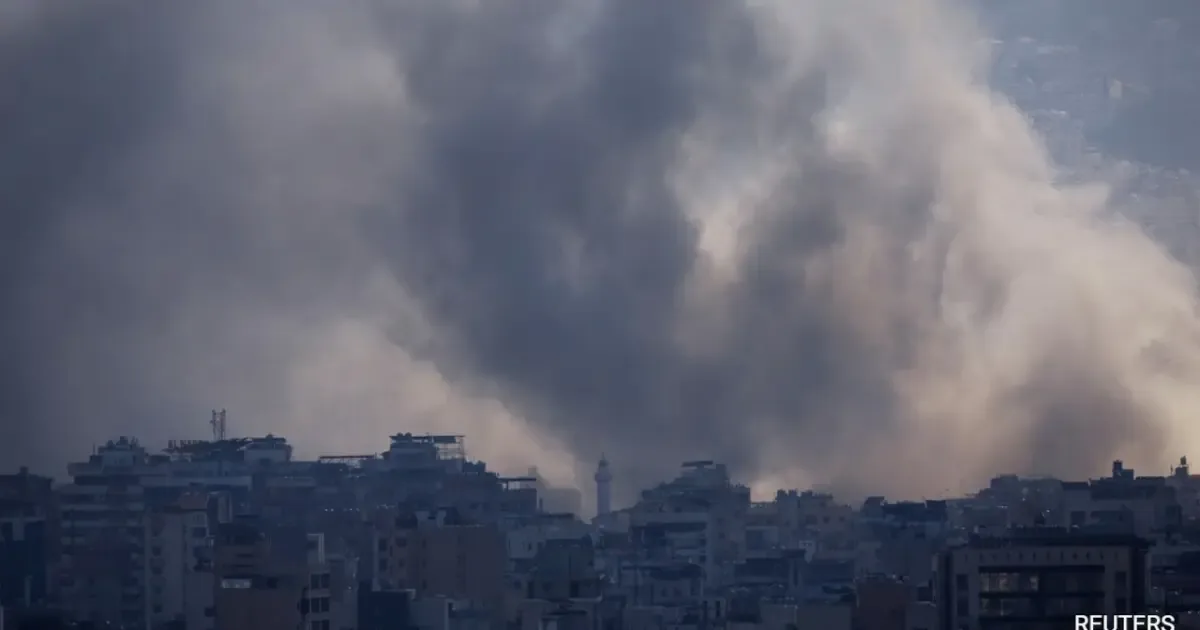
A senior US official has confirmed that Israel and Hezbollah have agreed to a ceasefire, set to begin Friday at 4 pm local time. This agreement, brokered by the United States, aims to de-escalate tensions along the Israel-Lebanon border after weeks of heightened conflict. While the exact terms and duration of the truce remain undisclosed, the announcement is seen as a significant diplomatic development, though its long-term effectiveness is yet to be determined.
Key Takeaways
The main points at a glance
- Israel and Hezbollah have agreed to a US-brokered ceasefire starting Friday at 4 pm local time.
- The agreement was confirmed by a senior US official speaking to Reuters on condition of anonymity.
- Details regarding the terms, duration, and enforcement mechanisms of the ceasefire are currently unknown.
- The United States played a central role in mediating the deal, utilizing backchannel diplomacy.
- US officials also informed Iran, Hezbollah’s main backer, about the ceasefire agreement.
- The announcement comes amidst stalled diplomatic talks between the US and Iran regarding Iran’s nuclear program.
Ceasefire Announced: When and How
Israel and the Lebanese militant group Hezbollah have agreed to a ceasefire, according to a senior US official. The truce is set to begin at 4 pm local time on Friday. This Israel Hezbollah ceasefire marks a significant diplomatic breakthrough after weeks of escalating cross-border attacks that raised fears of a broader regional war.
The ceasefire was confirmed by a senior US official who spoke to Reuters on condition of anonymity. The official did not provide details on the exact date or the terms of the agreement. However, the source said the deal was brokered by the United States and is aimed at reducing tensions along the Israel-Lebanon border. The lack of specific terms leaves many questions unanswered, but the mere fact of an agreement is seen as a positive step by international observers. The US has been actively mediating between the parties, using its diplomatic channels to push for de-escalation.
The timing of the ceasefire-Friday afternoon local time-suggests that both sides were under pressure to halt hostilities before the weekend. In the past, ceasefires have often been announced on Fridays to allow for a period of calm. The choice of 4 pm may also be symbolic, as it marks the end of the workweek in Israel and Lebanon. However, without official confirmation of the exact date, it remains unclear whether the ceasefire will begin this Friday or a future one.
Who Confirmed the Deal
The confirmation came from a senior US official who spoke to Reuters. The official did not give their name, citing the sensitivity of the diplomatic process. The official told Reuters that the ceasefire would take effect at 4 pm local time on Friday. No other details were provided. This is typical of high-stakes negotiations where leaks could undermine the fragile agreement. The anonymity also protects the official from potential backlash from parties who may oppose the deal.
The news was also reported by multiple other news outlets, including NDTV, The Jerusalem Post, Global Banking & Finance Review, and Deutsche Welle. All of them cited the same Reuters report or added their own context. No source gave conflicting information, which lends credibility to the announcement. The Jerusalem Post added that US officials informed Iran about the ceasefire, while Deutsche Welle provided context about failed Switzerland talks and Vice President JD Vance remaining in the US.
The fact that multiple independent outlets corroborated the story suggests that the ceasefire is not a rumor but a confirmed development. However, until an official joint statement is released by Israel and Hezbollah, some uncertainty remains. Hezbollah has not yet publicly commented on the agreement, which is typical for the group as it often lets its actions speak louder than words. Israel has also not issued an official statement, but the US confirmation is considered reliable given Washington’s role as the broker.
What the Ceasefire Entails: Knowns and Unknowns
At this point, the exact terms of the ceasefire are not known. None of the sources provided details about the duration of the truce, whether there will be buffer zones, or what conditions Israel and Hezbollah must meet. The absence of details is common in the early stages of such agreements, as parties often keep terms confidential to avoid public scrutiny. However, the lack of transparency also raises concerns about enforcement and compliance.
What is known is that the ceasefire is set to begin at 4 pm local time on Friday. It is also clear that the United States played a key role in brokering the deal. The US has been pushing for a de-escalation in the region for weeks, with diplomats shuttling between capitals and using backchannels to communicate with all sides. The US does not have direct talks with Hezbollah, which it designates as a terrorist organization, so intermediaries were likely used to convey messages.
The ceasefire targets the ongoing conflict between Israel and Hezbollah, which has seen cross-border attacks in recent months. Hezbollah is a Lebanese Shia militant group backed by Iran. The group has a history of fighting with Israel, including a full-scale war in 2006. Since then, there have been periodic flare-ups, but the recent escalation has been one of the most serious since 2006. Hezbollah has launched rockets and drones into northern Israel, while Israel has carried out airstrikes deep into Lebanese territory.
One of the key unknowns is how the ceasefire will be enforced. The sources do not mention any monitoring mechanism. In past ceasefires, the United Nations Interim Force in Lebanon (UNIFIL) has played a role in monitoring the border, but it is unclear if they will be involved this time. It is also not clear what happens if either side breaks the truce. Without a clear enforcement mechanism, the ceasefire could be fragile. Both sides have violated previous agreements, and trust is low.
Another unknown is whether the ceasefire includes any provisions for humanitarian aid or reconstruction. Southern Lebanon has been heavily damaged by Israeli airstrikes, and northern Israel has seen property damage and displacement. A lasting peace would likely require addressing these issues, but the current announcement does not mention them. The focus appears to be solely on stopping the fighting.
US Role in Brokering the Agreement
The United States was the main broker of the ceasefire. The senior US official confirmed that the deal was reached through US mediation. This is consistent with Washington’s long-standing role as a key mediator in the Middle East, despite its close alliance with Israel. The US has often used its influence to de-escalate conflicts involving Israel and its neighbors.
US diplomats have been working behind the scenes for weeks. They have been in contact with Israeli officials and possibly with intermediaries who can talk to Hezbollah. The US does not have direct talks with Hezbollah, which it considers a terrorist organization. Instead, it has relied on countries like Lebanon, Qatar, or Egypt to relay messages. The success of this backchannel diplomacy suggests that the US has maintained effective communication lines even with non-state actors.
The US role is part of a broader effort to reduce tensions in the Middle East. The region has seen several conflicts in recent years. The ceasefire between Israel and Hezbollah could help stabilize the Israel-Lebanon border, which has been a flashpoint for decades. It also sends a signal to Iran that the US is committed to preventing a wider war, even as it continues to apply pressure on Tehran through sanctions and other means.
The US mediation also reflects a shift in strategy. In the past, the US has often taken a more hands-off approach to the Israel-Hezbollah conflict, leaving it to the UN or other actors. But the current administration appears to be more proactive, possibly because of the risk of the conflict drawing in Iran and escalating into a regional war. The ceasefire is a diplomatic win for the US, which has faced criticism for its handling of other Middle East crises.
Iran Informed: Diplomatic Backchannel
As part of the diplomatic effort, US officials informed Iran that Israel will not continue its attacks on Hezbollah. This is a significant development because Iran is Hezbollah’s main backer, providing the group with money, weapons, and training. The US informing Iran directly suggests that Washington used a backchannel to communicate with Tehran, possibly through intermediaries.
The move may have been intended to reassure Iran that the ceasefire is serious. It also signals that the US wants to avoid a wider war that could draw in Iran. The US and Iran have not had formal diplomatic relations for decades, but they have used intermediaries to communicate during crises. The backchannel on the ceasefire indicates that both sides are willing to communicate to prevent escalation.
Informing Iran also serves a practical purpose: Hezbollah often coordinates with Iran on major decisions. By keeping Tehran in the loop, the US ensures that Iran does not undermine the ceasefire by ordering Hezbollah to continue attacks. It also gives Iran a stake in the success of the truce, as any violation could be traced back to Tehran. However, it is unclear whether Iran has given its explicit approval or simply been notified.
Context: Failed Switzerland Talks and Vance’s Stance
The ceasefire announcement comes at a time when other diplomatic efforts have stalled. Talks between the US and Iran in Switzerland were called off. These talks were supposed to address Iran’s nuclear program, which has been a major source of tension. The cancellation of the talks indicates that the two sides are far apart on key issues.
Additionally, US Vice President JD Vance remained in the United States during this period. His absence from the Switzerland talks suggests that the US is reassessing its approach to Iran. Some analysts speculate that the US may be prioritizing the ceasefire over nuclear negotiations, at least for now. Others believe that the US is trying to separate the two issues to avoid linking them.
This context matters because it shows that while one diplomatic track (the ceasefire) moved forward, another track (the Iran nuclear talks) hit a wall. The ceasefire may be part of a larger US strategy to lower the temperature in the region, even as it maintains pressure on Iran. The failure of the Switzerland talks could also be a sign that Iran is not willing to compromise on its nuclear program, which may lead to further tensions down the line.
The timing of the ceasefire and the stalled talks is not coincidental. The US may have used the threat of a wider war to push both Israel and Hezbollah toward a ceasefire, while simultaneously signaling to Iran that it is serious about de-escalation. However, the lack of progress on the nuclear front means that the underlying tensions between the US and Iran remain unresolved. The ceasefire could be a temporary reprieve rather than a long-term solution.
What Happens Next
The next few hours will be crucial. The ceasefire is set to begin on Friday at 4 pm local time. If it holds, it could lead to a significant reduction in violence along the border between Israel and Lebanon. Residents in northern Israel and southern Lebanon have been living under the threat of attack for weeks. The ceasefire could allow some of them to return to their homes.
The international community will be watching closely. The United Nations has called for a ceasefire in the past. If this deal holds, it could create a window for broader peace talks. The UN Security Council may meet to discuss the situation and potentially endorse the ceasefire. Other regional actors, such as Egypt and Saudi Arabia, have also called for de-escalation and may offer to help with monitoring or reconstruction.
For now, the details remain scarce. No one knows how long the ceasefire will last or what exactly it covers. But one thing is certain: for the first time in weeks, there is a real chance for quiet. The coming days will test whether both sides are committed to peace or whether the ceasefire is merely a tactical pause. If it holds, it could be a stepping stone to a more stable arrangement. If it fails, the region could slide back into conflict, with potentially devastating consequences.
The ceasefire also has implications for US foreign policy. A successful truce would boost the Biden administration’s credibility as a mediator. It could also free up diplomatic resources to focus on other crises. However, if the ceasefire collapses, it would be a setback for US diplomacy and could embolden hardliners on both sides.
In the longer term, the ceasefire could pave the way for negotiations on a more permanent settlement. But that would require addressing the root causes of the conflict, including Hezbollah’s military capabilities, Israel’s security concerns, and the broader regional rivalry between Iran and the US. For now, the immediate priority is to ensure that the ceasefire holds and that both sides adhere to its terms. The world will be watching closely as the clock ticks toward 4 pm on Friday.
Frequently Asked Questions
When will the Israel Hezbollah ceasefire begin?
The Israel Hezbollah ceasefire is scheduled to begin on Friday at 4 pm local time. This timing was confirmed by a senior US official involved in brokering the deal.
Who confirmed the Israel Hezbollah ceasefire agreement?
A senior US official, speaking to Reuters on condition of anonymity, confirmed the ceasefire agreement between Israel and Hezbollah. The official stated the deal was brokered by the United States.
What are the specific terms of the Israel Hezbollah ceasefire?
The specific terms of the Israel Hezbollah ceasefire have not been publicly disclosed. Details regarding the duration, enforcement mechanisms, and any conditions for the truce remain unknown at this time.
What was the US role in brokering the ceasefire?
The United States played a key role in mediating the ceasefire between Israel and Hezbollah. US diplomats engaged in backchannel communications with the parties involved to facilitate the agreement and de-escalate tensions.
Was Iran informed about the ceasefire?
Yes, US officials informed Iran about the ceasefire agreement. This was done through diplomatic backchannels, as Iran is a primary supporter of Hezbollah, aiming to ensure Tehran's awareness and potentially its cooperation.
What is the context of the ceasefire announcement?
The ceasefire announcement comes at a time when other diplomatic efforts, such as US-Iran talks in Switzerland regarding Iran's nuclear program, have stalled. This suggests a complex diplomatic landscape where de-escalation on one front is being pursued despite challenges on others.
What happens next after the ceasefire begins?
The coming hours and days will be crucial to see if the ceasefire holds and leads to a reduction in violence. The international community will be watching closely, and if successful, it could pave the way for broader peace talks and a more stable arrangement in the region.
References
- Israel, Hezbollah Have Agreed To Ceasefire: Report – Original report (NDTV World)
- Israel, Hezbollah Have Agreed To Ceasefire: Report – NDTV – NDTV reported the initial RSS item that Israel and Hezbollah agreed to a ceasefire based on a Reuters report.
- Israel, Hezbollah agree to ceasefire starting on Friday -U.S. official – Reuters – Reuters provided the original confirmation from a senior U.S. official about the ceasefire timing.
- Israel, Hezbollah Agree to U.S.-Brokered Ceasefire Starting Friday – Global Banking & Finance Review – The source reaffirmed the U.S.-brokered nature of the ceasefire and the Friday start time.
- Israel will not continues its attacks on Hezbollah, US officials told Iran – The Jerusalem Post – The Jerusalem Post added that U.S. officials informed Iran about the cessation of Israeli attacks on Hezbollah.
- Iran war: Switzerland talks called off, Vance stays in US – dw.com – DW provided context that Switzerland talks on Iran were called off and VP Vance stayed in US, suggesting wider diplomatic shifts.