At a Glance
Israeli strikes in southern Lebanon killed at least 16 people, including children, shattering hopes for an imminent ceasefire. The escalation occurred as US-Iran nuclear deal talks intensify, with President Trump issuing an ultimatum to Iran. Hezbollah retaliated with rocket fire, leading to further Israeli military preparations. Lebanon remains caught in the middle of this proxy conflict, facing severe consequences while major powers negotiate.
Key Takeaways
The main points at a glance
- Israeli airstrikes in southern Lebanon resulted in at least 16 deaths, including children, diminishing prospects for a ceasefire.
- Hezbollah responded with rocket attacks into northern Israel, escalating the tit-for-tat violence.
- The conflict is intertwined with US-Iran nuclear deal negotiations, with potential US actions against Iran and its allies looming.
- President Trump has issued a broad ultimatum to Iran regarding the nuclear deal, threatening widespread infrastructure damage.
- Iran has implemented a communications blackout, raising concerns about potential escalation and limiting international visibility.
- Lebanon continues to suffer as a proxy battleground, with its civilians bearing the brunt of the violence and geopolitical tensions.
The Strikes: Casualties and Immediate Aftermath
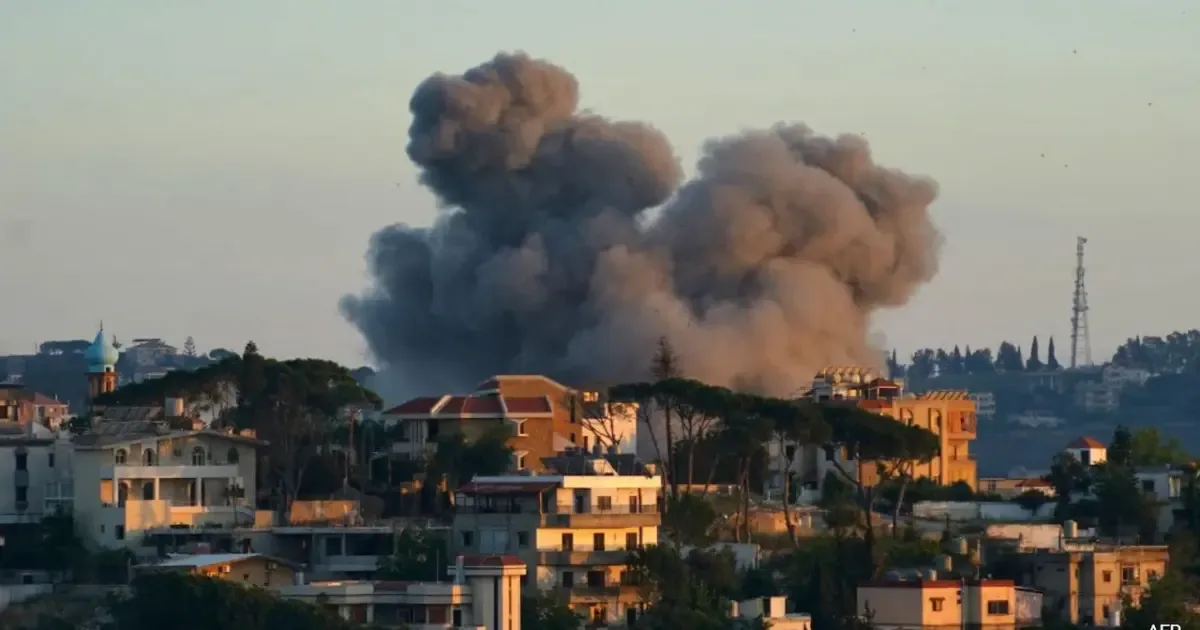
Israeli strikes on southern Lebanon on Saturday killed at least 16 people, including two children. The attacks came just hours after reports suggested a ceasefire might be close, puncturing hopes for de-escalation.
The dead included civilians in several villages near the border. Medical teams on the ground reported struggling to reach the wounded due to continued shelling. Local officials confirmed 16 deaths and many more injuries.
Among the victims were two children, aged 10 and 12, according to Lebanese health authorities. The strikes hit residential areas, not solely military targets.
Witnesses described scenes of panic as families fled their homes. One survivor told local media, “We thought there was a ceasefire. Then the bombs started falling again.”
The Israeli military stated it was targeting Hezbollah positions, claiming strikes hit rocket launch sites and command centers. However, the civilian death toll raises questions about the accuracy of these claims.
Lebanon’s caretaker prime minister condemned the attacks as a violation of international law and urged United Nations intervention.
The Red Cross in Lebanon reported ambulance delays due to road damage from the strikes. Rescue teams worked through the night to recover bodies from the rubble.
This incident marks a continuation of violence, with hundreds killed in southern Lebanon since October, predominantly civilians according to the UN. Saturday’s strikes were among the deadliest in weeks, shattering hopes for a truce.
Ceasefire Reports vs. Reality on the Ground
Earlier on Saturday, several news outlets reported an imminent ceasefire, citing diplomatic sources who suggested Israel and Hezbollah had agreed in principle to stop fighting. These reports, based on unnamed officials, were quickly contradicted by the ongoing strikes.
The breakdown of reported ceasefire talks highlights the fragility of any potential truce. Analysts suggest that intractable demands from both sides, such as Israel’s call for Hezbollah’s withdrawal from the border and Hezbollah’s demand for an end to all Israeli strikes, prevent compromise.
The UN special coordinator for Lebanon expressed deep concern over the escalation and called for a return to the ceasefire framework, but these appeals had little effect.
Lebanese officials voiced feelings of abandonment by the international community, stating that global discussions about ceasefires are not matched by enforcement actions.
The reality on Saturday was stark: the absence of a ceasefire and the continuation of deadly violence.
Hezbollah’s Response and Escalation
In response to the Israeli strikes, Hezbollah launched rocket attacks into northern Israel. Israeli air defenses intercepted most, but some projectiles caused fires in open areas without casualties.
Hezbollah declared the rocket attacks were retaliation for civilian deaths and vowed to continue until Israel ceases its strikes on Lebanon. The group stated, “Our response will be swift and painful. The blood of our people will not be shed in vain.”
This cycle of Israeli strikes and Hezbollah rocket fire has characterized the conflict since October, often resulting in civilian casualties on both sides. Saturday’s escalation, however, saw a higher Lebanese death toll and a larger Hezbollah rocket barrage.
Israeli officials indicated readiness for a prolonged conflict, announcing the deployment of additional troops to the northern border and placing tanks and artillery units on standby.
The Israeli prime minister warned Hezbollah against testing Israel’s resolve, stating, “We will not hesitate to use all our power to protect our citizens.”
Hezbollah’s leader, Hassan Nasrallah, has not made a public statement, but the group’s media arm released videos of rocket launches, signaling continued engagement.
The border region remains active, with constant Israeli drone surveillance and Hezbollah movements, leaving civilians caught in the middle.
The US-Iran Deal and its Impact on Lebanon
The escalating violence in Lebanon is closely linked to ongoing negotiations between the United States and Iran regarding a nuclear deal. The Trump administration has set a deadline for Iran to agree to terms, threatening expanded action against Iran’s infrastructure if an agreement is not reached.
Israel views Iran as a primary adversary and opposes any deal allowing Iran to enrich uranium. Furthermore, Israel is determined to prevent Hezbollah, Iran’s ally, from strengthening its military presence on Israel’s border. The current strikes in Lebanon aim to weaken Hezbollah before a potential US-Iran deal is finalized.
The timing of these events is crucial. A US-Iran deal could lead to sanctions relief for Iran, potentially increasing resources for Hezbollah. Israel’s actions seek to degrade Hezbollah’s capabilities before such a scenario unfolds.
The strikes also signal Israel’s capacity for independent action without requiring US approval for perceived threats.
While US officials have not publicly opposed the strikes, some private concerns exist that the escalation could jeopardize the nuclear talks, potentially causing Iran to withdraw.
The situation is complex, with Lebanon serving as a focal point for a broader geopolitical struggle involving the US and Iran.
Trump’s Ultimatum to Iran
President Trump has intensified threats against Iran, stating the US would target “all of Iran’s power plants and bridges” if a nuclear deal is not reached by an unspecified deadline.
This threat notably broadens the scope beyond previous US focus on Iran’s nuclear facilities to include civilian infrastructure.
“We will not allow Iran to have nuclear weapons,” Trump declared. “If they don’t make a deal, we will make it impossible for them to function as a country.”
The deadline is reportedly within the coming weeks, though neither side has confirmed the exact date.
Iran has rejected US terms, seeking sanctions relief before agreeing to nuclear program limitations, while the US demands Iran cease all enrichment first, creating a stalemate.
The US military has deployed additional assets, including bombers, warships, and missile defenses, to the Middle East in preparation for potential strikes.
In response, Iran has threatened to block the Strait of Hormuz, which could disrupt global oil supplies and has already contributed to rising oil prices.
These threats extend to Iran’s allies, including Hezbollah in Lebanon and militias in Iraq, warning of consequences for supporting Iran.
The potential for a full-scale US-Iran conflict carries severe risks, including wider regional involvement and immense civilian suffering.
Currently, both nations are in a standoff, with time running out and Lebanon bearing the immediate consequences.
Iran’s Communications Blackout
Iran has implemented a significant shutdown of its communications network, severely restricting internet access and disrupting satellite signals. This development is seen as a potential indicator of Iran preparing for major escalation.
Experts suggest the government may be attempting to control information flow or protect its networks from cyberattacks. Independent news sources from within Iran are currently unavailable, with only state-controlled media operating.
The blackout, which began on Thursday night, has made most international websites inaccessible and blocked VPN services. Residents report access to only a limited number of state-approved sites.
Analysts speculate the blackout could precede military action, possibly to conceal troop movements or prepare for a potential US or Israeli attack. It might also be an effort to suppress internal dissent related to economic issues.
Regardless of the reason, the blackout has heightened international tensions and reduced visibility into Iran’s activities, complicating diplomatic efforts and increasing the risk of miscalculation.
Human rights groups have condemned the shutdown as a violation of the right to information, but the Iranian government has disregarded these criticisms.
The current lack of clear information about Iran’s actions creates a dangerous uncertainty.
Lebanon Caught in the Crossfire
Lebanon finds itself a victim of geopolitical forces, grappling with a severe economic crisis, a weak government, and military limitations against regional powers.
The current conflict is characterized as a proxy war between Israel, supported by the US, and Iran, backed by Hezbollah, with Lebanon serving as the primary battleground.
Lebanese civilians bear the brunt of the violence, suffering loss of homes, loved ones, and livelihoods without having a say in the conflict’s origins or progression.
International diplomats have struggled to broker ceasefires, as major powers pursue their own agendas, often sidelining Lebanon’s interests.
Hezbollah operates with significant autonomy within Lebanon, functioning as a state within a state, beyond the control of the Lebanese government.
While Israel states its targets are Hezbollah, not Lebanon, the resulting civilian casualties and destruction on Lebanese soil render this distinction moot for affected families.
UN peacekeepers in southern Lebanon have a limited mandate for observation and reporting, lacking the authority to enforce a ceasefire.
Lebanon’s prime minister has appealed to the UN Security Council for a resolution demanding an end to the strikes, but US opposition is anticipated.
Consequently, Lebanon faces a grim outlook, enduring violence and displacement with little immediate hope for resolution.
What Happens Next in the Conflict
The coming days and weeks are critical, with three main factors shaping the future: ceasefire negotiations, the US-Iran deal, and actions on the ground.
The success of ceasefire talks remains uncertain, as both Israel and Hezbollah have ongoing reasons to continue fighting.
The outcome of the US-Iran deal is pivotal. An agreement might prompt Israel to intensify strikes within a limited window, while a failure to reach a deal could lead to a US-Iran conflict, with Lebanon becoming a secondary front.
On the ground, neither Hezbollah nor Israel shows signs of de-escalation, suggesting the cycle of strikes and counterstrikes could persist, leading to further civilian casualties.
Diplomatic efforts, including mediation offers from France, Qatar, and Egypt, have yet to yield results. The UN has called for a cessation of hostilities, but these appeals have been largely ignored amid divisions within the Security Council.
The outlook for civilians in southern Lebanon remains bleak, with continued risk of bombing, displacement, and death, and no clear end in sight.
The fate of those affected in Lebanon is inextricably linked to the US-Iran negotiations, highlighting the harsh reality of the conflict where distant diplomatic outcomes dictate immediate suffering.
Frequently Asked Questions
What happened in the Israeli strikes on Lebanon?
Israeli airstrikes on southern Lebanon killed at least 16 people, including two children. The attacks occurred shortly after reports suggested a ceasefire was near, dashing hopes for de-escalation.
What was Hezbollah's response to the strikes?
Hezbollah retaliated by launching rocket attacks into northern Israel. The group stated these actions were in response to the civilian deaths and vowed to continue until Israeli strikes on Lebanon cease.
How is the US-Iran deal related to the Lebanon conflict?
The violence in Lebanon is linked to US-Iran nuclear deal negotiations. Escalation in Lebanon could impact these talks, and potential outcomes of the deal may influence regional dynamics and support for groups like Hezbollah.
What threats has President Trump made against Iran?
President Trump has threatened to target "all of Iran's power plants and bridges" if a nuclear deal is not reached by his deadline. This broadens previous threats beyond Iran's nuclear facilities.
Why has Iran shut down its communications network?
Iran has significantly restricted internet access and communications. Experts suggest this could be preparation for escalation, an attempt to control information, or to protect networks from cyberattacks.
What is Lebanon's role in this conflict?
Lebanon is caught in the middle as a proxy battleground between Israel and Iran. Lebanese civilians are suffering the consequences of a conflict largely driven by external powers, despite their own severe economic and political instability.
References
- Israel Strikes On Lebanon Continue As Threat Looms Over US-Iran Deal – Original report (NDTV World)
- Israel Strikes On Lebanon Continue As Threat Looms Over US-Iran Deal – NDTV – NDTV
- Lebanon Endures Threats, Diplomacy and Whiplash as Others Decide Its Fate – The New York Times – Offers perspective on Lebanon's powerlessness as external players decide its fate amidst the conflict.
- Israel steps up strikes on Lebanon and Hezbollah attacks continue as talks loom – BBC – Details the mutual attacks between Israel and Hezbollah and upcoming talks.
- Iran goes dark: The terrifying sign that catastrophic developments loom over US talks? | Videos – Hindustan Times – Alerts that Iran's communications blackout may indicate impending catastrophic developments in talks.
- Trump widens threat to all of Iran's power plants and bridges as his deadline for a deal approaches – AP News – Reports Trump's escalated threats to Iran's infrastructure as deadline approaches, adding pressure to the deal.