At a Glance
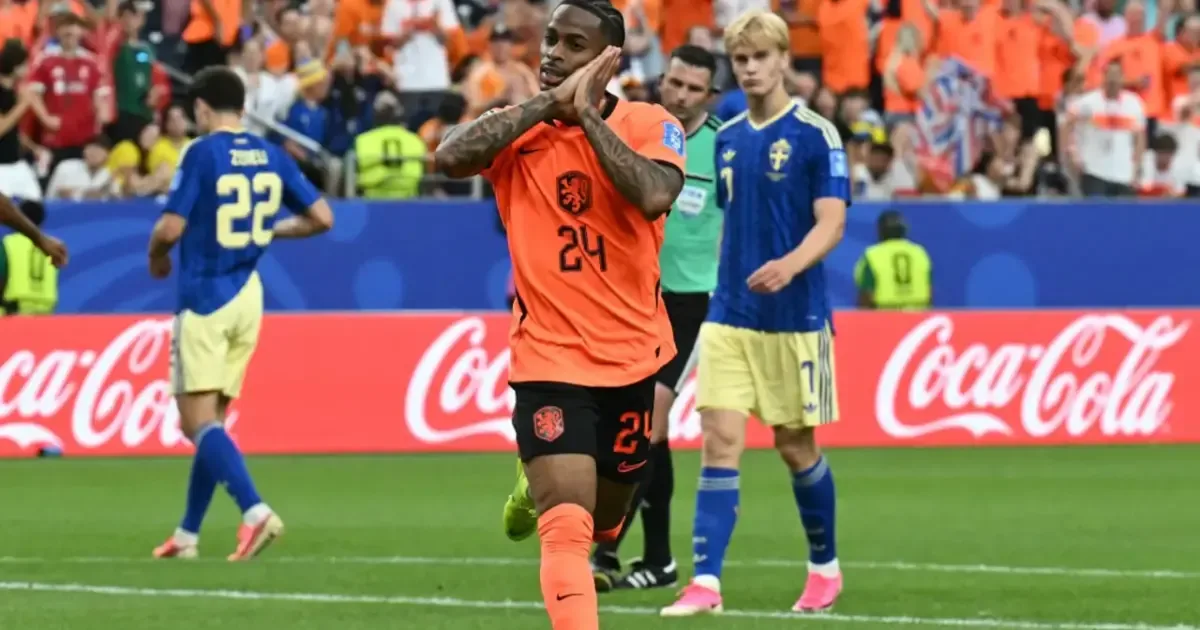
The Netherlands have become the eighth nation to score 100 goals in FIFA World Cup history following a commanding 5-1 victory over Sweden. This milestone highlights the team’s consistent attacking prowess and rich footballing tradition, placing them among the sport’s elite.
Key Takeaways
The main points at a glance
- The Netherlands achieved their 100th World Cup goal during a dominant 5-1 win against Sweden.
- They join an exclusive club of seven other nations with at least 100 World Cup goals, including Brazil, Germany, and Argentina.
- The milestone reflects the Netherlands’ long-standing attacking philosophy, often associated with “Total Football.”
- The 5-1 victory over Sweden provided a strong start to their tournament, emphasizing both offensive power and defensive solidity.
- The Netherlands reached this scoring landmark efficiently, averaging 1.82 goals per game across their World Cup history.
- This achievement boosts the team’s confidence and signals their intent to compete for the World Cup title.
The Netherlands have etched their name into World Cup history, becoming only the eighth nation to score 100 goals in the tournament, following a dominant 5-1 win over Sweden. This milestone achievement highlights the Netherlands’ consistent attacking prowess on the world stage.
Netherlands Reach 100 World Cup Goals Milestone
Scoring 100 goals in a World Cup is a significant accomplishment, requiring sustained performance across multiple tournaments. The Netherlands achieved this mark during their decisive 5-1 victory against Sweden. This historic goal celebrated the nation’s attacking tradition and its long-standing philosophy of entertaining, forward-thinking football.
Only seven other nations have reached this elite scoring club: Brazil, Germany, Italy, Argentina, France, Spain, and England. These are among the most successful footballing nations, boasting multiple titles and legendary players. Brazil leads the all-time list with over 230 goals, followed by Germany and Italy. The Netherlands now stands alongside these giants, a testament to their consistent attacking output, even without a World Cup title.
The Netherlands’ 100th goal symbolizes their attacking philosophy, often referred to as “Total Football.” This approach, pioneered by Rinus Michels and popularized by Johan Cruyff in the 1970s, emphasizes fluid movement, positional interchange, and relentless attacking intent. This philosophy has influenced football globally and is a key reason for the Netherlands’ prolific scoring record across different eras.
Having reached the World Cup final three times (1974, 1978, 2010) and securing a third-place finish in 2014, this milestone feels like a natural progression. The Dutch achieved this feat in their 11th World Cup appearance, dating back to their debut in 1934. Their journey underscores their resilience and quality as a consistent top-tier competitor.
The 100th goal itself was reportedly a product of collective brilliance, embodying the Dutch style. While the specific scorer isn’t detailed, the goal stemmed from a well-worked team move showcasing precise passing and movement. It was a fitting way to reach the mark, reflecting the team’s emphasis on collective effort over individual brilliance.
Dominant Performance: Netherlands Overwhelm Sweden 5-1
The match against Sweden was largely one-sided from the outset. The Netherlands attacked with speed and precision, overwhelming the Swedish defense. By halftime, the Dutch had established a comfortable lead through quick transitions and clinical finishing. The opening goal set the tone, and Sweden’s normally disciplined defense struggled against the relentless pressure from the Dutch midfield and forwards.
The goals showcased the Netherlands’ attacking versatility. The first was a well-taken strike from inside the box. The second came from a set-piece, highlighting improvements in dead-ball situations. The third was a classic counter-attack goal, exploiting space behind the Swedish defense. The fourth was a long-range effort, and the fifth, the historic 100th goal, was a tap-in following intricate passing that dismantled the Swedish backline. Multiple players contributed to the scoreline, demonstrating squad depth and tactical flexibility.
Sweden managed to score a single goal, but it was insufficient to challenge the Dutch dominance. The final 5-1 scoreline reflected the clear difference between the two teams. Sweden, a team with a strong World Cup pedigree, was outclassed. Their lone goal came from a penalty, with few threats in open play. The Dutch defense, anchored by experienced players, effectively absorbed pressure and launched swift counter-attacks.
This victory was more than just a record-breaking event; it was a statement of intent. The Netherlands displayed sharpness, organization, and attacking threat. Their midfield controlled the game, and the defense remained solid. The midfield trio worked tirelessly, while full-backs provided attacking support. Forwards exhibited excellent off-ball movement, creating space and exploiting defensive gaps.
For Swedish fans, it was a difficult match. For neutrals, it was a display of classic Dutch football: fast, creative, and relentless. The Netherlands’ high tempo throughout the 90 minutes, coupled with their physical superiority, was a key factor in the decisive scoreline.
The Exclusive 100-Goal Club in World Cup History
The 100-goal club represents an elite echelon of footballing nations in World Cup history. Before the Netherlands, only seven teams had achieved this milestone. These nations are characterized by rich footballing legacies, multiple tournament wins, and iconic players. Brazil leads with the most goals, followed by Germany, Italy, Argentina, France, Spain, and England – the traditional powerhouses of the sport.
The Netherlands now joins this esteemed group, a fitting place for a nation that has produced legendary players like Johan Cruyff, Marco van Basten, Ruud Gullit, Dennis Bergkamp, and more recently, Virgil van Dijk, Memphis Depay, and Frenkie de Jong. These players have upheld the Dutch footballing tradition, contributing significantly to the national goal tally.
This milestone underscores the Netherlands’ consistent attacking legacy, even without a World Cup title. Reaching 100 goals demonstrates their ability to score against top international teams. They have a history of overcoming strong defenses from nations like Brazil, Argentina, and Germany, showcasing their ambition to play attractive, attacking football.
Notably, the Netherlands reached the 100-goal mark faster than some other members of the club. Their attacking style contributes to this efficiency. In their 55 World Cup matches since 1934, they have scored 100 goals at an average of 1.82 per game, one of the highest rates among teams with significant tournament appearances. For comparison, England took 69 matches and Spain took 63 to reach the same milestone.
The composition of the 100-goal club also reflects the evolution of World Cup football. While early tournaments featured higher scoring rates, modern football often sees more defensive tactics. The Netherlands’ achievement in the current tournament, against a well-organized Swedish side, highlights their ability to adapt their attacking prowess to contemporary challenges.
Impact of the Milestone on the Dutch Campaign
The 5-1 victory over Sweden provides the Netherlands with a strong start to their tournament campaign. In group stages, goal difference is often crucial, and such a decisive win offers a significant advantage. With three points and a +4 goal difference, the Netherlands is in a commanding position to advance to the knockout stages. This margin could be vital if teams finish level on points.
The team’s ability to score freely will undoubtedly concern future opponents. The variety of goals scored-from open play, counter-attacks, and set-pieces-means defenses cannot focus on a single threat. Simultaneously, the Netherlands demonstrated defensive solidity, conceding only one goal. The backline, led by Virgil van Dijk, appeared organized and effective in crucial moments.
This historic result is expected to boost the team’s confidence. Achieving a significant milestone early in the tournament can foster greater freedom and belief among the players. The psychological advantage of being record-breakers can elevate team morale, particularly in high-pressure knockout matches. The blend of experienced players and emerging talents provides a strong foundation for the squad.
While one match does not guarantee a World Cup title, it sets a positive tone. The Netherlands has signaled their intent to compete for the championship. Fans are likely energized by the team’s performance and style, which has drawn praise from pundits. Maintaining this level of play could lead to a deep tournament run.
The Dutch coaching staff will be pleased with the overall performance, though areas for refinement may exist. Maintaining concentration for the full 90 minutes and minimizing defensive lapses, such as the one that led to Sweden’s goal, will be key. However, the dominant performance provides a strong platform for future matches.
Tactically, the Netherlands’ effective use of a high press and quick transitions was evident. They capitalized on turnovers in dangerous areas. The midfield’s ability to win second balls and maintain possession allowed for sustained pressure, combining tactical discipline with individual skill to create a formidable challenge for opponents.
Looking Ahead: Future Matches and Historical Context
The Netherlands still has group stage matches to play. Their next fixture against another strong opponent will require them to maintain their current performance level. Consistency in replicating the intensity and precision shown against Sweden will be crucial against diverse styles of opposition.
Continued goal-scoring could lead to further records. The Netherlands is now tenth on the all-time World Cup goals scored list and has the potential to climb higher. They could also target records for most goals in a single tournament, currently held by Hungary (27 in 1954) and France (16 in 2018). Their current form suggests such ambitious targets are within reach.
For now, the primary focus remains on winning each match and progressing through the tournament. The 100-goal milestone is a proud moment, celebrating Dutch football history while looking towards future success. The current generation, including key scorers like Memphis Depay and emerging talents like Xavi Simons, carries forward the legacy. The renowned Dutch youth academies continue to supply the national team with technically gifted players, ensuring the continuation of their attacking tradition.
Supporters worldwide will be watching to see if the Netherlands can achieve their ultimate goal this year. With their current form, they possess a genuine chance. The path ahead is challenging, but the Netherlands has demonstrated the attacking firepower to compete with any team. The 100-goal club has a new member, and their place in football history is secured, regardless of whether they lift the World Cup trophy.
In the broader context of World Cup history, the Netherlands’ achievement highlights the increasing competitiveness of international football. While traditional powerhouses have historically dominated goal-scoring charts, emerging nations are also making their mark. The Netherlands, despite not having won the tournament, has consistently performed at a high level, solidifying their status as a global footballing force.
Frequently Asked Questions
Which nations have scored 100 or more World Cup goals?
The nations that have scored 100 or more goals in FIFA World Cup history are Brazil, Germany, Italy, Argentina, France, Spain, England, and now, the Netherlands. These countries represent the traditional powerhouses of international football.
How many goals does Brazil have in the World Cup?
Brazil leads the all-time list of World Cup goal scorers with over 230 goals. They have consistently been one of the most prolific and successful teams in the tournament's history.
Has the Netherlands ever won the World Cup?
No, the Netherlands has not won the World Cup. They have reached the final three times, in 1974, 1978, and 2010, but finished as runners-up on each occasion. They also secured a third-place finish in 2014.
What is 'Total Football'?
'Total Football' is a tactical system in which any outfield player can interchange positions with any other outfield player. Pioneered by Rinus Michels and famously utilized by Johan Cruyff, it emphasizes fluidity, positional interchange, and relentless attacking intent.
How many World Cup appearances do the Netherlands have?
The Netherlands made their debut in the World Cup in 1934 and have since appeared in 11 tournaments. Their 100th goal was scored during their latest appearance.
Did the Netherlands reach 100 goals faster than other teams?
Yes, the Netherlands reached the 100-goal milestone in fewer matches than some other teams. They achieved this in 55 matches, averaging 1.82 goals per game, which is a higher rate than England (69 matches) and Spain (63 matches).
References
- Netherlands Achieve Massive FIFA World Cup Feat After Smashing 5-1 Win Over Sweden – Original report (NDTV Sports)
- Netherlands Achieve Massive FIFA World Cup Feat After Smashing 5-1 Win Over Sweden – NDTV Sports – NDTV Sports
- Why ‘you’d be a fool to write the Dutch off’ after Netherlands break records in statement World Cup win – football360.com.au – Title suggests analysis of the Netherlands' record win and why they remain a dangerous team in the tournament.
- World Cup 2026 Power Rankings: Lionel Messi leads Argentina to top spot as Spain & Portugal fall after opening up group stage with dismal draws – Goal.com – Likely includes the Netherlands in power rankings after their win, though full text not available.
- Follow day four of the FIFA World Cup with our LIVE updates! – Flashscore.co.za – Provided live coverage of the match day, likely including the Netherlands vs Sweden game.
- 🚨 Arsenal to sign World Cup star, Liverpool pushing for winger deal, Cucurella leaves Chelsea, Man United advntage in Mateus Fernandes race, Spurs turn down rival offer & more. – the Daily Briefing | Substack – Unrelated transfer news roundup; no direct contribution to the Netherlands story.