At a Glance
Imagine a room so grand that its walls have witnessed the rise and fall of empires. The Hall of Mirrors at the Palace of Versailles is exactly that kind of place. Stretching over 73 meters, lined with 357 mirrors, it sparkles with chandeliers and gold…
Key Takeaways
The main points at a glance
- The Grand Hall of History
- 1919: The Treaty That Left Germany Red-Faced
- Trump's Iran Deal: A Modern Echo
- Why Versailles? The Symbolism of Venue
- Parallels and Contrasts: Then and Now
The Grand Hall of History
Imagine a room so grand that its walls have witnessed the rise and fall of empires. The Hall of Mirrors at the Palace of Versailles is exactly that kind of place. Stretching over 73 meters, lined with 357 mirrors, it sparkles with chandeliers and gold leaf. On a sunny day, light pours through the tall windows, bouncing off the mirrors and making the room feel almost magical.
But this hall is not just a pretty sight. It is a stage where world leaders have rewritten history. In 1919, the Treaty of Versailles was signed here, ending World War I. The terms were harsh. Germany was forced to accept blame for the war, pay huge reparations, and give up land. Many historians say those terms planted the seeds for World War II.
Fast forward nearly a century. In 2018, another world leader stood in that same Hall of Mirrors. President Donald Trump signed the Iran nuclear deal there. The choice of venue was no accident. It was a deliberate nod to history. But the comparison raised eyebrows. Could a deal with Iran suffer the same fate as the treaty with Germany? Could it backfire?
The Palace of Versailles sits about 20 kilometers west of Paris. It covers more than 800 hectares, including gardens, fountains, and forests. Built by King Louis XIV in the 17th century, it was meant to show off French power. For centuries, it has been a backdrop for the world’s most important talks. But the 1919 treaty and the Iran deal are two of the most talked-about events there.
This article will take you through both events. We will look at what happened, why the venue matters, and what the parallels mean for today. No fancy words. Just a clear story about history repeating itself in a glittering hall.
1919: The Treaty That Left Germany Red-Faced
World War I ended in 1918 after four years of brutal fighting. Millions of soldiers and civilians had died. The war had torn Europe apart. Leaders from the winning side, mainly the United States, Britain, France, and Italy, gathered in Paris to decide what to do with the losers. Germany was the main loser.
The peace conference started in January 1919. It took months of arguing. The French wanted to punish Germany harshly. The British wanted a middle ground. The American president, Woodrow Wilson, wanted a fair peace that would prevent another war. But in the end, the harsh voices won.
On June 28, 1919, the Treaty of Versailles was signed in the Hall of Mirrors. The date was chosen on purpose. It was the fifth anniversary of the assassination of Archduke Franz Ferdinand, which had started the war. The room itself was a symbol of French power. The same hall where Louis XIV had shown off his wealth was now where Germany had to accept defeat.
The treaty’s terms were tough. Germany had to accept full blame for the war. That was called the “war guilt clause.” It had to pay 132 billion gold marks in reparations, which was a huge amount at the time. It lost 13 percent of its land, including valuable coal mines. Its army was cut to 100,000 men. It could not have tanks, planes, or submarines. Its navy was almost completely scrapped.
For Germans, the treaty was a humiliation. They felt they had been tricked. Many thought their army had not really lost the war but had been betrayed by politicians at home. That idea, called the “stab-in-the-back myth,” became popular. The treaty’s harsh terms created deep anger and resentment.
That anger helped fuel the rise of Adolf Hitler and the Nazi Party. Hitler promised to tear up the treaty and make Germany strong again. In the 1930s, he did just that. He rebuilt the army, took back lost land, and started World War II. Many historians say the Treaty of Versailles was a direct cause of the second world war.
The treaty also had other long-term effects. The reparations payments crippled Germany’s economy. Hyperinflation in the early 1920s wiped out people’s savings. The Great Depression hit Germany hard in 1929. All of this made people desperate and open to extreme ideas. The treaty was supposed to bring peace. Instead, it set the stage for more war.
Trump’s Iran Deal: A Modern Echo
Now let’s talk about the Iran deal. The Iran nuclear deal, officially called the Joint Comprehensive Plan of Action or JCPOA, was signed in 2015. It was between Iran and six world powers: the United States, Britain, France, Germany, Russia, and China. The goal was to stop Iran from building a nuclear bomb.
Under the deal, Iran agreed to limit its nuclear program. It had to reduce its uranium stockpile, limit enrichment, and allow international inspectors to visit its sites. In return, the world powers agreed to lift economic sanctions on Iran. That meant Iran could sell oil and trade with other countries again.
The deal was controversial from the start. Supporters said it was the best way to prevent Iran from getting a bomb without starting a war. Critics said it did not go far enough. They argued that Iran would cheat and that the deal gave it too much money to support militant groups in the Middle East.
Donald Trump was one of the biggest critics. He called the deal “the worst deal ever.” In 2018, after becoming president, he decided to pull the United States out of the agreement. But he did not just announce it from the White House. He chose a very special place to make the announcement: the Palace of Versailles.
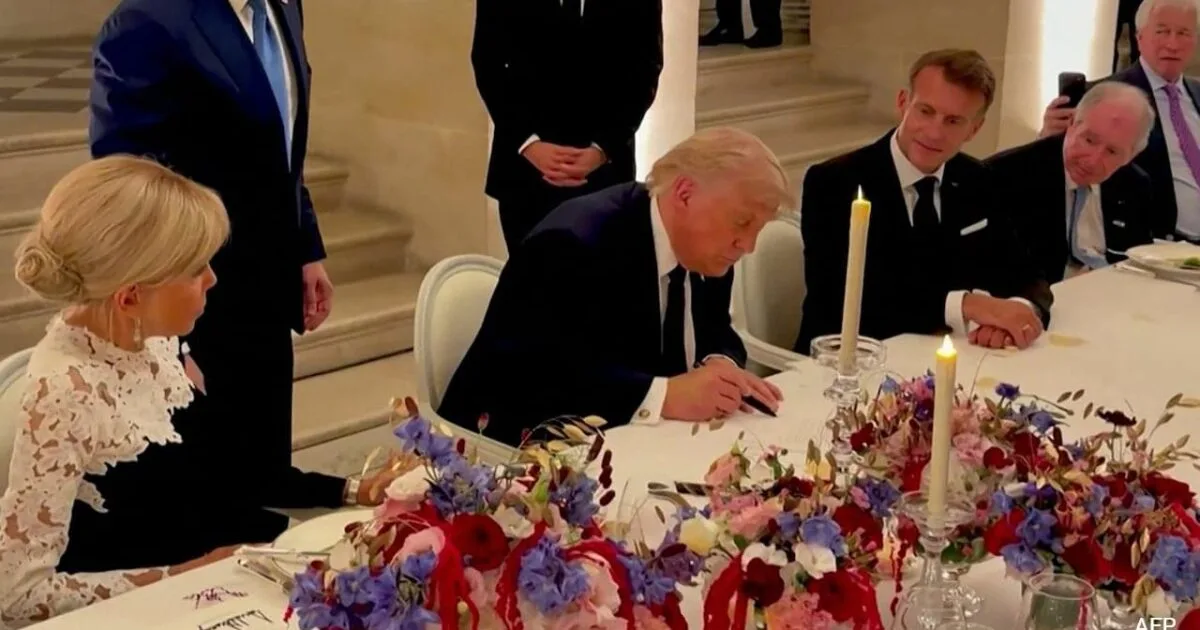
On May 8, 2018, Trump stood in the Hall of Mirrors and signed a document. It was not the actual Iran deal he was signing. He was signing a presidential memorandum that withdrew the United States from the deal and reinstated sanctions on Iran. But the symbolism was clear. He was using the same room where the Treaty of Versailles had been signed to signal a new approach to international agreements.
The event was carefully staged. Trump was surrounded by his advisors. Cameras captured the moment. The message was that the old deal was dead and that America would take a tougher line on Iran. But the choice of Versailles also sent another message: that this was a historic moment, like the treaty of 1919.
Why Versailles? The Symbolism of Venue
Why did Trump choose Versailles? The answer is all about symbolism. The Palace of Versailles is not just any building. It is a place where history was made. By choosing it, Trump was linking his actions to a major historical event.
First, the palace represents French power and grandeur. King Louis XIV built it to show that he was the most powerful ruler in Europe. For centuries, it was the center of French government. Using it for a major announcement gave the event a sense of importance and gravity.
Second, the Hall of Mirrors is specifically tied to the Treaty of Versailles. That treaty is one of the most famous documents in history. By standing in the same spot where it was signed, Trump was borrowing some of that historical weight. He was saying that his decision was just as significant.
Third, the choice was a deliberate contrast. The Treaty of Versailles was a multilateral agreement. It was signed by many countries working together. Trump’s move was the opposite. He was pulling out of a multilateral deal and going it alone. The venue highlighted the difference between the old way of doing things and his new approach.
Historians have mixed feelings about using Versailles for modern diplomacy. Some say it is a fitting place for important talks. Others worry that it adds too much drama and makes things seem more historic than they really are. But one thing is clear: the palace’s history makes any event held there seem bigger than life.
There is also a touch of irony. The Treaty of Versailles was supposed to bring lasting peace. Instead, it led to another war. The Iran deal was supposed to prevent a nuclear arms race. Trump’s withdrawal raised fears that Iran would restart its nuclear program. Could history be repeating itself? That is the question that hangs in the air.
Parallels and Contrasts: Then and Now
Let’s compare the two events. Both took place in the same room. Both were about trying to shape the future. But the similarities end there.
The Treaty of Versailles was a peace treaty after a war. The Iran deal was an agreement to prevent a war. The treaty was signed by all the major powers of the time. The Iran deal was signed by six powers, but the United States later pulled out. The treaty imposed harsh terms on a defeated enemy. The Iran deal was a negotiated compromise where both sides gave something up.
The treaty’s terms were meant to punish Germany. The Iran deal’s terms were meant to limit Iran’s nuclear program. The treaty created anger and resentment in Germany. The Iran deal created anger among some in the United States and Iran. The treaty led to World War II. The Iran deal’s collapse could lead to a nuclear arms race in the Middle East.
But there are also echoes. Both agreements were criticized for being too harsh or too weak. Both were seen as victories by some and defeats by others. Both had long-term consequences that are still being felt today.
One big difference is the role of the United States. In 1919, the US was a major force behind the treaty. President Woodrow Wilson pushed for a league of nations to keep peace. But the US Senate never ratified the treaty, and the US did not join the league. That weakened the treaty’s authority. In 2018, the US was pulling out of an agreement it had helped create. That weakened the Iran deal’s authority.
Another difference is the time frame. The Treaty of Versailles was signed after a war. The Iran deal was signed before a war. The treaty was about punishing the past. The Iran deal was about preventing the future. But both were about trying to control the actions of a powerful country.
The outcomes are also different. The Treaty of Versailles clearly failed. It led to World War II. The Iran deal’s fate is still unfolding. After Trump pulled out, Iran slowly started to violate the deal’s terms. It enriched more uranium and blocked inspectors. Other countries tried to keep the deal alive, but without the US, it was hard. In 2020, the US killed a top Iranian general, which raised tensions further. In 2021, new talks began, but progress has been slow.
What the Iran Deal Means Today
The Iran deal is not just a piece of paper. It is a key part of global security. Iran has the potential to build a nuclear bomb. If it does, that could start a nuclear arms race in the Middle East. Saudi Arabia, Turkey, and Egypt might want their own bombs. That would make the world more dangerous.
The deal was designed to stop that. It put strict limits on Iran’s nuclear program. It also had a system of inspections to make sure Iran was following the rules. Supporters say it was working. Inspectors reported that Iran was keeping its promises. Critics say it was not enough. They point to Iran’s missile program and support for militant groups as signs that Iran was not really changing.
After Trump pulled out, the situation changed. Iran started to enrich uranium to higher levels. It now has enough material for a bomb if it chooses to build one. But it says it is not building a bomb. International inspectors still visit, but Iran has limited their access.
The Biden administration has tried to revive the deal. Talks have been going on in Vienna. But there are disagreements. Iran wants the US to lift all sanctions. The US wants Iran to return to full compliance first. Neither side seems willing to give in. As of now, the deal is in a kind of limbo.
The choice of Versailles for Trump’s announcement added a layer of drama. It made the event seem historic. But it also raised questions. Would Trump’s move be seen as a bold stroke or a mistake? Would history judge it harshly, like the Treaty of Versailles? Only time will tell.
For now, the Iran deal remains a symbol of how hard it is to manage international relations. It shows that agreements can be fragile. It shows that symbolism matters. And it shows that the past is never really past. The ghosts of 1919 still haunt the Hall of Mirrors.
In the end, the story of Versailles is a story of human ambition and its limits. Kings built palaces to show their power. Diplomats signed treaties to shape the future. But the future is never easy to control. The same room that saw the humiliation of Germany also saw the unraveling of a nuclear deal. It is a reminder that history has a way of repeating itself, often in unexpected ways.
So the next time you see a picture of the Hall of Mirrors, remember what happened there. Remember the hopes and fears of the people who stood in that room. And remember that the choices made in that glittering hall can echo for generations.
Frequently Asked Questions
What is the Hall of Mirrors at the Palace of Versailles?
The Hall of Mirrors is a grand room in the Palace of Versailles, known for its beauty with 357 mirrors and chandeliers. It has been a significant location where world leaders have made important historical decisions.
Why was the Treaty of Versailles signed in the Hall of Mirrors?
The Treaty of Versailles was signed in the Hall of Mirrors on June 28, 1919, to mark the end of World War I. The date was chosen to coincide with the anniversary of Archduke Franz Ferdinand's assassination, and the hall symbolized French power.
What were the main terms of the Treaty of Versailles for Germany?
Germany was forced to accept full blame for World War I, pay massive reparations, and give up significant territory. Its army was also severely restricted in size and capabilities.
How did the Treaty of Versailles affect Germany after World War I?
The treaty's harsh terms caused humiliation and resentment in Germany, contributing to economic hardship and the rise of Adolf Hitler. Many historians believe it laid the groundwork for World War II.
What was the Iran nuclear deal?
The Iran nuclear deal, or JCPOA, was an agreement signed in 2015 between Iran and six world powers to prevent Iran from developing nuclear weapons. Iran agreed to limit its nuclear program in exchange for the lifting of economic sanctions.
Why did President Trump choose the Palace of Versailles to announce the US withdrawal from the Iran deal?
President Trump chose the Hall of Mirrors in Versailles to make a symbolic statement. By using the same venue where the Treaty of Versailles was signed, he signaled a new, tougher approach to international agreements, drawing a parallel to historical events.
What is the significance of the Palace of Versailles?
The Palace of Versailles was built in the 17th century to showcase French power and has historically served as a backdrop for major international talks. Its grandeur makes it a powerful setting for significant historical events.
References
- At Trump's Iran Deal Signing Venue, A 1919 Treaty Left This Nation Red-Faced – Original report (NDTV World)
- A World War 1 Link To Palace Of Versailles, Where Trump Signed Iran Deal – NDTV – This article shares the same title and URL as the RSS item, but full text was not available; it confirms the historical link between the Iran deal signing and World War I.