At a Glance
On Wednesday, the United States and Iran signed a 14-point framework called the Islamabad Memorandum of Understanding. The goal: end a conflict in the Middle East that had lasted about 110 days.
Key Takeaways
The main points at a glance
- 1. The New Deal: Islamabad Memorandum at a Glance
- 2. What Obama’s Iran Deal Did (2015 JCPOA)
- 3. Trump’s Broken Promise: Why He Tore Up the Old Deal
- 4. Key Differences: Nuclear Controls vs. Conflict Resolution
- 5. The Strait Pledge: Oil and Tolls at Center
1. The New Deal: Islamabad Memorandum at a Glance
On Wednesday, the United States and Iran signed a 14-point framework called the Islamabad Memorandum of Understanding. The goal: end a conflict in the Middle East that had lasted about 110 days.
The signing took place in Islamabad, the capital of Pakistan. That choice of venue is notable. Pakistan has long played a role as a go-between for the US and Iran, especially during times of tension. The country shares a border with Iran and has its own complex relationship with both Washington and Tehran.
The memorandum is not a full treaty. It is a memorandum of understanding, which means it is a statement of intent rather than a legally binding contract. But it carries political weight. Both sides are expected to follow its terms, at least for now.
Details are still coming out. Based on headlines from multiple news outlets, the deal covers several key areas: ending the conflict, ensuring free passage through a major oil shipping route, and possibly unlocking billions of dollars for Iran.
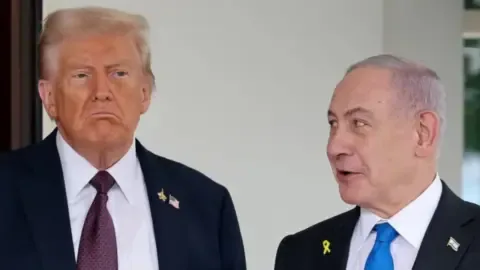
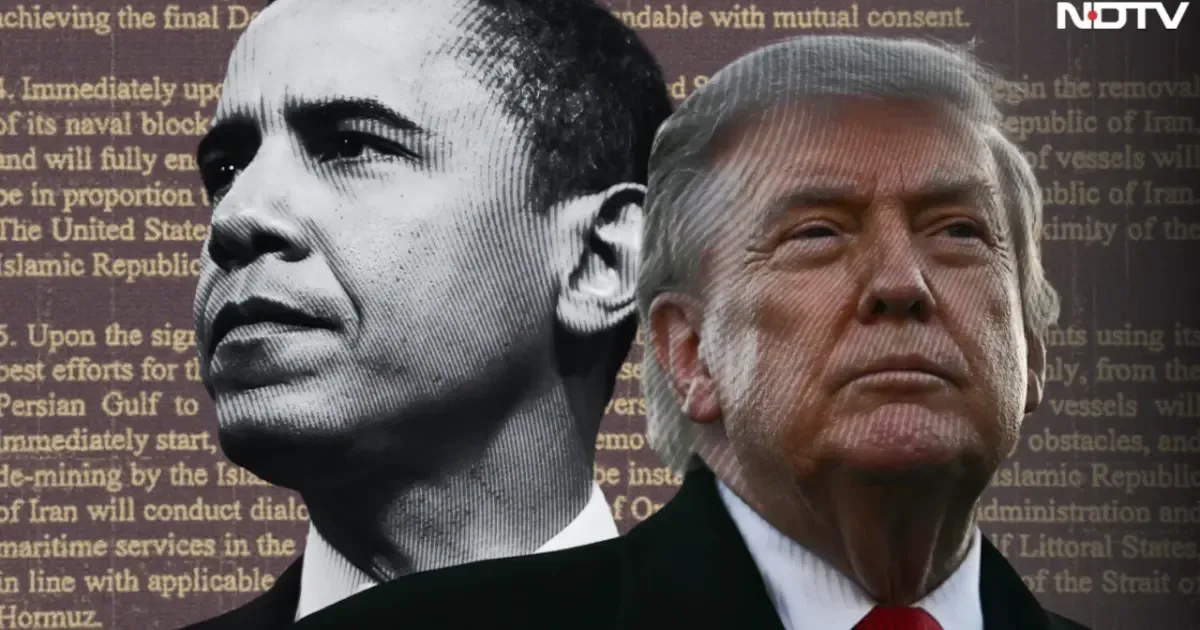
President Donald Trump, who tore up the Obama-era deal in 2018, has called this new memorandum a better agreement. He promised it would be superior to the 2015 nuclear deal, known as the Joint Comprehensive Plan of Action, or JCPOA.
But what exactly is in the new deal? And how does it compare to the old one? Let’s break it down.
2. What Obama’s Iran Deal Did (2015 JCPOA)
To understand the new deal, you need to know what came before. In 2015, after years of negotiations, the United States, the United Kingdom, France, Germany, Russia, China, and the European Union signed the JCPOA with Iran.
The main goal of the JCPOA was to stop Iran from building a nuclear bomb. Under the deal, Iran agreed to limit its uranium enrichment. Uranium enrichment is the process that can produce fuel for nuclear power plants or, if pushed further, material for nuclear weapons. Iran agreed to keep its enrichment level low and to reduce its stockpile of enriched uranium.
International inspectors from the International Atomic Energy Agency (IAEA) were allowed to visit Iran’s nuclear sites. They checked that Iran was following the rules.
In exchange, the world powers agreed to lift many economic sanctions on Iran. Sanctions are penalties that restrict trade and investment. Lifting them allowed Iran to sell oil more freely and access money frozen in foreign banks.
The JCPOA was a complex deal. It had strict limits on how many centrifuges Iran could run. Centrifuges are machines that spin uranium gas to separate isotopes. Fewer centrifuges meant slower enrichment. The deal also set a timeline. Some restrictions would last 10 years, others 15 years, and some would expire after 25 years.
The Obama administration called it a historic achievement. It was meant to prevent a nuclear arms race in the Middle East and to avoid a war with Iran.
3. Trump’s Broken Promise: Why He Tore Up the Old Deal
Donald Trump never liked the JCPOA. During his 2016 presidential campaign, he called it the worst deal ever negotiated. He said it was a giveaway to Iran that did not address other issues, such as Iran’s ballistic missile program or its support for militant groups in the region.
In 2018, Trump made good on his promise. He withdrew the United States from the JCPOA and reimposed sanctions on Iran. He called the old deal horrible and said it was a disaster for American security.
The move shocked America’s allies in Europe. They had spent years negotiating the deal and believed it was working. The IAEA had repeatedly confirmed that Iran was complying with the terms. But Trump argued that the deal did not go far enough. He said it did not cover Iran’s missile program, its regional activities, or its nuclear research beyond the sunset clauses (the dates when restrictions would expire).
After the US pulled out, Iran gradually stopped following the deal’s limits. It began enriching uranium at higher levels and using more advanced centrifuges. By 2021, Iran had enough enriched material to build a nuclear weapon, if it chose to do so. The international community struggled to bring both sides back to the table.
Now, in 2026, Trump has signed a new agreement with Iran. The contrast with his earlier rejection is stark. He went from calling any deal with Iran a disaster to endorsing a new memorandum that goes beyond nuclear issues.
4. Key Differences: Nuclear Controls vs. Conflict Resolution
The biggest difference between the two deals is what they focus on.
Under the Obama deal (JCPOA):
- The main focus was nuclear non-proliferation. That means stopping Iran from getting a nuclear bomb.
- It set strict limits on uranium enrichment, centrifuge numbers, and stockpile size.
- It allowed international inspections of nuclear sites.
- It did not address Iran’s ballistic missiles, its support for groups like Hezbollah and Hamas, or its role in conflicts in Syria, Yemen, or Iraq.
- It was a multilateral deal involving six world powers plus the EU.
Under the new deal (2026 Islamabad Memorandum):
- The main focus appears to be ending a regional conflict that lasted 110 days. The exact nature of that conflict is not fully clear from headlines alone. It could be a direct military confrontation between US and Iranian forces, a proxy war in a third country, or a crisis in the Persian Gulf. The sources do not specify.
- The deal mentions making a major shipping strait permanently toll-free. This is likely the Strait of Hormuz, a narrow waterway between Iran and Oman that carries about a fifth of the world’s oil supply.
- It may unlock a $300 billion investment fund for Iran, according to Al Jazeera headlines.
- It does not appear to mention nuclear restrictions directly. At least, no headlines about uranium enrichment or inspections have surfaced yet.
- It is a bilateral deal between the US and Iran, brokered in Pakistan, rather than a multilateral agreement.
So the Obama deal was about preventing a future nuclear threat. The new deal is about stopping an immediate conflict and securing economic gains.
5. The Strait Pledge: Oil and Tolls at Center
One of the most striking features of the new memorandum is the pledge about the Strait. According to a New York Times headline, Trump claimed the Strait will be permanently toll-free under the agreement.
What does that mean? The Strait of Hormuz is a chokepoint for global oil shipments. Tankers carrying crude oil from Saudi Arabia, Iran, Iraq, Kuwait, and the United Arab Emirates pass through it. In 2023, about 20 million barrels of oil and petroleum products moved through the strait every day.
Iran has threatened to close the strait in the past, especially during times of tension with the US. In 2019, after the US killed Iranian General Qasem Soleimani, Iran threatened to disrupt shipping. The strait is narrow, only about 33 kilometers wide at its narrowest point. A single mine or a few missiles could block it for days or weeks.
A toll-free strait would mean that ships can pass without paying fees to any authority. But the strait is international waters. Ships already do not pay a toll to use it. The phrase toll-free might refer to Iran stopping any threats or harassment of commercial vessels. It could mean that Iran agrees not to block or delay oil tankers, effectively removing the risk premium that insurance companies add to ships passing through the region.
If the strait is truly safe and open, global oil prices could drop. The risk of a supply disruption has kept prices higher than they would otherwise be. A guaranteed toll-free passage would reassure markets and could lower costs for consumers around the world.
But the details matter. Is the pledge permanent? Does it cover all ships? What happens if Iran violates it? The headlines do not answer these questions. We will have to wait for the full text of the memorandum.
6. The $300bn Question: Economic Incentives for Iran
Another big question is money. Al Jazeera ran a headline asking: Will a US-Iran deal unlock $300 billion in investment fund for Tehran?
The figure is eye-catching. $300 billion is roughly equal to Iran’s entire annual economic output. If the deal unlocks that much money, it would be a huge boost for Iran’s struggling economy.
But is it confirmed? The headline uses the word will, which suggests it is a possibility, not a certainty. The sources available do not confirm whether the $300 billion is part of the 14-point memorandum or just speculation.
Under the Obama deal, Iran got sanctions relief worth tens of billions of dollars. But much of that money was frozen assets that Iran could access once the deal was in place. The $300 billion figure in the new deal could be similar: frozen assets in foreign banks that Iran can now use. Or it could be a new investment fund, perhaps from foreign companies eager to do business in Iran once sanctions are lifted.
Economic incentives are a key part of the new deal. Without them, Iran would have little reason to agree to end the conflict. The US is offering something valuable: access to money and markets. In return, Iran is expected to stop the fighting and keep the strait open.
But $300 billion is a lot of money. Critics will ask: Is this a bribe? Is the US paying off Iran to stop a war it started? Supporters will say it is a smart investment in peace. Without the money, Iran might have continued the conflict, costing far more in military spending and economic disruption.
7. What’s Missing? Verification and Timeline
For all the headlines, some important details are missing from the new deal.
Verification: The Obama deal had a robust inspection regime. IAEA inspectors could visit any nuclear site in Iran on short notice. They could check records, take samples, and monitor centrifuges. The new deal, as far as we know, does not mention any similar verification mechanism. If the deal is about ending a conflict, how will either side know the other is keeping its promises? Without inspectors or monitoring, trust is the only guarantee. And trust between the US and Iran is in short supply.
Timeline: The Obama deal had clear timelines. Some restrictions lasted 10 years, others 15. The sunset clauses meant that after a certain date, Iran could expand its nuclear program. Critics said that was a flaw. The new deal does not appear to have a published timeline. The word permanently in the strait pledge suggests it is meant to last forever. But no agreement lasts forever. What happens if a future US president decides to tear up this deal too? The same vulnerability exists.
Nuclear program: The new deal does not seem to address Iran’s nuclear capabilities. Iran has continued enriching uranium since the US left the JCPOA. It now has enough material for several nuclear bombs. The new deal does not require Iran to give up that material or to submit to inspections. That is a major gap. Without nuclear controls, Iran could still build a bomb in the future, even if the conflict ends today.
Regional conflicts: The 110-day conflict that the deal aims to end might be just one of several crises in the Middle East. Iran is involved in Syria, Yemen, Iraq, and Lebanon through proxy groups. The new deal does not address those conflicts, at least not in the headlines. Ending one conflict does not mean peace across the region.
8. What Happens Next: Risks and Reactions
The Islamabad Memorandum is a fresh start. But it is also a gamble.
Risks:
- Iran might not stop its nuclear program. The deal does not require it. That leaves the world vulnerable to a nuclear Iran in the future.
- The $300 billion fund could be misused. Iran could spend the money on military programs or support for militants, rather than on its people.
- Israel and Saudi Arabia, both rivals of Iran, might oppose the deal. They could take unilateral action to disrupt it.
- The strait pledge might not hold. Iran could threaten shipping again if tensions rise.
- The deal might be temporary. A change in US leadership could undo it, just as Trump undid Obama’s deal.
Reactions:
Reactions from world leaders are still coming in. The headlines suggest a mix of hope and skepticism. Supporters say any agreement that ends a war is a good thing. Critics say the deal gives too much to Iran without getting enough in return.
For now, the world watches. The Islamabad Memorandum is signed. The 110-day conflict is supposedly over. The strait is supposed to be toll-free. Iran might get $300 billion. But the real test is whether the deal holds up in practice, not just on paper.
One thing is certain: this is not the same deal that Obama negotiated in 2015. It is a different approach for a different time. Whether it works better or worse is a question only the future can answer.
And for readers who want to dig deeper: What exactly was that 110-day conflict? Why did it end now? And will the strait really be toll-free forever? Those are the stories to follow in the coming weeks.
Frequently Asked Questions
What is the new agreement between the US and Iran called?
The new agreement is called the Islamabad Memorandum of Understanding. It is a 14-point framework signed by the United States and Iran.
Where was the new memorandum signed and why is that location significant?
The memorandum was signed in Islamabad, Pakistan. Pakistan was chosen because it has historically acted as a mediator between the US and Iran, especially during tense times.
What was the main goal of the Obama-era Iran deal (JCPOA)?
The main goal of the JCPOA was to prevent Iran from developing nuclear weapons. It achieved this by limiting Iran's uranium enrichment and allowing international inspections of its nuclear sites.
Why did President Trump withdraw the US from the JCPOA in 2018?
President Trump believed the JCPOA was a bad deal that did not address Iran's ballistic missile program or its support for militant groups. He felt it did not go far enough to ensure American security.
How does the new Islamabad Memorandum differ from the Obama-era deal?
The new deal focuses on ending a regional conflict and ensuring free passage through a major oil shipping route. The Obama deal primarily focused on preventing Iran from obtaining nuclear weapons.
Does the new memorandum include nuclear restrictions like the JCPOA did?
Based on current information, the new memorandum does not appear to directly mention nuclear restrictions. The Obama deal had strict limits on uranium enrichment and allowed international inspections.
Is the new agreement a legally binding treaty?
No, the Islamabad Memorandum is a memorandum of understanding, not a full treaty. This means it is a statement of intent rather than a legally binding contract, though both sides are expected to adhere to its terms.
References
- Trump Tore Up Obama-Era Iran Deal. How It Compares To 2026 Memorandum – Original report (NDTV World)
- Trump Claims Strait Will Be ‘Permanently Toll-Free’ Under Agreement With Iran – The New York Times – Contributed the angle that Trump claims the Strait will be permanently toll-free under the 2026 memorandum.
- Trump Tore Up Obama-Era Iran Deal. How It Compares To 2026 Memorandum – NDTV – Provided the initial RSS item confirming the 14-point framework and the 110-day conflict context.
- Here's how Trump's memo of understanding with Iran compares to the Obama nuclear deal – CBS News – Framed the story as a direct comparison between Trump's 2026 memo and Obama's nuclear deal.
- Trump promises a better Iran deal than Obama’s. Here’s what we know – CNN – Highlighted Trump's promise of a better deal and framed the memo as an improvement over Obama's deal.
- Will a US-Iran deal unlock $300bn in investment fund for Tehran? – Al Jazeera – Introduced the economic dimension: potential $300bn investment fund for Iran under the deal.