At a Glance
Karnataka is strengthening its welfare scheme oversight after discovering that payments were still being made to deceased beneficiaries. The state plans to introduce new verification methods, such as Aadhaar linking and periodic re-verification, to prevent financial leakage. This move has sparked political debate, with concerns about potential voter backlash versus the need for fiscal responsibility and efficient use of public funds.
Key Takeaways
The main points at a glance
- Karnataka is enhancing checks on its guarantee welfare schemes due to payments continuing to deceased individuals.
- Proposed solutions include Aadhaar-based verification and periodic re-enrollment of beneficiaries.
- The revisions have ignited political debate, with opposition parties criticizing the government and some within the ruling party worried about public perception.
- Implementation success varies, with Bengaluru showing better results than rural areas, highlighting infrastructure disparities.
- The government aims to balance the need for robust verification with the risk of alienating voters who rely on these schemes.
- Addressing leakage is seen as crucial for good governance and maintaining public trust in welfare programs.
The Karnataka government is implementing stricter checks on its popular welfare schemes after discovering that benefits were still being disbursed to deceased individuals. This issue highlights significant gaps in the current beneficiary verification system, prompting the state to introduce new measures to prevent financial leakage.
The affected programs are the five “guarantee” schemes launched by the Congress-led government prior to the 2023 state elections. These popular initiatives, which include free bus travel for women, 200 units of free electricity monthly, and the Yuva Nidhi unemployment stipend for graduates, are central to the ruling party’s political agenda. However, reports of inefficiencies and misuse have necessitated government action.
The continuation of payments to deceased beneficiaries is a particularly alarming example of system flaws. The government aims to address these vulnerabilities, though any revisions to the schemes carry political risks, potentially alienating voters who depend on them.
Karnataka Guarantee Scheme Beneficiary Checks: The Problem of Dead Beneficiaries
While the exact number of deceased beneficiaries still receiving funds is not publicly disclosed, even isolated incidents point to weak oversight. In a state as large as Karnataka, with millions of beneficiaries, the potential for fraudulent activity is substantial.
Internal audits revealed that funds were automatically transferred to bank accounts. Families often did not report the death of a beneficiary, and the system lacked a mechanism to halt payments without such notification.
This situation represents a significant loss of public funds, diverting resources that could assist genuinely needy individuals. The guarantee schemes are intended as a safety net, but systemic flaws prevent them from effectively supporting all eligible recipients.
In response, the government has pledged to introduce new verification processes to ensure that beneficiaries are alive and eligible at the time of payment.
Proposed Verification Methods for Karnataka Guarantee Schemes
Although specific methods are yet to be announced, officials have hinted at several possibilities, drawing from practices in other states.
A likely measure involves linking all beneficiary accounts to Aadhaar, India’s national biometric identification system. Aadhaar can be used for ‘alive’ verification. Some states already employ Aadhaar-based authentication for welfare payments, requiring beneficiaries to verify their identity via fingerprint or iris scan for each transaction, thus deterring fraudulent claims.
Periodic re-verification is another potential strategy. Instead of a one-time enrollment, beneficiaries might be required to update their details annually or biennially. This could involve a simple declaration of continued eligibility based on residency, age, or income criteria.
Requiring family declarations is also an option. Governments could mandate that families report a beneficiary’s death within a specified period, with penalties for non-compliance, such as repayment of benefits received post-mortem.
Implementing these measures involves costs related to system setup, maintenance, and personnel. Aadhaar authentication requires biometric devices and connectivity, while re-verification necessitates administrative staff.
However, the government appears to deem the cost of inaction higher. Persistent leakage of funds due to weak checks can deplete public resources over time. Strengthening the system is seen as a long-term financial saving.
Political Debate Surrounding Guarantee Scheme Revisions
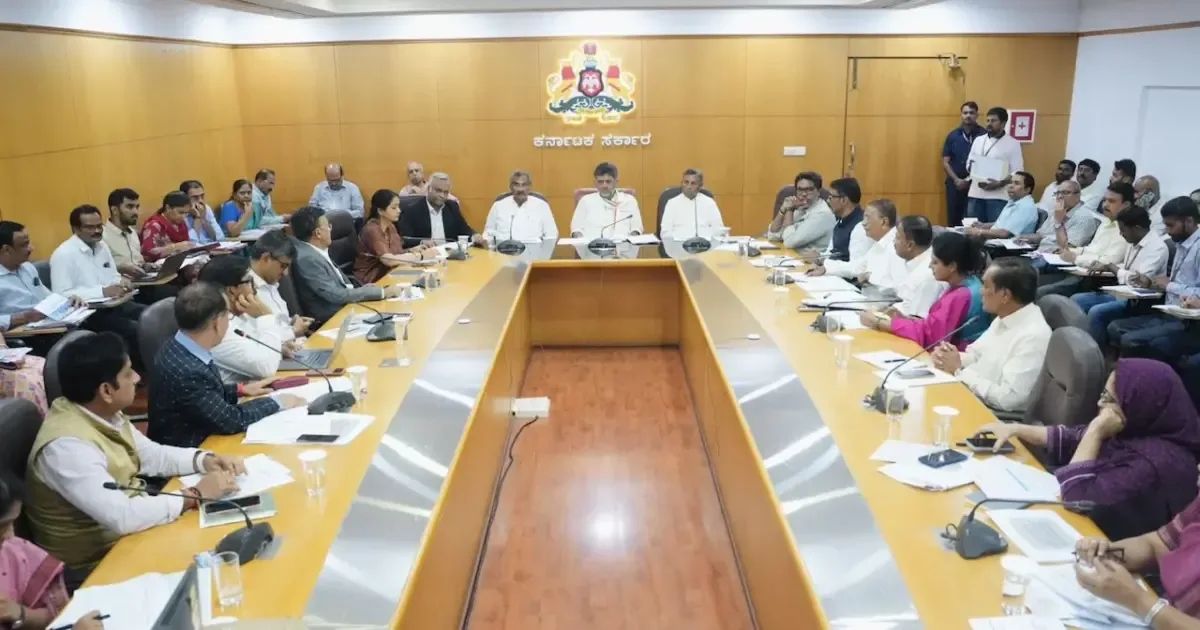
The prospect of revising the guarantee schemes has ignited a political debate. A statement by the Karnataka PWD Minister regarding potential revisions drew immediate reactions from various political factions.
Some within the ruling Congress party express concern that any changes perceived as reducing benefits or increasing access difficulty could damage the party’s image. The guarantee schemes were a cornerstone of their election campaign and a key factor in their 2023 victory.
Opposition parties, including the Bharatiya Janata Party, are closely monitoring the situation. They have previously criticized the Congress for alleged mismanagement of these schemes and are likely to use the issue of dead beneficiaries to attack the government’s fiscal responsibility.
The debate extends beyond politics to policy considerations: balancing inclusive welfare with fiscal prudence and ensuring that verification processes are effective without becoming overly burdensome for genuine applicants.
The PWD Minister’s comment may have been an early indicator of the government’s awareness of systemic issues. The political impact of any changes will depend on their perceived fairness and efficiency. Public acceptance hinges on whether the new checks are seen as necessary improvements or as administrative harassment.
Success in Bengaluru: A Contrasting Implementation?
Reports suggest that the guarantee schemes have been implemented more successfully within the Bruhat Bengaluru Mahanagara Palike (BBMP) limits in Bengaluru city. This indicates variations in implementation quality across the state.
Bengaluru, as the state capital, benefits from superior administrative infrastructure and greater technological adoption. Its urban administration possesses more comprehensive resident data, facilitating easier record updates and the cessation of payments to deceased individuals.
Rural areas may present different challenges. Limited internet connectivity, lower Aadhaar saturation, and a lack of awareness regarding reporting deaths can complicate beneficiary verification in smaller towns and villages.
This urban-rural disparity is a common hurdle for welfare schemes nationwide. Programs that function effectively in urban settings may falter in rural areas without adequate supporting systems.
The BBMP’s success offers a model. The challenge for Karnataka is to replicate this efficiency statewide. The proposed new checks could help bridge the gap between urban and rural implementation standards.
Details of Karnataka’s Guarantee Schemes and Verification Challenges
Understanding the scope of the verification challenge requires an overview of the five guarantee schemes:
1. Yuva Nidhi: Provides a monthly stipend of Rs 3,000 for unemployed graduates and Rs 1,500 for diploma holders, aimed at supporting job seekers.
2. Free bus travel for women: Allows women to travel for free on state-run buses, offering significant savings on daily commutes.
3. 200 units of free electricity: Households consuming less than 200 units per month receive free power, easing the burden on low-income families.
4. Rs 2,000 monthly assistance to women heads of households: A direct cash transfer for primary female earners in families.
5. Free breakfast in schools: Provides free morning meals to children in government schools to improve nutrition and attendance.
Each scheme has distinct eligibility criteria, including income, age, or employment status. Universal schemes like free bus travel for women have different verification needs compared to cash transfer programs. The issue of deceased beneficiaries is more pronounced in schemes like Yuva Nidhi and the women’s assistance program, where direct bank transfers are involved.
The Yuva Nidhi scheme, in particular, necessitates stringent verification of unemployment and job-seeking status. Failure to report a beneficiary’s death can lead to continued disbursement of funds to their family.
New verification measures are expected to prioritize cash transfer schemes where financial leakage is most easily quantifiable, with potential expansion to other schemes later.
Next Steps for Karnataka’s Welfare Scheme Verification
While a specific timeline for implementing new checks has not been set, public acknowledgment of the issue suggests prompt action. Bureaucratic planning is likely underway.
The initial step will involve a comprehensive audit of current beneficiaries to quantify the extent of the problem and identify deceased individuals on the rolls. This data will inform the design of new verification mechanisms.
Subsequently, the government must select the most appropriate verification method, possibly a combination of Aadhaar-based authentication and periodic re-verification, considering cost and logistical feasibility across the state.
Political approval from the Congress leadership will be essential. The party will need to balance the benefits of preventing financial leakage against the potential electoral repercussions of altering popular schemes. A phased approach to implementation might be favored to mitigate voter backlash.
The announcement of changes could be structured as a series of steps. For instance, Aadhaar linking might first be mandated for new applicants, followed by a gradual integration of existing beneficiaries.
Pilot projects in select districts could also be employed to test the effectiveness and user-friendliness of new verification systems before a statewide rollout.
Addressing Welfare Scheme Leakage: A Broader Context
Karnataka’s challenge with deceased beneficiaries is not unique; similar issues have surfaced in other Indian states with extensive welfare programs, such as Tamil Nadu and Delhi, indicating a systemic problem.
Welfare schemes are inherently susceptible to leakage due to the sheer volume of beneficiaries. Maintaining accurate, up-to-date records amidst daily occurrences of death is a significant administrative challenge.
The national government’s push for Aadhaar-based verification and the Direct Benefit Transfer (DBT) system have reduced leakage in programs like LPG and food subsidies. However, DBT remains vulnerable if deceased beneficiaries’ Aadhaar details are not promptly removed from records.
Beyond financial loss, welfare scheme leakage erodes public trust. Taxpayers expect efficient use of their funds, and reports of mismanagement, such as payments to deceased individuals, can foster perceptions of inefficiency.
Conversely, overly stringent verification processes can create barriers for genuine beneficiaries, particularly those lacking necessary documentation like Aadhaar or facing difficulties with biometric authentication. Millions in India, especially the elderly and impoverished, fall into this category.
Achieving the right balance between robust verification and accessibility is crucial. Karnataka’s initiative to enhance checks is a necessary step towards ensuring accountability and good governance. The goal is to ensure that benefits reach the intended recipients while preventing misuse and maintaining public confidence.
Further details on the new verification measures are anticipated in the coming weeks. Karnataka’s commitment to plugging leakages in its guarantee schemes is evident, with the primary challenge being the implementation of these changes without undermining the programs themselves.
Frequently Asked Questions
Why is Karnataka tightening its welfare scheme checks?
Karnataka is tightening checks because it discovered that welfare benefits were still being paid to people who had already died. This indicates a problem with the current system for verifying beneficiaries and preventing financial leakage.
What are the main guarantee schemes in Karnataka?
The main guarantee schemes include free bus travel for women, 200 units of free electricity per month, the Yuva Nidhi unemployment stipend for graduates, Rs 2,000 monthly for women heads of households, and free breakfast in government schools.
What verification methods are being considered?
The government is considering methods like linking beneficiary accounts to Aadhaar for biometric verification and requiring periodic re-verification of eligibility. Families might also be required to report deaths promptly.
What is the political reaction to these proposed changes?
The proposed revisions have led to a political debate. Opposition parties are using the issue to criticize the government, while some within the ruling Congress party are concerned about potential negative reactions from voters who depend on these schemes.
Has the implementation of these schemes been successful elsewhere in Karnataka?
Yes, reports suggest that the guarantee schemes have been implemented more successfully in Bengaluru city compared to rural areas. This is attributed to better administrative infrastructure and technology adoption in urban centers.
What is the broader issue of leakage in welfare schemes?
Leakage in welfare schemes is a systemic challenge where funds are lost due to various reasons, including payments to ineligible or deceased beneficiaries. It undermines public trust and diverts resources from those genuinely in need.
References
- Implementation Of Guarantees To Change, Karnataka To Bring In New Checks – Original report (NDTV India)
- Implementation Of Guarantees To Change, Karnataka To Bring In New Checks – NDTV – This article is also from NDTV (Google RSS mirror) but full text is unavailable; it likely echoes the same story.
- India gets new labour codes: Minimum wage guarantee, gratuity, social security for 400 mn workers — Full list – Mint – This article discusses new national labour codes, including minimum wage and social security for 400 million workers, providing a broader policy context but not directly on Karnataka.
- Yuva Nidhi Scheme Karnataka: Eligibility, Registration, How To Apply Online, Benefits – ClearTax – This source provides details on the Yuva Nidhi Scheme, one of Karnataka's guarantee schemes, but full text is unavailable.
- ‘Guarantees implemented successfully in Bruhat Bengaluru Mahanagara Palike limits of Bengaluru’ – The Times of India – This article reports that guarantee schemes have been successfully implemented in BBMP limits, providing a local success story and potential contrast to state-level issues.
- Karnataka PWD Minister's suggestion to revise guarantees sparks political debate – The New Indian Express – The New Indian Express