At a Glance
On Shiv Sena Foundation Day, two rival factions led by Uddhav Thackeray and Eknath Shinde held separate events, highlighting a deep party split. The focus was on claims to Bal Thackeray’s legacy and the party symbol, amidst allegations of ‘Operation Tiger’ aimed at poaching lawmakers. Uddhav faces a struggle for survival, while Shinde seeks to consolidate power, with the Election Commission’s symbol decision and upcoming elections being crucial factors.
Key Takeaways
The main points at a glance
- Two distinct Shiv Sena factions, led by Uddhav Thackeray and Eknath Shinde, held separate foundation day celebrations, underscoring a significant party division.
- Allegations of ‘Operation Tiger’ surfaced, suggesting Shinde’s faction attempted to lure lawmakers from Uddhav’s camp, though these were officially denied.
- Uddhav Thackeray faces an existential challenge to maintain his faction’s strength and relevance, relying on emotional appeals and legacy, while lacking governmental power.
- Eknath Shinde, as Chief Minister, aims to consolidate his position and project his faction as the true inheritor of Shiv Sena’s legacy, navigating coalition dynamics with the BJP.
- The battle for the party’s ‘bow and arrow’ symbol, currently held by Shinde’s faction after an Election Commission ruling, remains a key point of contention, with Uddhav challenging the decision in court.
- The future of the Shiv Sena depends on the court’s verdict on the symbol, the performance of both factions in upcoming elections, and the strategic role of the BJP.
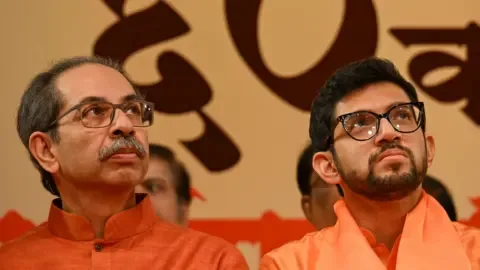
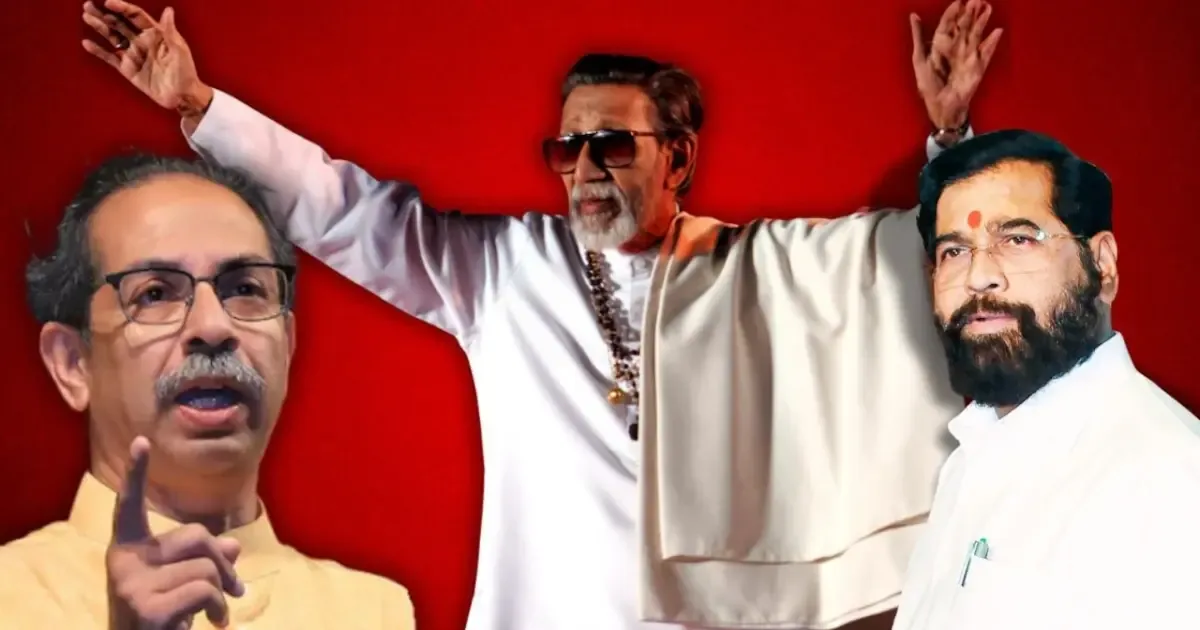
On June 19, two distinct gatherings convened in Maharashtra, united by familiar songs and slogans praising Bal Thackeray, the founder of the Shiv Sena in 1966. Both groups proudly displayed the party’s iconic roaring tiger symbol. However, despite these shared elements, the two events represented a deep chasm within the party.
One assembly supported Uddhav Thackeray, son of Bal Thackeray and former chief minister. The other sided with Eknath Shinde, who led a rebellion against Uddhav and now heads a rival government in alliance with the BJP.
This was not a unified celebration but a public demonstration of a significant party split. Each faction asserted its claim as the legitimate Shiv Sena, aiming to project strength. Amidst this, a subtle contest, dubbed ‘Operation Tiger,’ unfolded, hinting at attempts to sway loyalists between the factions. While denials were swift, the central question remained: which faction truly embodies Bal Thackeray’s legacy?
Two Shiv Sena Factions Hold Rival Foundation Day Events
The Shiv Sena’s foundation day, traditionally a moment for unity, highlighted the party’s division this year. The Shiv Sena now operates with two distinct leaderships, two sets of officials, and two competing narratives of its history.
Uddhav Thackeray’s event took place at a venue significant to his father’s legacy. His supporters, many wearing Bal Thackeray masks, voiced slogans against perceived betrayers. Uddhav himself spoke of betrayal and the departure of trusted individuals.
Concurrently, Eknath Shinde hosted his own event. His supporters also sang party anthems and honored Bal Thackeray. Shinde positioned himself as the true custodian of the party’s core principles, asserting that the original Shiv Sena championed Hindutva and development, not alliances with parties like the Congress and NCP. He framed his rebellion as a necessary course correction rather than a betrayal.
Both gatherings drew substantial crowds, but their underlying significance lay in their implications for the future. For Uddhav, the focus was on survival, while for Shinde, it was about solidifying his position.
The timing of these events was particularly noteworthy, with reports circulating for weeks about several of Uddhav’s Members of Parliament (MPs) being in contact with the Shinde camp. Some reports suggested up to six lawmakers were considering switching sides, which would have significantly weakened Uddhav’s parliamentary presence and signaled a decline in his leadership.
However, the Shinde faction officially denied these defection rumors. A spokesperson stated that no MPs from Uddhav’s faction were joining them on foundation day. Yet, other news outlets reported conflicting information. The New Indian Express indicated that Shinde intended to welcome rebel MPs as part of Operation Tiger on foundation day, while The News Mill also referenced allegations of Operation Tiger surrounding the celebrations.
This created a clear discrepancy in the information being disseminated. One side claimed no defections were occurring, while other sources suggested defections were precisely what Shinde was orchestrating. In politics, public denials can sometimes precede confirmations, and the explicit denial from the Shinde camp suggests they felt compelled to address the prevailing rumors.
Operation Tiger: Allegations of Poaching and Official Denials
The term ‘Operation Tiger’ describes an alleged plan by the Shinde faction to attract lawmakers from Uddhav’s camp. The name itself is a symbolic claim to the party’s identity. Reports from The New Indian Express suggested that Shinde’s team had identified several MPs dissatisfied with Uddhav’s leadership, who were reportedly prepared to switch allegiance. The alleged plan was to publicly welcome these MPs into the Shinde faction on foundation day.
However, this public display did not materialize, at least not overtly. The Shinde faction officially denied that any such event took place. A Moneycontrol report quoted a Shinde spokesperson dismissing rumors of six UBT MPs joining as entirely false.
The contradiction raises several possibilities. The reports might have been inaccurate. Alternatively, the plan may have existed but was abandoned at the last minute, perhaps due to the MPs having second thoughts or Shinde’s team deciding against a public defection on foundation day to avoid appearing overly aggressive. Another interpretation is that the denials were strategic, allowing the Shinde camp to sidestep accusations of poaching while potentially facilitating future defections as ‘unplanned’ moves.
Regardless of the exact truth, the mere existence of these reports underscores the precariousness of Uddhav’s political standing. Even without actual defections on foundation day, the widespread discussion about them implies restlessness among Uddhav’s MPs, a potentially dangerous situation for any leader.
Uddhav Thackeray’s Challenge: Leading a Faction Under Pressure
Uddhav Thackeray has faced significant political challenges before. He assumed leadership of the Shiv Sena after his father’s passing in 2012. His formation of a government with disparate allies in 2019 ended after two and a half years when Eknath Shinde led a mass exodus of MLAs in June 2022, causing the government to collapse and Uddhav to resign as chief minister.
Since then, Uddhav has been engaged in a struggle to maintain his faction’s viability. The recent wave of potential defections, as noted in an NDTV report citing an RSS source, has cast doubt on his ability to retain control of his party, with the source describing it as his most challenging period.
Uddhav’s current strategy appears to rely heavily on emotional appeals, emphasizing loyalty to Bal Thackeray and labeling Shinde a traitor who aligned with the BJP. This narrative resonates with staunch Shiv Sena supporters. However, emotional appeals have limitations, especially for elected officials focused on electoral success and political relevance. If they perceive Uddhav as unable to secure victories, they may seek alternative affiliations. Shinde, currently holding the chief minister’s office, benefits from state machinery and BJP backing, making him a potentially safer choice for MPs and MLAs concerned about future elections.
Uddhav faces a stark dilemma: he must keep his supporters united but possesses limited resources to offer. He cannot promise ministerial positions or government funds, only adherence to the party’s legacy. While this is sufficient for some, it is not for others.
The foundation day event was an opportunity for Uddhav to demonstrate his faction’s continued strength. However, the specter of Operation Tiger loomed, with media inquiries about defections accompanying every speech by his camp’s leaders. Uddhav’s challenge is existential; further losses of MPs could diminish his faction’s significance, potentially leading the Election Commission to recognize Shinde’s group as the true Shiv Sena and award them the party symbol. Such a decision would be a devastating blow.
Eknath Shinde’s Strategy: Consolidating Power Amidst Coalition Dynamics
Eknath Shinde occupies a different political landscape. As chief minister, he commands a majority in the assembly and enjoys the BJP’s support. Nevertheless, he faces his own set of challenges. Shinde’s 2022 rebellion succeeded due to the significant number of MLAs who joined him. However, he now must navigate a coalition with the BJP, a larger partner with its own political agenda.
Operation Tiger, whether fully realized or exaggerated, appears to be part of Shinde’s strategy to bolster his position. By attracting Uddhav’s MPs, he aims to increase his own numbers and diminish Uddhav’s faction to the point of irrelevance. However, this approach carries risks. An overly aggressive poaching strategy could provoke public backlash, with some voters viewing him as an opportunistic politician who fractured the party for personal gain.
Shinde’s foundation day event was designed to project his faction as the legitimate Shiv Sena. He emphasized his role as a protector of Hindutva and criticized Uddhav for aligning with the Congress and NCP. By framing his actions in ideological terms, Shinde seeks to legitimize his rebellion. The denial of Operation Tiger aligns with this narrative, portraying Shinde as a leader whose faction naturally attracts support through its performance rather than through forced defections.
Regardless of the veracity of Operation Tiger, its influence is already apparent. The mere speculation has generated uncertainty within Uddhav’s camp, potentially pushing some lawmakers toward Shinde over time. In politics, perceived realities can often shape actual outcomes.
The Battle for the Shiv Sena Symbol: Defining Legitimacy
The tiger symbol is more than just a mascot for the Shiv Sena; it embodies strength, pride, and assertiveness. Following the party’s split in 2022, the symbol became a focal point of contention. The Election Commission initially froze the symbol before ultimately recognizing Shinde’s faction as the legitimate Shiv Sena, based on the majority support from MPs and MLAs. This decision granted Shinde’s group the right to use the ‘bow and arrow’ symbol in elections, forcing Uddhav’s faction to adopt a new symbol, the ‘flaming torch’.
This ruling represented a significant setback for Uddhav, as losing the original symbol disadvantaged his candidates. Uddhav has challenged the Election Commission’s decision in court. In the interim, both factions continue to use the tiger as their unofficial emblem, making foundation day a prime occasion for each side to assert its claim to the symbol.
However, symbols alone do not determine ownership of a legacy. The fundamental struggle revolves around control of the party’s organizational structure, the loyalty of its workers, and the support of the electorate. Shinde currently holds an advantage in terms of institutional recognition. Yet, Uddhav retains considerable affection among many grassroots workers who view him as the rightful heir, given his lineage as Bal Thackeray’s son.
Future Outlook: Navigating the Political Landscape of a Divided Shiv Sena
The future trajectory of the Shiv Sena hinges on several key factors. Firstly, the ongoing court case concerning the party symbol is critical. A favorable ruling for Uddhav, restoring the ‘bow and arrow’ symbol, would provide a substantial boost to his faction. Secondly, upcoming elections will serve as a crucial test for both factions. Maharashtra’s assembly elections, anticipated in late 2024 or early 2025, will reveal voter preferences. Even a modest electoral success for Uddhav’s faction could be interpreted as public endorsement.
Thirdly, the BJP’s role remains pivotal. While the BJP supported Shinde’s rebellion, it also pursues its own strategic interests, and its approach will influence the operational latitude afforded to Shinde.
Operation Tiger, whether a tangible plan or a political maneuver, reflects the persistent instability within the party. Uddhav’s faction remains vulnerable. While he can focus on strengthening ties with loyalists and leveraging emotional appeal, he lacks the governmental power that Shinde wields. Shinde, conversely, must manage the expectations of his supporters, many of whom are former Uddhav loyalists. Maintaining unity within a coalition of defectors presents its own set of difficulties.
Consequently, both leaders face considerable uncertainties. Shinde holds power, but his coalition is inherently fragile. Uddhav is out of power, yet commands a core support base driven by emotional commitment. The foundation day events vividly encapsulated this ongoing tension: two gatherings, two competing claims to the tiger symbol, and a party irrevocably split.
Frequently Asked Questions
What happened on Shiv Sena Foundation Day?
On Shiv Sena Foundation Day, two rival factions, one led by Uddhav Thackeray and the other by Eknath Shinde, held separate events. Both claimed to be the true Shiv Sena, highlighting the party's deep division.
What is 'Operation Tiger'?
'Operation Tiger' refers to alleged attempts by Eknath Shinde's faction to persuade lawmakers from Uddhav Thackeray's camp to switch sides. While denied by Shinde's camp, the rumors persisted around foundation day.
Who currently controls the Shiv Sena symbol?
The Election Commission of India recognized Eknath Shinde's faction as the real Shiv Sena and granted them the 'bow and arrow' symbol. Uddhav Thackeray's faction uses a different symbol and is challenging this decision in court.
What are the main challenges for Uddhav Thackeray?
Uddhav Thackeray faces the challenge of retaining his party's support base and preventing further defections. He lacks governmental power and resources, relying mainly on emotional appeals and the legacy of his father, Bal Thackeray.
What are Eknath Shinde's political goals?
Eknath Shinde, as Chief Minister, aims to consolidate his power, weaken Uddhav's faction, and solidify his claim as the legitimate leader of the Shiv Sena. He also needs to manage his coalition with the BJP.
How will the court case affect the Shiv Sena?
The court case challenging the Election Commission's decision on the party symbol is crucial. If Uddhav Thackeray wins, it could significantly boost his faction's morale and electoral prospects.
What is the significance of the tiger symbol?
The roaring tiger is the original and iconic symbol of the Shiv Sena, representing strength and pride. Both factions continue to use it informally, symbolizing their claims to the party's legacy.
References
- A Tale Of Two Tigers On Shiv Sena's Foundation Day – Original report (NDTV India)
- A Tale Of Two Tigers On Shiv Sena's Foundation Day – NDTV – Provides the original RSS item highlighting Uddhav Thackeray's challenging time and the rebellion.
- Shiv Sena denies reports of six UBT MPs joining party at Foundation Day event – Moneycontrol.com – Reports the Shinde faction's denial of six UBT MPs joining them at the foundation day event.
- Shiv Sena factions celebrate foundation day amid ‘Operation Tiger’ allegations in Maharashtra – The News Mill – Adds context of 'Operation Tiger' allegations during the foundation day celebrations by both factions.
- Shinde to welcome rebel MPs on Shiv Sena foundation day under 'Operation Tiger' push – The New Indian Express – The New Indian Express
- US-Iran Peace Deal Drops Netanyahu Into A Box As Election Deadline Nears – NDTV – Unrelated article about US-Iran peace deal; not used for this story.