At a Glance
A Trump campaign spokeswoman has set off a firestorm online after calling Gen Z "lazy" and suggesting that young Americans who do not work hard should be sent to Iran or Cuba. The remark, made by Karoline Leavitt, quickly went viral and drew sharp criticism…
Key Takeaways
The main points at a glance
- The Remark That Sparked Outrage
- Who Is Karoline Leavitt?
- Backlash: Critics Point to Economic Realities
- Political Reactions and Defenses
- Broader Context: Gen Z in the Workforce
A Trump campaign spokeswoman has set off a firestorm online after calling Gen Z “lazy” and suggesting that young Americans who do not work hard should be sent to Iran or Cuba. The remark, made by Karoline Leavitt, quickly went viral and drew sharp criticism from people who say it ignores the real economic struggles facing young people today.
Leavitt’s comment spread across social media within hours. Many users called it out of touch. Others said it showed a lack of understanding about the financial pressures young adults face, from student debt to high housing costs.
The controversy comes at a time when generational tensions are already high in American politics. And it raises questions about how political figures talk about young voters, especially as the 2024 election approaches.
The Remark That Sparked Outrage
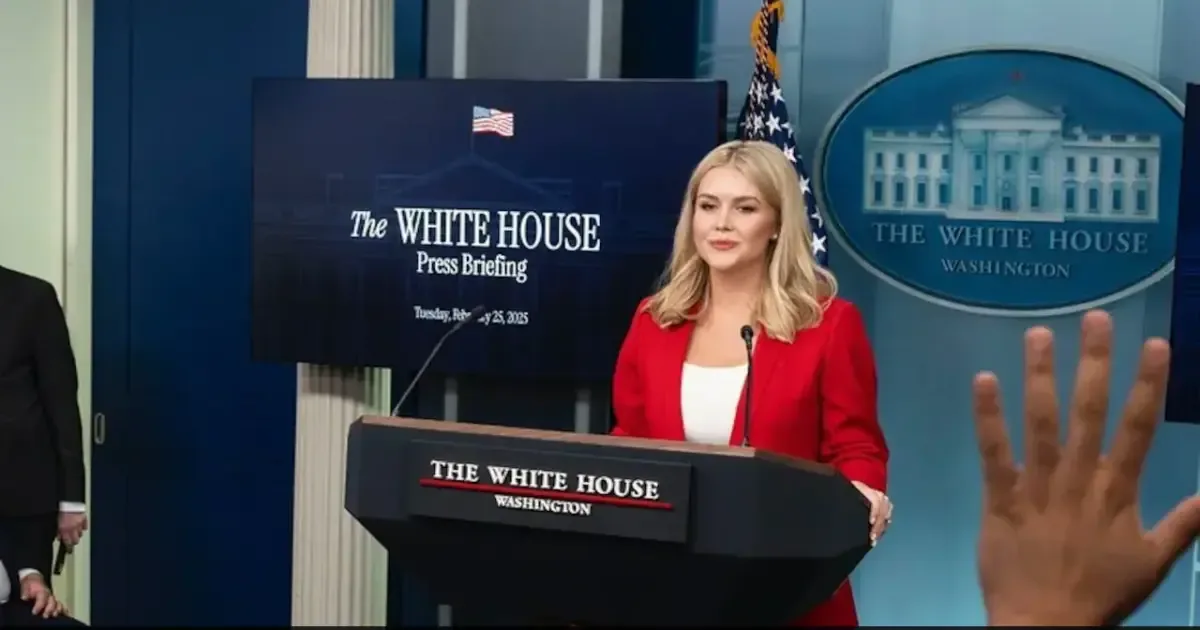
Karoline Leavitt, a spokeswoman for former President Donald Trump’s campaign, made the comment during a recent appearance. She described Gen Z as “lazy” and said that young people who do not want to work hard should be sent to Iran or Cuba.
The exact words spread quickly online. Within hours, clips of the remark were being shared on X, formerly Twitter, and other platforms. Many users expressed anger. Some pointed out that Iran and Cuba are countries where political dissent is often crushed and living conditions are harsh for many people.
Critics said the remark was not just insulting but also dangerous. They argued that joking about sending Americans to countries with poor human rights records was irresponsible for someone working on a presidential campaign.
The comment also drew attention because it came from a young person herself. Leavitt is in her late 20s, which makes her part of the millennial generation, just a few years older than the oldest members of Gen Z. This led some to call her a “traitor to her generation.”
As of now, neither Leavitt nor the Trump campaign has issued a formal statement clarifying or apologizing for the remark. The silence has only fueled more debate online.
Who Is Karoline Leavitt?
Karoline Leavitt is a relatively new face in national politics. She serves as a national spokeswoman for Donald Trump’s 2024 presidential campaign. Before that, she worked in the Trump White House as an assistant press secretary.
Leavitt is from New Hampshire. She studied at Saint Anselm College, a liberal arts school. After graduating, she joined the Trump administration in 2020, working under then-Press Secretary Kayleigh McEnany.
When Trump left office, Leavitt stayed involved in Republican politics. She ran for Congress in New Hampshire’s 1st district in 2022 but lost in the Republican primary. After that, she joined the Trump campaign as a spokeswoman, often appearing on cable news to defend the former president.
Leavitt is known for her aggressive style on television. She often goes after Democrats and the media in sharp terms. This latest remark fits that pattern, but it has drawn more attention than most of her previous comments.
Her age makes the remark stand out. At 27, she is closer in age to Gen Z than to older generations. Some observers noted that her criticism of young people seemed to come from someone who should understand their struggles better.
Backlash: Critics Point to Economic Realities
The backlash was swift and widespread. Many people pointed out that Gen Z faces economic challenges that previous generations did not have to deal with at the same age.
Student debt is a major issue. The average college graduate in the United States carries about $30,000 in student loans. For many young people, that debt makes it hard to save for a house, start a business, or even pay rent.
Housing costs have also skyrocketed. In many cities, rent prices have risen far faster than wages. Young workers often have to spend more than half their income on housing, leaving little for other expenses.
Inflation has made things worse. Over the past few years, the cost of food, gas, and other basics has gone up sharply. Wages have not kept pace, especially for entry-level jobs that many young people take.
Critics say that calling Gen Z “lazy” ignores these real problems. They argue that young people are not refusing to work. Instead, they are struggling to find jobs that pay enough to live on.
Some data supports this view. A 2023 survey from the Pew Research Center found that Gen Z workers are more likely than older generations to say they have changed jobs in the past year. But the same survey showed that they are also more likely to be looking for better pay and working conditions, not avoiding work altogether.
Other studies have found that Gen Z is actually more entrepreneurial than previous generations. Many young people are starting side hustles or small businesses to make ends meet. This does not fit the “lazy” stereotype.
Advocacy groups for young people were quick to respond. The group Gen Z for Change issued a statement calling Leavitt’s remarks “out of touch and cruel.” They said that young Americans are working harder than ever just to stay afloat.
Some critics also noted the irony of a Trump campaign official making this comment. Trump himself has faced criticism for his own work habits, including spending long hours watching television and golfing while in office.
Political Reactions and Defenses
The remark has drawn reactions from across the political spectrum. Democrats were quick to condemn it. Some called it a sign that the Trump campaign is out of touch with young voters.
Representative Alexandria Ocasio-Cortez, a Democrat from New York who is herself a millennial, tweeted that the comment was “disgusting.” She said that young people are not lazy but are instead fighting against a system that is stacked against them.
Other Democratic figures echoed that sentiment. They pointed to the fact that many Gen Z workers held essential jobs during the COVID-19 pandemic, working in grocery stores, hospitals, and delivery services while older people stayed home.
On the Republican side, reactions were more mixed. Some conservative commentators defended Leavitt. They said she was simply telling hard truths about a generation that expects too much without working for it.
Others on the right were more cautious. They worried that the remark could hurt the Trump campaign’s efforts to reach young voters. Polls show that Trump has struggled with voters under 30, and comments like this could make that problem worse.
Some Republican strategists privately expressed frustration. They said that the campaign should be focused on economic messages that appeal to young people, not on insulting them.
There has been no public defense of the remark from Trump himself. The former president has not commented on it directly. But his campaign has a history of using provocative language to generate media attention, and some analysts see this as part of that pattern.
Leavitt’s defenders argue that she was making a point about work ethic, not about politics. They say that her suggestion to send lazy people to Iran or Cuba was meant to highlight the value of living in a free country where hard work can lead to success.
But critics say that framing is misleading. They note that Iran and Cuba are not just countries with different political systems. They are places where the US government has hostile relations, and where Americans could face serious danger if sent there against their will.
Broader Context: Gen Z in the Workforce
The stereotype of Gen Z as lazy is not new. It has been around for several years, often pushed by older generations who see young people as entitled or unwilling to pay their dues.
But the data tells a different story. Gen Z, born roughly between 1997 and 2012, is the most educated generation in American history. They are also the most diverse. And they have entered the workforce during one of the most turbulent economic periods in recent memory.
The COVID-19 pandemic hit young workers especially hard. Many lost jobs in hospitality and retail when businesses shut down. Others had to take on extra work as essential employees, often without hazard pay or adequate protection.
Since then, the job market has improved. Unemployment rates for young workers are low. But many of the jobs available are in low-wage sectors like food service and retail. These jobs often come with unpredictable schedules and few benefits.
Gen Z workers have also been at the forefront of labor organizing. In recent years, young workers have led union drives at companies like Starbucks, Amazon, and Apple. They have pushed for higher wages, better benefits, and more say in how their workplaces are run.
This activism does not fit the “lazy” label. If anything, it shows a generation that is willing to fight for better conditions, even when that means taking on powerful corporations.
Some experts say that the stereotype of lazy young people is a recurring theme in American history. In the 1960s, older generations criticized hippies for being lazy. In the 1990s, they called millennials slackers. Now, the same criticism is being aimed at Gen Z.
But the economic context is different each time. When baby boomers were young, the economy was growing fast, and a single income could support a family. That is no longer true. Young people today face a world where college costs have tripled, housing prices have doubled, and wages have barely budged.
Leavitt’s remark also comes at a time when the concept of “laziness” itself is being reexamined. Some experts argue that what looks like laziness is often a response to burnout or mental health struggles. Gen Z has reported higher rates of anxiety and depression than older generations, which can affect their ability to work.
The pandemic also changed how many people think about work. Remote work became common, and many workers decided they did not want to go back to long commutes and rigid office schedules. This shift has been called the “Great Resignation,” though it has slowed down recently.
Some employers have complained that young workers are harder to manage. They say that Gen Z employees demand too much flexibility and are not willing to put in extra hours. But others argue that these workers are simply asking for what is fair, like reasonable hours and fair pay.
The debate over Gen Z’s work ethic is not just happening in the US. Similar discussions are taking place in Europe, Asia, and elsewhere. In many countries, young people are facing high unemployment and rising costs, leading to frustration on all sides.
What Happens Next?
It is unclear whether the controversy will have any lasting impact on the Trump campaign. The former president has made controversial statements before, and his supporters have often stuck with him.
But the remark could affect his standing with young voters. Polls show that Trump is already trailing President Joe Biden among voters under 30. A recent New York Times poll found that Biden leads Trump by 20 points among that age group.
Comments like Leavitt’s could make it even harder for Trump to close that gap. Young voters are a key demographic in swing states like Arizona, Georgia, and Michigan. If they turn out in large numbers for Biden, it could decide the election.
Some political analysts say that the remark might not matter much in the long run. Voters often forget about individual comments, especially when there are many other issues to focus on. But others say that it could stick, especially if the Trump campaign does not address it.
There is also the question of whether Leavitt will face any consequences. So far, the campaign has not distanced itself from her comment. That suggests that they either agree with it or do not see it as a problem.
If the campaign does issue a statement, it could take several forms. They could apologize, saying the remark was taken out of context. They could double down, arguing that Leavitt was right. Or they could simply ignore the controversy and hope it goes away.
Each option carries risks. Apologizing might be seen as weakness by Trump’s base. Doubling down could alienate young voters even more. Ignoring it might allow the story to fade, but it could also leave the impression that the campaign does not care about young people’s concerns.
The controversy also highlights a larger challenge for the Trump campaign. The former president has a strong base of older, white, rural voters. But he has struggled to expand that base to include younger and more diverse voters.
In 2020, Trump lost the youth vote by a wide margin. According to exit polls, Biden won 60% of voters under 30, compared to 36% for Trump. That gap was even larger among young voters of color.
To win in 2024, Trump will need to do better with this group. But comments like Leavitt’s could make that harder. They reinforce the perception that the Republican Party does not care about young people’s problems.
Some Republicans have tried to push back against that perception. They have proposed policies like expanding apprenticeships and making college more affordable. But those messages often get drowned out by culture war issues.
The Leavitt controversy is just the latest example of a political figure making a generational attack. In 2019, former Australian Prime Minister Tony Abbott called young people “snowflakes.” In 2021, a British Conservative MP said that Gen Z needed to “grow up.” These comments often backfire, energizing young voters against the person who made them.
It is too early to tell if this will happen with Leavitt’s remark. But early signs suggest that it has struck a nerve. Many young people have shared their own stories of working multiple jobs, struggling with debt, and still being called lazy.
The remark has also sparked a broader conversation about how society values different kinds of work. Some people have pointed out that many jobs that are considered “unskilled” are actually very demanding. Fast food workers, for example, have to deal with rude customers, hot kitchens, and low pay. Calling them lazy ignores the reality of their work.
Others have noted that the term “lazy” is often used to judge people who are not working in traditional jobs. Stay-at-home parents, artists, and people with disabilities are sometimes called lazy even when they are contributing in other ways.
The controversy also touches on the issue of mental health. Gen Z has been open about struggling with anxiety, depression, and burnout. Some experts say that what looks like laziness can actually be a symptom of these conditions. Telling someone to just work harder does not help if they are already overwhelmed.
In the end, the Leavitt remark may be remembered as a minor moment in a long campaign. Or it could become a symbol of how out of touch some political figures are with the lives of ordinary young people.
For now, the story continues to develop. More reactions are likely to come from both sides. And the Trump campaign will have to decide how to handle it.
One thing is clear: the remark has opened a window into the generational divide in American politics. Older voters tend to be more conservative and more likely to support Trump. Younger voters are more liberal and more likely to support Democrats. Comments like Leavitt’s only deepen that divide.
Whether the controversy will have any lasting effect on the election remains to be seen. But it has already given many young people a reason to pay attention to the campaign, and not in a good way for Trump.
As the 2024 race heats up, both sides will be watching to see how this story evolves. For now, the ball is in the Trump campaign’s court. They can either address the controversy or let it fade. Either way, the remark has already left a mark.
Frequently Asked Questions
Who made the controversial remark about Gen Z?
Karoline Leavitt, a spokeswoman for former President Donald Trump's campaign, made the remark. She is in her late 20s and is part of the millennial generation.
What did Karoline Leavitt say about Gen Z?
Leavitt described Gen Z as 'lazy.' She also suggested that young people who do not want to work hard should be sent to countries like Iran or Cuba.
Why did Karoline Leavitt's comment cause outrage?
Critics found the remark out of touch and insulting. They argued it ignores the economic struggles young people face, such as student debt and high housing costs.
What economic challenges does Gen Z face?
Gen Z deals with significant student loan debt, skyrocketing housing costs, and rising inflation. Wages have not kept pace with these rising expenses, making it hard for them to get by.
How did Gen Z respond to the comment?
Advocacy groups and many individuals responded swiftly, calling the remarks cruel and out of touch. They highlighted that young people are working hard just to manage financially.
Has the Trump campaign or Karoline Leavitt responded to the criticism?
As of now, neither Karoline Leavitt nor the Trump campaign has issued a formal statement clarifying or apologizing for the remark. This silence has led to further online discussion.
What is Karoline Leavitt's background?
Karoline Leavitt is a national spokeswoman for Trump's 2024 campaign and previously worked in the Trump White House. She is known for her aggressive style in defending the former president.
References
- "Send Them To Iran Or Cuba": Trump Spokeswoman Slams 'Lazy' Gen Z In Viral Remark – Original report (NDTV World)
- "Send Them To Iran Or Cuba": Trump Spokeswoman Slams 'Lazy' Gen Z In Viral Remark – NDTV – NDTV
- ‘Send them to Iran’: Trump spokeswoman issues dire assessment of ‘lazy’ Gen Zers – Yahoo News UK – Coverage of the same story with a similar headline; full text not available.
- Taylor Swift's Net Worth Explained: How The Singer Built A $2.1 Billion Fortune Ahead Of Her Rumoured Wedding With Travis Kelce – Dailyhunt – Dailyhunt
- BJP national president Nitin Nabin to visit Uttar Pradesh on July 4-5 – Dailyhunt – Unrelated article about a BJP leader's visit; no connection to the main topic.
- Norway warns Brazil after historic World Cup win over Ivory Coast – Dailyhunt – Unrelated article about Norway warning Brazil; no connection to the main topic.