
At a Glance
After 48 years, Bukhara has been honored with the Legendary Restaurant of India award, celebrating its enduring legacy and consistent culinary excellence. Since its opening in the mid-1970s, Bukhara has remained dedicated to the rustic flavors of North-West Frontier cuisine, with a menu that has seen little change, proving that tradition and quality can be a winning strategy in the restaurant industry.
Key Takeaways
The main points at a glance
- Bukhara has been awarded the Legendary Restaurant of India award after 48 years of operation.
- The restaurant has maintained a consistent menu and culinary style since its opening in the mid-1970s.
- Bukhara’s success is attributed to its unwavering commitment to North-West Frontier cuisine and traditional cooking methods.
- The restaurant’s consistency has built strong customer loyalty and trust over decades.
- While largely unchanged, Bukhara has introduced minor vegan and gluten-free options without altering its core offerings.
- The award highlights the value of tradition and consistency as a successful business strategy in the modern dining landscape.
Step inside Bukhara, and time slips away. The air is thick with the smell of charcoal and smoked meat. Tandoor fires crackle. A waiter carries a sizzling platter of sikandari raan, the giant leg of lamb that has been a star for nearly five decades. At a corner table, a diner digs into a bowl of dal bukhara, the famous black lentil stew that tastes exactly the same as it did in 1975. Nothing here has changed much. And that is precisely the point.</p
The Night Bukhara Opened: A Look Back at Indian Dining Evolution
Forty-eight years ago, in the mid-1970s, Indian dining was a different world. Fine dining was still a Western concept for most. Bukhara came along and changed things. It brought the rustic flavors of North-West Frontier cuisine to a city that was hungry for something bold. The restaurant was born inside a hotel, but it felt like a rugged village fort. Rough stone walls, heavy wooden tables, and an open kitchen with huge clay ovens. The first guests were curious. They left amazed. Word spread quickly.
Opening night must have been electric. The chefs, trained in traditional tandoor cooking, worked with fire and iron. The room filled with the scent of marinated meats and freshly baked breads. There were no fancy tablecloths. No silverware on the table. Just hands tearing into warm rotis and tender kebabs. It was a radical idea for its time: serve food the way it was eaten in the tribal regions of the northwest. Elegance through simplicity. The gamble paid off. Within months, Bukhara became the place to be. Politicians, celebrities, and tourists all came for a taste of the frontier.
Bukhara’s Timeless Menu: Consistency for 48 Years
The menu at Bukhara is famously short. A handful of starters, a few kebabs, some breads, and the iconic dal bukhara. The lineup has barely shifted in 48 years. The chefs still use the same recipes, the same spice blends, the same slow-cooking techniques. The dal bukhara simmers for 24 hours. The sikandari raan is marinated for two days. The tandoori rotis are made with organic whole wheat flour, just as they were on day one. Even the presentation has stayed the same. The food comes on simple metal platters. No fuss, no garnishes. Just honest, bold flavors.
Take the dal bukhara. It starts with whole black urad lentils, slow-cooked overnight with ginger, garlic, and a whisper of cumin. Butter and cream are added at the end, but the real magic is time. The dish achieves a creamy, velvety texture without any blending. It is served in a small metal bowl, with a dollop of butter melting on top. For many regulars, this dal is the taste of happiness. It has not changed because it cannot improve. Why mess with perfection?
The same goes for the sikandari raan. A whole leg of lamb, marinated in a paste of raw papaya, yogurt, and spices, then slow-roasted in the tandoor. The result is impossibly tender, with a smoky crust and a pink, juicy interior. It arrives at the table on a sizzling platter, surrounded by charred onions and lemon wedges. No sauce, no accompaniment. Just the meat. One bite and you understand why Bukhara has never felt the need to innovate.
Why Bukhara’s Consistency Became a Superpower
In an industry that chases trends, Bukhara chose to stand still. While other restaurants overhauled their menus every season, Bukhara kept its classics. Regular customers knew exactly what they would get. The same smoky aroma, the same perfect char, the same velvet-smooth dal. That reliability became its superpower. People don’t come to Bukhara for surprises. They come for the comfort of a meal that has not let them down in 48 years.
The staff, many of whom have worked there for decades, reinforce this philosophy. They treat every table like family. They remember your name and your favorite dish. One longtime waiter once said, “We don’t just serve food. We serve memories.” That sense of belonging keeps diners coming back. Families who first visited Bukhara in the 1970s now bring their grandchildren. The younger generation may not remember the old India, but they know the taste of dal bukhara.
Has Bukhara changed anything to keep up with modern dietary preferences? A little. The restaurant now offers a few vegan options and marks gluten-free items on the menu. Instead of ghee, they use oil in some dishes for vegan guests. But these are additions, not replacements. The classics remain untouched. The management has always believed that you don’t fix what isn’t broken. “If someone wants dal without cream, we make it to order,” says a chef. “But the original recipe stays in the kitchen. It is our identity.”
That stubborn consistency has drawn criticism over the years. Some food critics called Bukhara outdated. But the restaurant’s fans have always been louder. Loyalty this deep does not come from being fashionable. It comes from trust. You trust that every dish will taste exactly as it did on your first visit. In a world of constant change, that is a rare gift.
The Legendary Restaurant of India Award for Bukhara
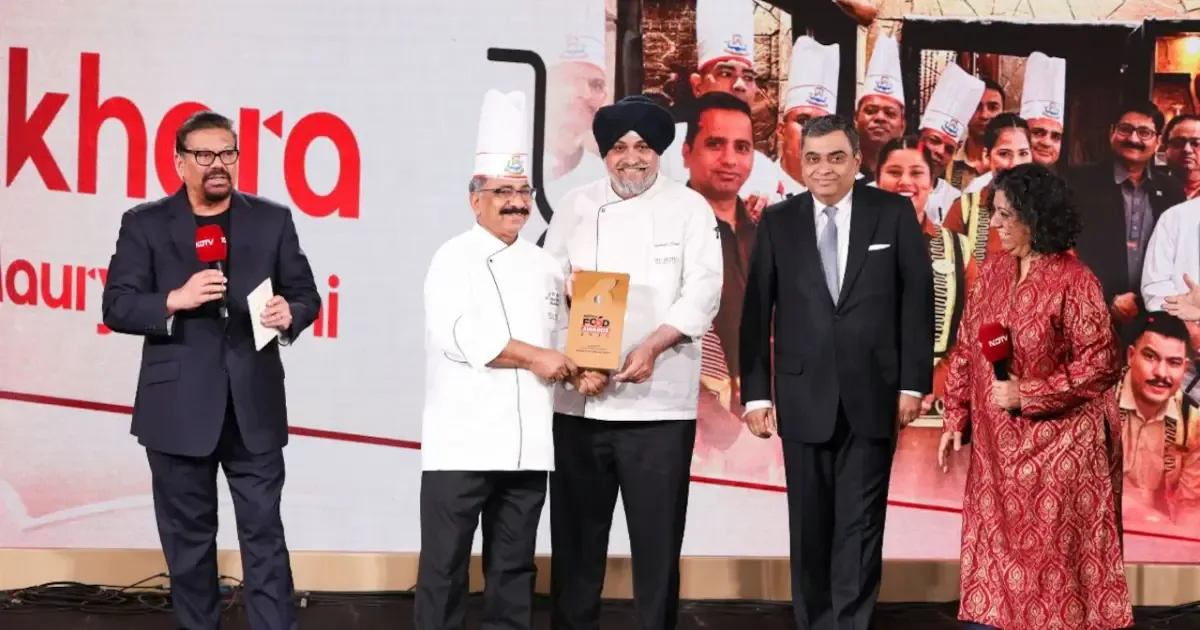
Recently, NDTV Food named Bukhara the Legendary Restaurant of India. The award recognizes a rare feat: nearly half a century of excellence without losing the soul of the original. It is not just about longevity. It is about influence. Bukhara shaped how Indians think about frontier cuisine. It set a standard for consistency that few have matched. The award came with no controversy. Food lovers across generations agreed.
For a restaurant that has never advertised its achievements, the recognition felt overdue. Bukhara’s fame has always grown through word of mouth. Foreign dignitaries visiting India often asked to be taken there. Presidents and prime ministers have eaten at its tables. But the restaurant never displayed their photos on the walls. It was always about the food, not the fame. This award finally gave the restaurant a public tribute that matched its quiet legend.
The Legendary Restaurant of India award is more than a trophy. It is a signal to the industry that staying true to your roots can be a winning strategy. In an era of pop-ups and fusion menus, Bukhara stands as proof that tradition sells. The award also reminds younger diners that some restaurants are worth more than a single trend. They are institutions that define a city’s food culture.
Bukhara’s Impact on Indian Dining Today
Bukhara’s story is a lesson for the next generation of restaurateurs. In a world obsessed with novelty, there is power in staying true to your roots. Young chefs today often feel pressured to reinvent the wheel. But Bukhara shows that if you get the basics right, you don’t need to change. The award also highlights the growing appreciation for heritage restaurants. As Indian dining matures, there is a renewed interest in the old guard. Restaurants like Bukhara are being celebrated not as relics, but as pioneers. They remind us that good food is timeless.
Other Indian restaurants have achieved similar longevity. Some, like the legendary Karim’s in Delhi’s Jama Masjid area, have been serving Mughlai cuisine for over a century. Others, like the 50-year-old Mavalli Tiffin Room in Bangalore, have become cultural icons. But what sets Bukhara apart is its unwavering focus on a single regional style. It never tried to be everything to everyone. Instead, it perfected one thing and stuck with it. That clarity of vision is rare in today’s crowded market.
For the next generation of restaurateurs, Bukhara offers a counterintuitive lesson: sometimes the most innovative thing you can do is refuse to innovate. Consistency, when paired with quality, builds a legacy that no trend can touch. The award may carry the word “legendary,” but it is not about nostalgia. It is about recognizing that some standards simply cannot be improved. Bukhara has been the same for 48 years, and that is exactly what makes it legendary.
So next time you step into Bukhara, order the dal. Let it take you back to a simpler era. Some things are worth keeping exactly the same.
Frequently Asked Questions
What is the Legendary Restaurant of India award?
The Legendary Restaurant of India award is a recognition given by NDTV Food to establishments that have demonstrated nearly half a century of excellence without losing their original identity. It celebrates longevity, influence, and a consistent standard of quality.
What makes Bukhara's menu special?
Bukhara's menu is famously short and has remained largely unchanged for 48 years. It focuses on rustic North-West Frontier cuisine, featuring iconic dishes like Dal Bukhara and Sikandari Raan, prepared using traditional recipes and slow-cooking techniques.
How has Bukhara maintained its consistency?
Bukhara maintains consistency by adhering to the same recipes, spice blends, and cooking methods that were established in 1975. The chefs use time-tested techniques, such as slow-simmering the dal for 24 hours and marinating the lamb for two days, ensuring a reliable taste experience.
Has Bukhara adapted to modern dietary trends?
Yes, Bukhara has made minor adaptations to cater to modern dietary preferences. They now offer a few vegan options and clearly mark gluten-free items on their menu, using oil instead of ghee in some vegan dishes. However, the classic recipes remain untouched.
Why is consistency considered Bukhara's superpower?
In an industry that often chases trends, Bukhara's steadfast consistency has built immense customer trust and loyalty. Diners know they can always expect the same high-quality, familiar flavors, providing a sense of comfort and reliability that keeps them returning.
What is the significance of the Dal Bukhara?
Dal Bukhara is Bukhara's iconic black lentil stew, slow-cooked for 24 hours with aromatic spices, butter, and cream. It is renowned for its velvety texture and rich flavor, and for many patrons, it represents the taste of happiness and a connection to the restaurant's enduring legacy.
References
- 48 Years Later, Bukhara Still Reigns Supreme, Wins Legendary Restaurant Of India Award – Original report (NDTV Health)
- 48 Years Later, Bukhara Still Reigns Supreme, Wins Legendary Restaurant Of India Award – NDTV Food – Reports that Bukhara won the Legendary Restaurant of India award after 48 years, highlighting its consistent menu and enduring popularity.