At a Glance
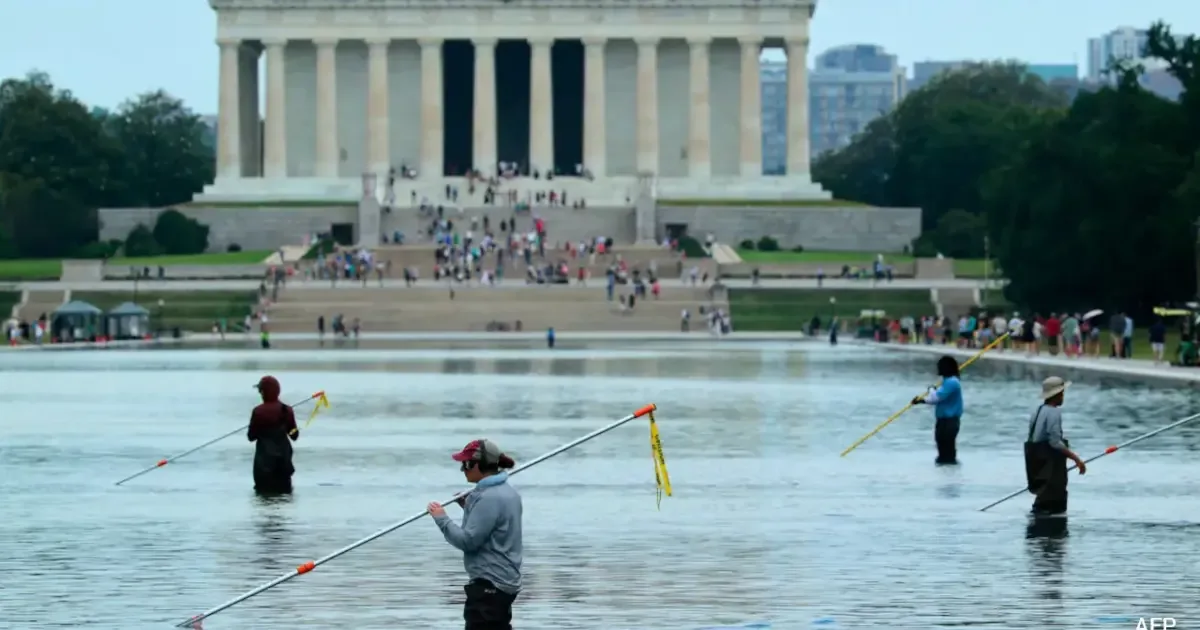
The $14 million renovation of the Lincoln Memorial Reflecting Pool under the Trump administration has been plagued by problems, turning a national landmark into a public spectacle. Initially marred by algae blooms shortly after completion, the pool’s issues escalated when the new blue paint began peeling off the bottom within days, leading to widespread criticism and mockery. Tourists are now visiting to see the failures rather than admire the landmark’s intended beauty.
Key Takeaways
The main points at a glance
- The $14 million renovation of the Lincoln Memorial Reflecting Pool faced immediate issues with algae growth.
- Shortly after completion, the pool’s new blue paint began peeling off the bottom within days.
- An attempt to fix the algae problem with hydrogen peroxide proved to be a temporary and ineffective solution.
- Tourists have begun visiting the pool specifically to see the visible failures and take photos of the peeling paint and murky water.
- The project’s failures are attributed to rushed timelines, potential micromanagement, lack of expertise, and questionable budget oversight.
- The Reflecting Pool’s problems have become a symbol of perceived incompetence and have drawn significant public and political criticism.
What was supposed to be a gleaming symbol of presidential legacy has become a running joke. First the algae, now the peeling paint. The Trump Reflecting Pool problems have turned a national landmark into a public spectacle.
President Donald Trump wanted to leave his mark on Washington D.C. He picked a famous landmark for his project: the Lincoln Memorial Reflecting Pool. That iconic stretch of water between the Lincoln Memorial and the Washington Monument. He ordered a major renovation costing around $14 million. The goal was a perfect, shimmering pool to impress visitors and cement his legacy.
It did not go as planned.
The $14 Million Makeover That Backfired
The Reflecting Pool is not just any pond; it is a national treasure. For decades, it has been the backdrop for civil rights marches, presidential inaugurations, and quiet moments of reflection. Millions of tourists have posed for photos with its still water mirroring the Washington Monument. The pool has always needed upkeep, but it had never been the subject of such an ambitious, high-profile renovation.
Trump took a personal interest in the project. According to news reports, he wanted the pool to look pristine and pushed for a quick turnaround. The renovation involved draining the pool, cleaning the bottom, and applying a fresh coat of blue paint. The paint was intended to make the water look deeper and more vibrant, focusing purely on aesthetics.
The work finished earlier this year. For a brief moment, the pool looked good. But that moment did not last long.
Within weeks, something went wrong. Green slime, algae, started to appear and spread across the surface. The water turned murky and green, looking nothing like the postcard image Trump had envisioned. It resembled a neglected fish pond. Tourists noticed, took pictures, and posted them online, sparking jokes.
From Algae to Hydrogen Peroxide: A Fix That Didn’t Stick
The algae problem was embarrassing, but the Trump administration had a plan: fight it with chemicals. Specifically, they decided to use hydrogen peroxide, the same substance used for cleaning cuts. The theory was that pouring it into the giant reflecting pool would kill the algae.
It was a bold move. Hydrogen peroxide is not typically used for large bodies of water. While it can work, it is often a temporary fix as it breaks down quickly, allowing algae to return. Nevertheless, the administration proceeded, dumping hydrogen peroxide into the pool. For a short time, the water cleared up, and the green slime disappeared. Officials declared victory.
But the victory was short-lived. The algae came back, like a stubborn guest who refuses to leave. The hydrogen peroxide treatment became a running gag, with people humorously suggesting other household items like vinegar or baking soda. The situation felt like a DIY home project gone wrong, addressing symptoms rather than the root cause, which was likely related to the new paint or the pool’s sealing.
Peeling Paint: The Final Blow
Just when it seemed the situation could not worsen, it did. The blue paint on the bottom of the pool began peeling off. This happened not weeks or months later, but days after the renovation was completed. CNN reported that blue material was flaking off and floating in the water, a fact confirmed by Reuters. The paint was lifting in sheets, resembling sunburned skin.
Imagine spending $14 million on a paint job only to watch it fall apart publicly. That is precisely what occurred.
The peeling paint was visible to anyone passing by, with strips of blue drifting in the water and the pool’s bottom looking patchy and worn. It was far from the polished look Trump desired; it was a mess. Photographers captured the damage, and news channels broadcast the footage, turning the story international.
Several possibilities could explain how paint peeled off so quickly: improper surface preparation, the wrong type of paint, rushed contractor work, or incorrect water chemistry. Whatever the reason, it pointed to a significant lack of quality control. A $14 million project should not fail within days.
Tourists Flock for the Wrong Reasons
Normally, tourists visit the Reflecting Pool to admire its beauty, take selfies with the Washington Monument’s reflection, or enjoy a peaceful moment. However, after the algae and peeling paint incidents, something changed.
Tourists began visiting for a different reason: to witness the disaster. ABC News reported that the pool was drawing crowds, but not for the reasons Trump intended. People came to gawk at the green water and peeling blue paint, taking pictures of the failures and sharing them on social media with laughing emojis.
One tourist told a reporter, “I came here expecting a beautiful sight. Instead, I saw a swimming pool that needs a new liner. It is kind of sad, but also funny.” Another visitor commented, “Trump spent all this money, and it looks worse than my backyard kiddie pool.”
The irony was palpable. The project, intended as a monument to presidential competence, instead became a monument to incompetence. The pool meant to reflect greatness was now reflecting something else entirely: poor planning and shoddy work.
A Legacy in Disrepair: What Went Wrong?
How did a $14 million renovation go so wrong? The answer likely involves a combination of factors.
First, the timeline was a major issue. Trump desired rapid results, pushing for a quick turnaround. Rushing renovations often leads to corners being cut. The concrete or paint might not have had adequate time to cure, the pool might not have been properly sealed allowing algae to take hold, and the peeling paint suggests the surface was not clean before repainting-all classic signs of a rushed job.
Second, management played a role. Trump’s personal interest, while seemingly positive, could have caused problems. A president micromanaging a pool renovation is unusual and might have pressured the National Park Service and contractors to deliver spectacular results quickly, increasing the likelihood of mistakes.
Third, there may have been a lack of expertise. The individuals involved might have been political appointees rather than experienced pool engineers. Maintaining a historic water feature requires specialists who understand algae prevention, appropriate paint selection, and water quality management. Based on the outcome, it seems unlikely the right experts were consulted.
Fourth, the budget itself raises questions. While $14 million is substantial, its allocation is unclear. The National Park Service oversees the Reflecting Pool, but the Trump administration exerted significant influence. Critics suggest the failures indicate poor oversight and potential waste of funds, although no official audit has been released.
Public Reaction and Political Fallout
The public reaction has been harsh but unsurprising, as people often enjoy witnessing political failures, especially visible and easily mockable ones. Late-night comedians had a field day, with jokes about Trump’s pool becoming a staple on shows like “The Daily Show” and “Saturday Night Live.” Memes spread across social media, with one popular meme showing the pool captioned: “Trump’s legacy: green and peeling.”
Political opponents seized the story, with Democrats using the algae and peeling paint as evidence of the Trump administration’s inability to manage basic government projects. They questioned how the administration could handle critical issues like healthcare or infrastructure if it couldn’t fix a pool.
However, the criticism was not entirely partisan. Some conservative commentators also expressed embarrassment, wanting the pool to be a success story rather than a punchline. The project was intended to showcase Trump’s ability to get things done better and cheaper, but it demonstrated the opposite.
Even Trump’s supporters found the pool’s condition difficult to defend. While some attempted to blame the media for exaggerating the problems, the visual evidence-photos and videos of peeling paint and algae-was undeniable. The hydrogen peroxide fiasco was also a documented reality.
The incident raised questions about accountability. Who was responsible for the failures-the contractors, the National Park Service, or the White House? To date, no one has officially taken the blame. The project quietly continued with further repairs, but the public relations damage was significant.
What’s Next for the Reflecting Pool?
Currently, the Reflecting Pool remains in a state of limbo. Workers are still attempting to fix the peeling paint. This may require draining the pool again and repainting the bottom, possibly installing an algae prevention system. These additional repairs will likely increase the total cost beyond the initial $14 million.
The National Park Service has not released a detailed long-term maintenance plan. However, it is clear that the current approach is ineffective. Simply applying hydrogen peroxide and hoping the paint adheres is not a sustainable solution.
Perhaps the lesson is that quick fixes are unsuitable for historic landmarks. These structures demand careful planning, expert knowledge, and a commitment of time. A pool is not merely a photo opportunity; it is a complex system requiring proper engineering.
For Trump, the Reflecting Pool project will likely be remembered as a blemish on his legacy. He aimed to leave a mark, and he did-just not the one he intended. The pool now stands as a symbol of how ambition without attention to detail can spectacularly backfire.
As tourists continue to photograph the peeling paint and murky water, one question lingers: If you cannot build a pool that stays blue, how can you build a legacy that lasts?
Frequently Asked Questions
What were the main problems with the Trump Reflecting Pool renovation?
The main problems were the rapid appearance of algae, turning the water green, and the peeling of the new blue paint from the pool's bottom just days after the renovation was completed. These issues turned the project into a public spectacle.
How much did the renovation of the Trump Reflecting Pool cost?
The renovation project cost approximately $14 million. The goal was to create a pristine and impressive pool to serve as a presidential legacy.
What was done to try and fix the algae problem?
The Trump administration attempted to fix the algae problem by using hydrogen peroxide. While this cleared the water temporarily, the algae soon returned, making the treatment ineffective.
Why did the paint on the Trump Reflecting Pool start peeling so quickly?
The exact reasons for the paint peeling are not definitively stated, but potential causes include improper surface preparation before painting, using the wrong type of paint, rushed work by contractors, or incorrect water chemistry. It indicated poor quality control.
How did tourists react to the problems at the Trump Reflecting Pool?
Instead of admiring the pool's beauty, tourists began visiting to see the failures. Many took photos of the green water and peeling paint, sharing them on social media and expressing disappointment or amusement at the costly project's outcome.
What factors contributed to the failures of the Trump Reflecting Pool project?
Key factors likely include a rushed timeline, potential micromanagement from the White House, a possible lack of specialized expertise in pool engineering and maintenance, and questions about how the $14 million budget was managed and overseen.
What is the current status of the Trump Reflecting Pool?
The pool is still undergoing repairs to address the peeling paint. Further work, potentially including draining and repainting, is expected, which could increase the total cost beyond the initial $14 million.
References
- After Algae, Peeling Paint Adds To Donald Trump's Pool Project Problems – Original report (NDTV World)
- After Algae, Peeling Paint Adds To Donald Trump's Pool Project Problems – NDTV – NDTV
- Blue material peeling off bottom of Reflecting Pool, days after costly renovation – CNN – CNN provided video evidence of blue paint flaking off the pool floor just days after the renovation was finished, emphasizing the rapid failure.
- The paint is already peeling in Trump's renovated Washington Reflecting Pool – Reuters – Reuters confirmed the paint peeling story, adding weight to the narrative of a flawed renovation with its international credibility.
- Algae-marred Reflecting Pool draws tourists, but not for reasons Trump wanted – ABC News – Breaking News, Latest News and Videos – ABC News highlighted the ironic tourist attraction the pool became due to the algae problem, shifting focus to public reaction.
- Reflecting Pool woes: Trump administration turns to hydrogen peroxide in latest bid to beat back algae – CNN – CNN reported on the administration's use of hydrogen peroxide as a chemical solution to kill algae, revealing the struggle to fix the pool's problems.