At a Glance
Congress MP Shashi Tharoor’s recent comments on Kashmir tourism, suggesting improvements and comparing India’s travel costs unfavorably to Thailand, have triggered a significant internal backlash within his party. While Tharoor aimed to advocate for policy reforms, his remarks were criticized by Congress leaders in Jammu and Kashmir and quickly exploited by the BJP to highlight perceived divisions within the opposition party.
Key Takeaways
The main points at a glance
- Shashi Tharoor’s remarks on Kashmir tourism, intended to promote policy reforms, sparked internal criticism from Congress leaders in Jammu and Kashmir.
- The BJP capitalized on the Congress infighting, using Tharoor’s comments to attack the party’s unity and leadership, particularly Rahul Gandhi.
- Tharoor’s critique extended to India’s broader tourism sector, advocating for lower travel costs, which the BJP framed as anti-national.
- The incident highlights a recurring pattern of public disagreements within the Congress, damaging its image and providing ammunition to political rivals.
- The controversy underscores the challenge the Congress faces in managing internal dissent and presenting a united front, especially with upcoming general elections.
- The response from Congress allies was muted, indicating concern over the party’s internal stability and its ability to lead opposition efforts.
The Remark That Sparked a Storm
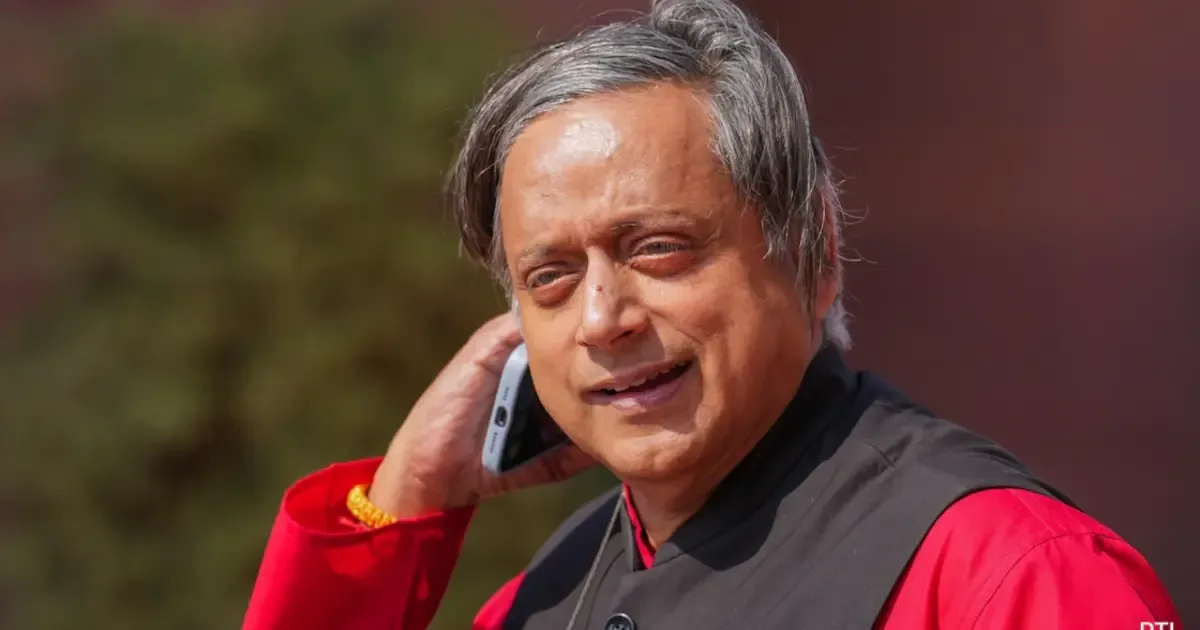
Congress MP Shashi Tharoor’s comment on Kashmir tourism ignited a significant internal conflict within his party. Tharoor suggested that Kashmir needed improved tourism policies and noted that India’s travel costs were higher compared to destinations like Thailand. His intention was to advocate for reforms to boost the region’s tourism sector.
However, in the context of Indian politics, any statement regarding Kashmir is sensitive. The ruling BJP has consistently asserted that its policies have restored peace and tourism to the valley. Tharoor’s remarks, which questioned this narrative, quickly drew criticism.
The criticism was not limited to the BJP. Tharoor’s comments also faced backlash from his own party colleagues in Jammu and Kashmir, revealing deep divisions within the Congress.
Congress Infighting: Jammu and Kashmir Leader Criticizes Tharoor
Ravinder Sharma, the chief spokesperson for the Congress in Jammu and Kashmir, publicly criticized Shashi Tharoor. Sharma stated that Tharoor should have engaged with the local population in Kashmir before making such remarks. This public rebuke suggested that Tharoor’s comments did not reflect the ground reality as perceived by the state leadership.
This was not an isolated incident for Tharoor, who has a history of making statements that diverge from the official party line on various issues, including foreign policy and economic matters. While some appreciate his independent thinking, others view it as a distraction.
In this instance, the Kashmir Congress unit felt Tharoor’s comment undermined their efforts to counter the BJP’s narrative on the region’s improved tourism under the current government. The disagreement highlighted a lack of unified messaging within the party regarding its stance on Kashmir and tourism policy.
BJP Exploits Tharoor’s Kashmir Remark to Attack Congress
The BJP quickly seized upon Shashi Tharoor’s comments as political ammunition. Party spokespeople and social media amplified the remark, using it to attack not only Tharoor but also other Congress leaders, including Rahul Gandhi.
The BJP argued that Tharoor’s statement demonstrated a lack of confidence within the Congress regarding India’s unity and the government’s policies in Kashmir. Senior BJP leaders linked Tharoor’s remarks to his past statements, portraying the opposition as divided and out of touch with mainstream Indian sentiment.
Crucially, the BJP connected this controversy to Rahul Gandhi’s leadership, questioning the Congress’s ability to lead the country if its own members could not agree. This strategy of exploiting internal party conflicts is a recurring tactic used by the BJP to undermine the Congress’s credibility, especially in the lead-up to general elections.
The BJP’s response was swift and coordinated, with party officials appearing on news channels and issuing statements. This put the Congress leadership in a difficult position, struggling to present a united front.
Tharoor’s Broader Critique of India’s Tourism Sector
Shashi Tharoor’s comments on Kashmir tourism were part of a wider critique of India’s tourism sector. He pointed out that India is more expensive for tourists than destinations like Thailand and advocated for reducing taxes on hotels and flights to attract more visitors.
While these suggestions were seen by some as practical policy recommendations, the BJP framed them as an insult to India, accusing Tharoor of promoting foreign travel over domestic tourism. This further fueled the internal debate within the Congress.
This situation highlights a broader division within the Congress between those who prioritize direct opposition to the BJP and those, like Tharoor, who advocate for offering constructive policy alternatives. Tharoor’s supporters view him as a voice of intellectualism, while critics see him as a potential liability due to his independent stances.
The Congress leadership has maintained an ambiguous position, neither fully endorsing nor rejecting Tharoor’s views. This lack of a clear stance on internal differences leaves the party vulnerable to external criticism and makes each of Tharoor’s statements a potential crisis.
Implications for Congress’s Internal Health and Unity
The controversy surrounding Shashi Tharoor’s Kashmir remark is symptomatic of a larger, ongoing pattern of public infighting within the Congress. Several senior leaders have previously voiced disagreements with the party’s direction, with some eventually leaving the party.
These public disagreements create a perception of disarray and provide the BJP with easy talking points to question the Congress’s credibility and its ability to form a united opposition. The sensitive nature of the Kashmir issue and the ongoing questions about leadership within the Congress amplify the damage caused by such incidents.
The Congress struggles with internal democracy, lacking formal channels for leaders to express dissent without being labeled as rebels. This forces constructive criticism into the public sphere, often appearing as defiance.
Furthermore, the Congress’s allies in opposition coalitions are closely watching these internal dynamics. A strong and united Congress is crucial for these alliances to effectively challenge the BJP. Visible infighting erodes the confidence of these allies, as seen in their muted response to this particular controversy.
Navigating the Fallout: Congress’s Path Forward
Following the public outcry, Congress leadership attempted to mitigate the damage by characterizing Ravinder Sharma’s comments as personal views. However, this explanation was met with skepticism, given Sharma’s prominent role as the party’s chief spokesperson in Jammu and Kashmir.
Shashi Tharoor has largely maintained his focus on his policy-related arguments, avoiding direct confrontation with party colleagues or leadership. While this approach avoids immediate escalation, it does not resolve the underlying tensions within the party.
The Congress faces a critical juncture: either attempt to smooth over the disagreements or address the fundamental issue of managing internal dissent constructively. The party’s history suggests a tendency to opt for the former, hoping the controversy will fade.
However, this approach is unlikely to be effective in the long term. The BJP is expected to continue leveraging any signs of division within the Congress, and state-level leaders may continue to voice public disagreements. The core challenge for the Congress lies in establishing a system that allows for internal debate without compromising party unity and public perception.
Ultimately, the public witnesses a party preoccupied with internal conflicts while the ruling party benefits. Unless the Congress can foster a more cohesive internal environment and present a united front, the damage to its reputation and voter trust could be significant and long-lasting. Tharoor’s remark acted as a catalyst, exposing pre-existing fault lines within the party that require urgent attention.
Frequently Asked Questions
What did Shashi Tharoor say about Kashmir?
Shashi Tharoor commented on Kashmir tourism, suggesting that the region needed better tourism policies and that India's travel costs were higher compared to destinations like Thailand. His aim was to advocate for reforms to boost tourism.
Why did Tharoor's remark cause controversy within the Congress?
His remark was seen by some Congress leaders in Jammu and Kashmir as undermining their efforts to counter the BJP's narrative on tourism recovery in the valley. It also touched upon the politically sensitive issue of Kashmir, leading to internal backlash.
How did the BJP react to Tharoor's comments?
The BJP quickly used Tharoor's remarks as political ammunition, attacking the Congress for internal divisions and questioning its leaders' commitment to national interests. They linked the comments to Rahul Gandhi's leadership.
Is this the first time Tharoor has made controversial statements?
No, Shashi Tharoor has a history of making statements that differ from the official party line on various issues, including foreign policy and economic matters, often leading to mixed reactions within the Congress.
What does this incident reveal about the Congress party?
It highlights ongoing internal infighting and a lack of a unified voice within the Congress. It also points to challenges in managing dissent internally without it spilling into public view, potentially damaging the party's image and electoral prospects.
How did the Congress leadership respond to the controversy?
The Congress leadership attempted to downplay the dispute, suggesting that the comments from the Jammu and Kashmir spokesperson were personal views. However, this explanation was seen as insufficient by many observers.
References
- Congress vs Congress: Shashi Tharoor's Kashmir Remark Triggers Party Storm – Original report (NDTV India)
- Congress vs Congress: Shashi Tharoor's Kashmir Remark Triggers Party Storm – NDTV – Duplicate reference of the same controversy; adds no new details beyond title.
- 'He Hears What PM Doesn't Say': Congress, Shashi Tharoor In Fresh Bout – NDTV – Highlights BJP's jibe that Tharoor hears what PM Modi does not say, deepening the attack.
- "Thailand Cheaper For Tourists Than India": Shashi Tharoor Calls For Tourism Sector Reforms – NDTV – Reports Tharoor's broader tourism reform pitch, comparing India's costs to Thailand's, adding context to his stance.
- 'Rahul Gandhi hates India': BJP cites Shashi Tharoor's remarks on India's foreign policy; what opposition – The Times of India – BJP weaponizes Tharoor's foreign policy remarks to attack Rahul Gandhi, framing it as proof of Congress's anti-India stance.
- Rahul Gandhi’s leadership now being questioned within Congress and among allies: BJP – The Hindu – The Hindu