The Secret Flight to Delhi
On a quiet Tuesday, June 16, six Members of Parliament (MPs) from Maharashtra’s Shiv Sena (UBT) party secretly departed from their homes in various cities. They avoided informing anyone of their destinations, evaded local intelligence agencies, and slipped past the Mumbai media. Their journey concluded with boarding chartered flights bound for Delhi, marking the beginning of a significant Shiv Sena UBT rebellion.
The news of their departure only surfaced after their arrival in the national capital. This sudden move plunged Uddhav Thackeray’s party into its second major internal crisis in two years. The six Lok Sabha MPs are now in Delhi, and their subsequent actions could profoundly impact the party’s future trajectory.
This dramatic development underscores the deep divisions within the Shiv Sena (UBT) and the high stakes involved. The MPs represent diverse constituencies across Maharashtra, from bustling urban areas to rural regions. Their departure was so clandestine that even party loyalists were caught by surprise, raising concerns about internal communication and security protocols.
How the Drama Unfolded
Sources indicate that the MPs departed from locations including Mumbai, Pune, and Nagpur, opting for private charter planes instead of commercial flights to hinder tracking. Maharashtra’s intelligence networks did not detect any unusual activity, and the Mumbai media also missed the initial story. By the time party leaders became aware of the situation, the MPs had already reached Delhi.
These six MPs are all members of the Lok Sabha. While their names have not been officially disclosed, political insiders suggest they are loyalists who have become disillusioned with the party’s current direction. The secrecy of their operation points to a well-coordinated plan, possibly involving external facilitators. Flight records suggest the chartered planes were booked through a Delhi-based travel agency, fueling speculation about potential orchestration by other political entities aiming to destabilize Thackeray’s leadership.
Upon landing in Delhi, the MPs were reportedly taken to a secure, undisclosed location, avoiding all media contact. Their phones were switched off, and they did not respond to party communications, indicating a carefully planned operation rather than a spontaneous act of dissent.
A Second Major Rebellion Against Uddhav Thackeray
This is not the first significant revolt Uddhav Thackeray has faced. In 2022, a large faction of MLAs, led by Eknath Shinde, broke away from the party. This split led to the collapse of Thackeray’s Maharashtra government, and Shinde subsequently formed a new government with the BJP. Now, a similar rebellion is unfolding, this time at the national parliamentary level.
The six Lok Sabha MPs could potentially shift their allegiance to another party. Such a move would diminish Thackeray’s party’s strength in Parliament, potentially impacting his ability to negotiate with allies and influence national politics. The 2022 rebellion severely weakened the Shiv Sena (UBT) in the Maharashtra assembly, resulting in the loss of key leaders and damage to its organizational structure.
The current rebellion threatens to replicate this pattern nationally, potentially leaving Thackeray without any Lok Sabha representation from the original party cadre. This would be a significant blow to a party once known for its discipline and loyalty. The timing is also critical, with the 2024 general elections approaching. Internal fractures within parties like Shiv Sena (UBT) can weaken the broader opposition alliance, INDIA, which is striving to unite against the BJP.
The Delhi Connection and Potential Motives
The MPs’ journey to Delhi is reportedly linked to invitations from senior leaders of the ruling Bharatiya Janata Party (BJP). The BJP has been actively seeking to expand its influence among regional parties. By drawing MPs from Shiv Sena (UBT), the BJP could weaken the opposition and bolster its own parliamentary numbers.
However, the MPs also have their own grievances. Some reportedly feel dissatisfied with Thackeray’s leadership style, while others believe they lack sufficient input in party decisions. The possibility of financial incentives has also been cited as a factor.
Political analysts observe a pattern of the BJP facilitating defections from rival parties. The current situation appears similar to the 2022 Shinde rebellion, involving isolation of MPs, offers of incentives, and subsequent negotiations in Delhi. Speculation suggests the BJP’s central leadership may be directly involved, as such high-profile defections typically require top-level approval.
For the MPs, aligning with the BJP might offer immediate benefits such as ministerial positions, financial security, and potential protection from legal issues. However, they also face the risk of being perceived as opportunists by voters and potential backlash in their constituencies. The decision is complex, and the MPs are reportedly weighing their options carefully.
Allegations of Rs 50 Crore Offers
Reports have emerged suggesting that each of the six MPs was offered Rs 50 crore to switch their allegiance. While these claims remain unconfirmed by official sources, political observers suggest that such substantial financial offers are not uncommon in Indian politics, particularly when a party aims to engineer defections.
If true, this figure represents a significant sum, potentially a life-changing amount for many politicians. Such offers underscore the perceived value of each MP in a closely divided Parliament. While the BJP-led NDA coalition currently holds a majority in the Lok Sabha, securing additional MPs further solidifies its dominance and diminishes the opposition’s strength.
However, financial incentives may not be the sole motivation. Some MPs might be driven by unfulfilled political ambitions within Shiv Sena (UBT) or personal conflicts with party leadership. The combination of financial inducements and political grievances can create a powerful impetus for defection.
Link to a 2006 Murder Case
The current rebellion has brought renewed attention to a 2006 murder case with alleged connections to Sunetra Pawar, the wife of Nationalist Congress Party (NCP) leader Ajit Pawar. The specifics of the case are not fully clear, but political commentators suggest that some of the MPs involved in the rebellion may have ties to it.
This connection is reportedly being used by certain political factions to exert pressure on the MPs. The involvement of such personal and legal matters alongside political maneuvering adds complexity to the situation. The MPs might feel vulnerable and consider switching sides for potential legal protection.
The 2006 case involves the killing of a businessman in Pune and has been a subject of controversy, with allegations of political interference over the years. Sunetra Pawar’s name has surfaced in connection with the case, although she has not been formally charged. The MPs’ alleged knowledge of the case could be a factor in their decision-making, with a move to the ruling party potentially offering a degree of immunity or delay in legal proceedings.
Using legal cases to pressure politicians is a known tactic in Indian politics. The MPs might feel cornered, viewing defection as their only viable option. This situation also highlights the intricate web of political families and legal entanglements within Maharashtra’s political landscape.
Uddhav Thackeray’s Response to the Shiv Sena UBT Rebellion
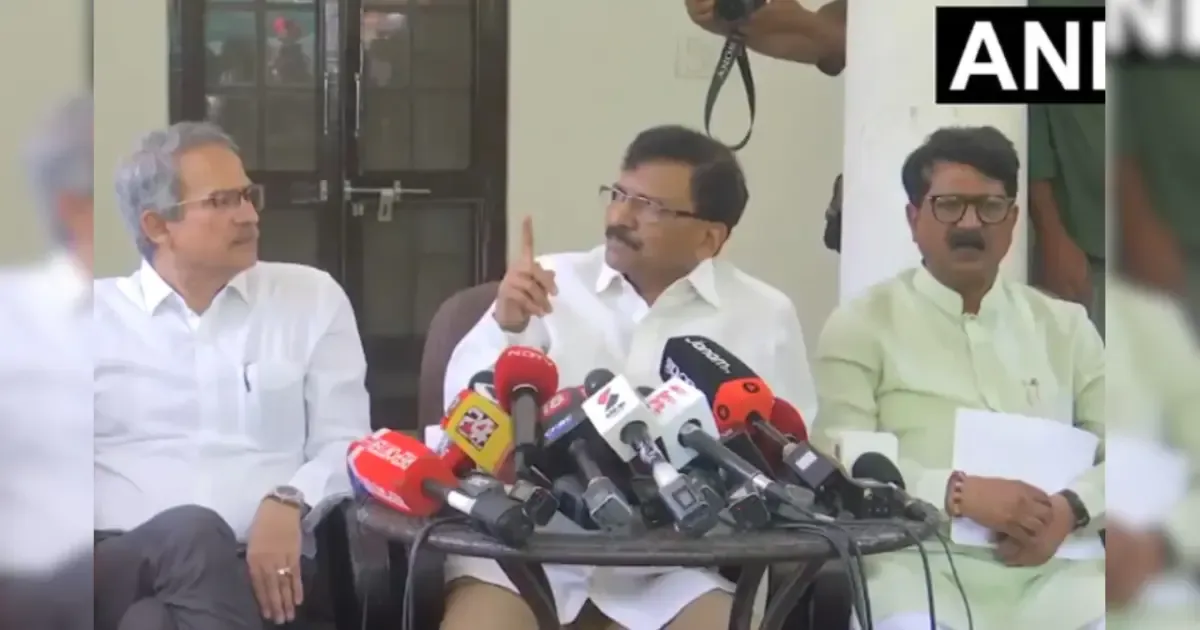
Uddhav Thackeray reacted swiftly to the news of the rebellion. He convened an urgent meeting of the party’s parliamentary board in Delhi on the same day the reports broke, summoning all MPs. The meeting took place at a city hotel, but the six rebel MPs were notably absent.
During the meeting, party leaders discussed strategies to manage the crisis and reportedly attempted to persuade the dissenting MPs to return. Thackeray is said to be both angry and disappointed by the developments. He has urged party workers to remain calm while issuing a warning against any acts of betrayal.
In the subsequent days, Thackeray adopted a more conciliatory stance, dispatching senior leaders to negotiate with the rebels. He has offered assurances of key party positions and greater autonomy. He has also appealed to their sense of loyalty, referencing the party’s history and its founder, Bal Thackeray. However, the rebels have remained noncommittal, seeking more concrete guarantees.
The party is also considering disciplinary actions, potentially including expulsion, if the MPs do not return. However, such a move could inadvertently push them further towards the BJP. Thackeray is navigating a delicate balance between demonstrating resolve and preventing a complete party rupture.
What Happens Next for the Shiv Sena UBT MPs?
The future of the six MPs remains uncertain. They might return to the party if Thackeray addresses their concerns or offers improved positions. Alternatively, they could formally join the BJP or align with another allied party.
If they defect, Shiv Sena (UBT) would lose six MPs. While a small number, the impact could be significant, signaling a loss of control for Thackeray and potentially encouraging further defections. The MPs could merge with the BJP while remaining independent or form a new faction within the NDA. Another possibility is joining the Eknath Shinde faction of Shiv Sena, which is already allied with the BJP, thereby strengthening Shinde’s position and further weakening Thackeray.
For the opposition INDIA alliance, this rebellion represents a considerable setback. Shiv Sena (UBT) is a crucial partner in Maharashtra, and the loss of MPs diminishes the coalition’s overall strength. It could also demoralize party workers and make them more susceptible to poaching attempts. The alliance, already facing challenges in maintaining unity, could experience further defections as a result of this incident.
Broader Implications for Indian Politics
This Shiv Sena UBT rebellion is indicative of a broader trend in Indian politics, where party switching has become more common, often driven by financial or power-related considerations. This phenomenon can undermine the stability of political parties and create confusion among voters.
Shiv Sena (UBT), founded by Bal Thackeray, was historically known for its strong regional
References
- Rebellion of Team Thackeray And The Delhi Link: Inside Story – Original report (NDTV India)
- Rebellion of Team Thackeray And The Delhi Link: Inside Story – NDTV – NDTV
- Rebellion buzz: Shiv Sena (UBT) convenes crucial parliamentary board meeting in Delhi, summons all MPs – Moneycontrol.com – Moneycontrol.com
- Team Thackeray tussle puts focus on 2006 murder case with a Sunetra Pawar link – The Indian Express – The Indian Express
- Rs 50 crore each? Meet 6 MPs who could decide the fate of Uddhav Thackeray's Shiv Sena – The Times of India – The Times of India
- Sena UBT faces 2nd major rebellion – Daily Excelsior – Daily Excelsior