At a Glance
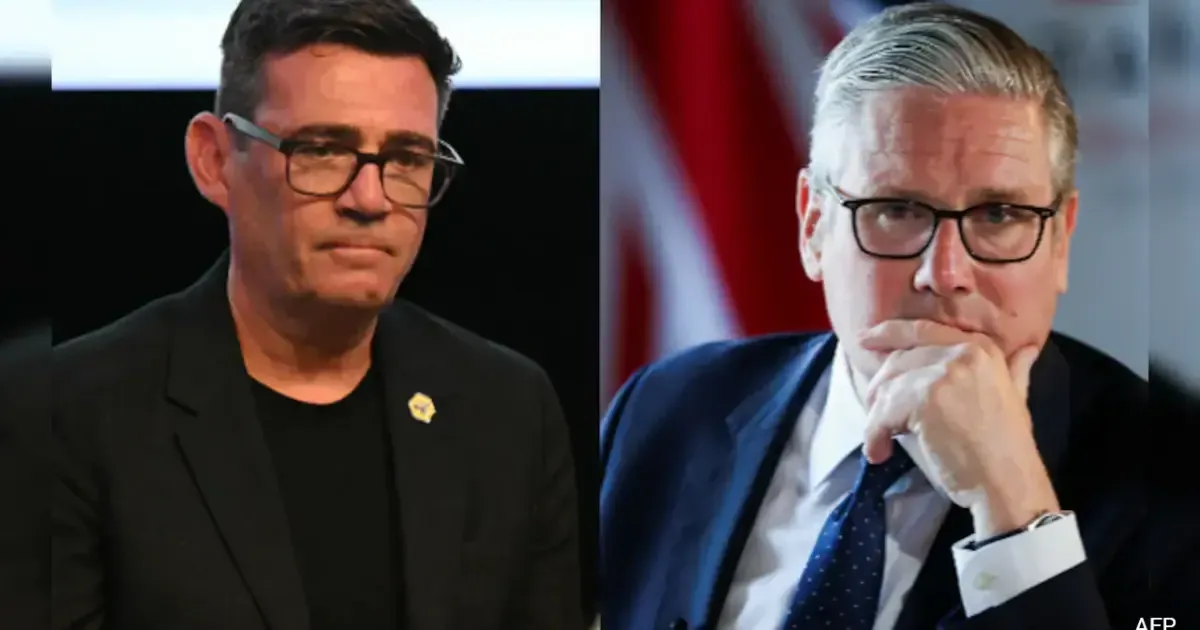
Andy Burnham, the Mayor of Greater Manchester, has returned to Parliament, positioning himself as a potential challenger to Keir Starmer’s leadership of the Labour Party. His path to becoming Prime Minister involves securing significant MP support to trigger a leadership contest, followed by winning a vote among party members and affiliated groups. However, this strategy carries risks, including potential party division and the possibility that a leadership change could force an immediate general election, jeopardizing Labour’s chances of gaining power.
Key Takeaways
The main points at a glance
- Andy Burnham has returned to the House of Commons, a necessary step for any potential Labour leadership bid.
- A leadership contest requires nomination from 20% of Labour MPs (around 80-90 individuals).
- If successful, Burnham would become Labour leader, but not automatically Prime Minister; he would need to win a general election.
- Supporters are divided on whether Burnham should challenge Starmer now or wait until after the next general election.
- Senior Labour figure Harriet Harman warns that replacing Starmer could pressure the party into calling an immediate general election.
- The next general election must be held by January 2025, adding urgency and complexity to leadership considerations.
Could Andy Burnham, the mayor of Greater Manchester, soon be the UK’s next prime minister? His recent by-election win has set the stage for a leadership challenge that could reshape British politics. Burnham has made it clear he would run in any race to replace Keir Starmer and is considered a frontrunner. However, the path from Manchester to Number 10 Downing Street is complex, with supporters divided on the timing of a potential move. Some warn that ousting Starmer could trigger a general election.
This article explores how such a challenge might unfold, what Burnham would need to do, and the risks involved for him and the Labour Party.
Who Is Andy Burnham? A Look at His Political Career
Andy Burnham is an experienced figure in national politics. He served as the Member of Parliament (MP) for Leigh from 2001 to 2017. During his time in Westminster, he held significant roles under Prime Ministers Tony Blair and Gordon Brown, including Chief Secretary to the Treasury, Culture Secretary, and Health Secretary. This gave him valuable experience in managing large government departments.
After Labour’s defeat in 2010, Burnham twice ran for the party leadership, first losing to Jeremy Corbyn in 2015 and then to Keir Starmer in 2020. Following his second leadership bid, he stepped back from Parliament to become the Mayor of Greater Manchester.
As mayor, Burnham has cultivated a reputation as a strong, independent voice advocating for his region. He has actively sought increased funding and pushed back against the Conservative government on issues like transport and housing. His prominent role during the COVID-19 pandemic, often criticising the government’s response, raised his national profile. This increased visibility has made him popular not only with traditional Labour voters but also with some who previously voted Conservative.
His popularity in the North of England is seen by many Labour supporters as key to winning back seats lost to the Conservatives. However, some question whether his strong regional identity might be a weakness nationally, making him appear too tied to one area to win a general election. Others argue that this very identity is what Labour needs to reconnect with its former voter base.
The Makerfield By-Election: A Crucial Step Back to Parliament
A significant development occurred when a parliamentary seat in Makerfield, a safe Labour constituency in Greater Manchester, became vacant. To become prime minister, one must be a Member of Parliament. While being a mayor is a powerful regional role, it does not grant the ability to vote on national laws or lead a party from the front benches of the House of Commons.
Burnham stood for and won the Makerfield by-election. Although the outcome was largely expected due to the seat’s safety for Labour, the victory was a critical move. It returned him to Parliament, providing a national platform to discuss key issues, build relationships with fellow MPs, and potentially gather support for a leadership bid.
Despite this success, questions remain about his path to leadership. Some analyses suggest that while securing a parliamentary seat was necessary, winning the Labour leadership if he challenges Starmer is a different challenge altogether. Gaining the support of MPs and party members nationwide is distinct from winning a by-election in a secure seat.
Labour Leadership Rules: How Andy Burnham Could Challenge Keir Starmer
For Andy Burnham to initiate a leadership contest within the Labour Party, specific rules must be followed. A challenge is triggered if 20% of Labour MPs formally nominate a candidate seeking to replace the current leader. This means Burnham would need the public backing of approximately 80 to 90 MPs to launch a contest.
Securing this level of support from MPs represents a significant hurdle. While Burnham may be popular with the public, he needs to convince his parliamentary colleagues. Many MPs were elected under Keir Starmer’s leadership and may feel a sense of loyalty. Others might be concerned that a leadership challenge could divide the party and negatively impact their chances in the next general election.
If the 20% threshold is met, a leadership election follows. This involves a vote open to all Labour Party members, as well as members of affiliated trade unions and socialist societies. Following a campaign period, the candidate with the most votes becomes the new leader of the Labour Party. As the leader of the opposition party, this individual would then be positioned to potentially become prime minister if their party wins a general election.
Crucially, if a sitting prime minister is replaced by their party between general elections, the new leader does not automatically become prime minister. They must first win a general election. This differs from historical instances where a change in party leadership without a public vote led to a new prime minister, such as Theresa May succeeding David Cameron in 2016.
Therefore, Burnham’s strategy hinges on convincing a sufficient number of Labour MPs that he offers a better prospect of winning the next general election compared to Keir Starmer. He needs to persuade them that the party’s electoral fortunes would improve under his leadership.
Supporters Divided: The Debate Over the Right Time to Strike
The timing of a potential leadership challenge is a major point of contention among Burnham’s supporters. Some advocate for swift action, arguing that Keir Starmer’s current standing is weak, with less-than-ideal approval ratings and recent electoral setbacks. They believe that delaying a challenge could allow the situation to worsen, citing ongoing national issues like NHS waiting lists, the cost of living crisis, and a sluggish economy.
Conversely, others urge caution. They worry that a challenge now could be perceived as self-serving, especially given Burnham’s previous leadership defeats. Such a move might be seen as divisive, potentially harming the party’s unity and public image just before a crucial election. This group suggests that Burnham should wait for Starmer to lead Labour into the next general election. If the party loses, a leadership contest would then naturally occur, with Burnham potentially taking over as leader of the opposition.
Burnham faces risks regardless of his decision. Challenging too early and failing could damage his political career, marking him as disloyal. Waiting too long might mean missing his opportunity if Starmer’s position strengthens or another candidate emerges as a frontrunner.
This presents a significant political dilemma, with high stakes for Burnham and the Labour Party. Ultimately, the decision to challenge rests not only on Burnham’s ambition but also on his ability to secure the necessary MP support.
Harriet Harman’s Warning: A Leadership Change Could Trigger a General Election
A notable intervention came from Harriet Harman, a long-serving Labour MP and former Deputy Leader. With extensive knowledge of party rules and constitutional matters, she issued a stark warning regarding the consequences of replacing Keir Starmer with Andy Burnham.
Harman suggested that if Labour MPs were to change their leader, the Conservative Party would likely demand an immediate general election. They would argue that the public did not elect Andy Burnham as prime minister and that changing the leader without a public vote is undemocratic. This could create immense political pressure on a new Labour leader to call an election shortly after taking office.
While UK law does not mandate a general election upon a change of party leader, the political reality could force one. Opposition parties might obstruct government business, and the media would likely scrutinize any new leader’s mandate. Governing under such conditions could prove extremely difficult, potentially compelling a new prime minister to seek a public vote within months or even weeks.
This warning highlights that a leadership change might not result in a smooth transition but could lead to political instability. Harman’s caution is not necessarily an opposition to Burnham himself but a pointed observation of the potential repercussions. If a leadership change forces an election, Labour risks losing the opportunity to gain power after years in opposition.
This perspective bolsters the argument for Burnham to wait, suggesting that the potential gains of an immediate challenge might not outweigh the risks of triggering an election that Labour could lose.
What Happens Next? The Path to a Potential Leadership Vote
The current situation is one of anticipation. Andy Burnham, now back in Parliament, is expected to use his platform to articulate his vision for the country. He will likely engage in speeches, media interviews, and behind-the-scenes efforts to build support among MPs.
There is no set deadline for a leadership challenge. It could materialize in the coming weeks or months, or it may never occur. The pivotal factor remains whether Burnham can secure the required 20% of MP nominations. If he fails to gather sufficient support, any challenge will be averted, and Keir Starmer will likely remain leader.
Should the nominations begin to accumulate, clear indicators will emerge. MPs may start making public declarations, either supporting a new leader or rallying behind Starmer. Media coverage will track the count of supporters, turning it into a prominent political narrative.
The possibility of other candidates entering the race also exists. While Burnham is considered the frontrunner, other senior Labour figures, such as members of the Shadow Cabinet, could also decide to run, adding complexity and unpredictability to any contest.
Finally, the looming general election, due by January 2025, significantly shapes the current dynamics. If Burnham were to take over as leader now, he would face an immediate general election. Alternatively, if he were to assume leadership after a Starmer-led defeat, he would lead the party in opposition, with more time to rebuild.
Andy Burnham harbours clear ambitions and possesses considerable political skill, backed by strong support in the North. However, his route to the top is fraught with challenges, including party rules, political loyalties, and substantial risks. The critical question is not only whether he desires the position but whether he can attain it without jeopardizing the Labour Party’s prospects.
For followers of British politics, this unfolding situation is a key storyline, potentially determining the country’s leadership for the next five years. It is a narrative of ambition, internal party dynamics, and national anticipation.
Frequently Asked Questions
Can Andy Burnham become Prime Minister without winning a general election?
If Andy Burnham were to successfully challenge Keir Starmer and become the leader of the Labour Party, he would not automatically become Prime Minister. He would first need to lead Labour to victory in a general election. However, if the ruling party changes its leader between elections, the new leader does not legally need to call an immediate vote, but political pressure could force one.
What is the process for a Labour leadership challenge?
A Labour leadership contest can be triggered if 20% of Labour MPs nominate a candidate who wishes to challenge the current leader. If this threshold is met, a formal election is held, with votes cast by party members, affiliated trade union members, and socialist society members.
Why are some Labour supporters divided on when Andy Burnham should challenge Keir Starmer?
Some supporters believe Burnham should challenge Starmer now while the government is perceived as weak and Labour's poll numbers are potentially low. Others advise patience, arguing that a challenge could divide the party and that Burnham should wait for Starmer to lead Labour into the next general election, challenging only if the party loses.
What is Harriet Harman's warning about a leadership change?
Harriet Harman, a senior Labour figure, has warned that if Labour MPs replace Keir Starmer with Andy Burnham, the Conservative opposition would likely demand an immediate general election. She suggests this could create significant political instability and pressure the new leader to go to the country, potentially risking the party's chance to govern.
What is Andy Burnham's political background?
Andy Burnham served as an MP for Leigh from 2001 to 2017 and held cabinet positions such as Chief Secretary to the Treasury, Culture Secretary, and Health Secretary under Labour governments. After losing two bids for the party leadership, he became the Mayor of Greater Manchester.
How does being Mayor of Greater Manchester help Andy Burnham's political ambitions?
As Mayor of Greater Manchester, Burnham has developed a strong public profile and a reputation as an independent voice advocating for his region. This role has increased his national visibility and demonstrated his ability to connect with voters, including some who previously supported the Conservatives, which is seen as crucial for Labour's electoral success in the North.
References
- Explained: How Andy Burnham Could Attempt To Replace Keir Starmer As UK PM – Original report (NDTV World)
- Explained: How Andy Burnham Could Attempt To Replace Keir Starmer As UK PM – NDTV – NDTV
- Andy Burnham's election to parliament sets up bid to oust UK PM Starmer – The Edge Malaysia – Confirms that Burnham's parliamentary win directly enables a leadership challenge.
- Andy Burnham says his Makerfield by-election win could be turning point – BBC – Quotes Burnham directly, framing his win as a pivotal moment for his political future.
- Analysis: Andy Burnham's route back to Commons is clearer – but can he win in Makerfield? – BBC – Adds analytical depth, questioning Burnham's electoral viability despite a clearer path.
- UK may be ‘tipped into a general election’ if Burnham replaces Starmer, says Harman – The Guardian – Introduces a warning from Harriet Harman about potential national election fallout, adding stakes.